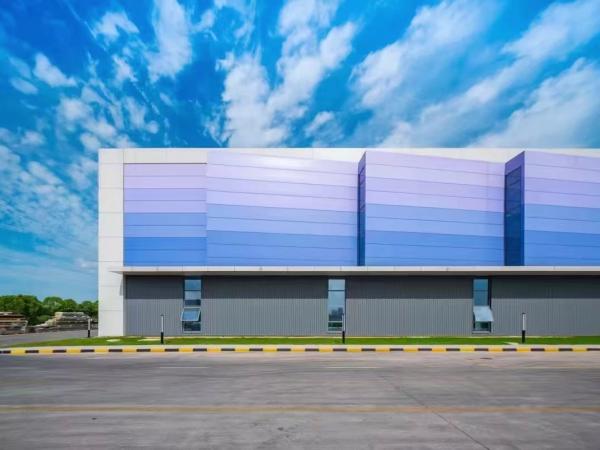
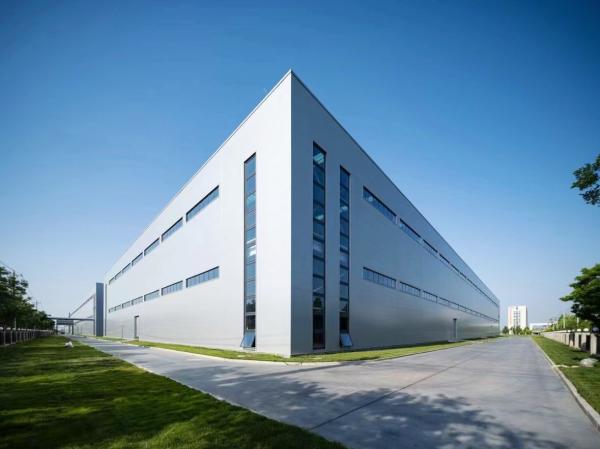
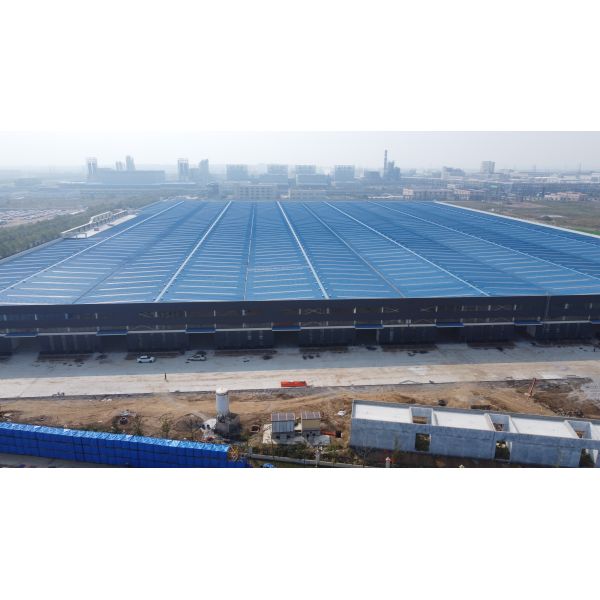
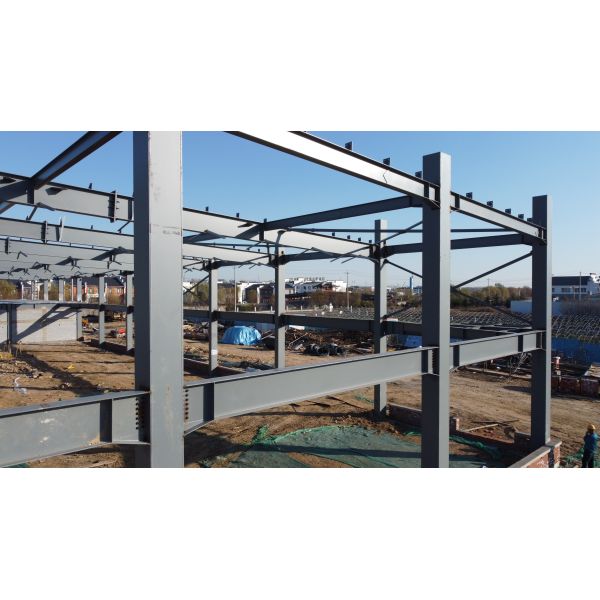
2 Months Fast Construction Steel Structure Warehouse for Manufacturing & Logistics
Product Specifications
Application Fields: Logistics, manufacturing, agriculture, and retail for storing goods, equipment, or raw materials.
Maximum Roof Load: 20+ lb/sq.ft
Frame Type: Portal Frame
Design Parameters: Wind Load, Snow Load, and Earthquake resistance
Working Scope: Design, Fabrication, Installation
Life Span: 30-50 years
Product Overview
Our high-strength prefabricated steel structure warehouse offers a complete solution for industrial storage needs, featuring rapid construction (typically 2 months), durable materials, and professional installation guidance. The portal steel frame design combines steel columns, beams, and bracings to create a fully enclosed building capable of withstanding severe weather conditions including strong winds, heavy rain, and snow loads.
Technical Specifications
| Component |
Specification |
| Dimension |
Customizable length × width × eave height with various roof slopes |
| Type |
Single/double/multi-slope; Single/double/multi-span; Single/double/multi-floor configurations |
| Foundation |
Concrete with steel foundation bolts |
| Column & Beam |
Hot rolled or welded H steel Q355B, high strength bolts connection |
| Bracing |
X or V type bracing made from angle steel or steel pipe |
| Purlin |
Q235B C/Z section steel (C160-300 or Z160-300) |
| Roof & Wall Panel |
Single corrugated steel sheet or sandwich panels with EPS, rock wool, glass wool, or PU insulation |
| Surface Treatment |
Painting or hot dip galvanized |
Key Advantages
- High Strength & Durability: Withstands heavy loads (stacked pallets, machinery) and harsh weather conditions with a 30-50 year lifespan.
- Large Span Design: Supports column-free spans of 20-50 meters for maximum usable space and flexible layouts.
- Cost Efficiency: Lower construction and maintenance costs compared to traditional buildings with good resale value.
- Quick Construction: Prefabricated components reduce build time by 30-50% versus concrete structures.
- Sustainability: 100% recyclable materials with energy-efficient insulation options available.
Design Considerations
- Load Requirements: Calculate static and dynamic loads to determine steel grade and frame design
- Weather Resistance: Select appropriate coatings for corrosion protection based on local climate
- Insulation & Ventilation: Choose panel types to regulate temperature and prevent moisture buildup
- Space Planning: Optimize span width, height, and access points for your operational needs
- Compliance: Meets local building codes for fire resistance, seismic safety, and emergency exits
Quality Control & Packaging
Our comprehensive quality control process includes material inspections before and after fabrication. Our skilled team ensures precision in:
- Measuring, cutting, and welding steel components
- Accurate placement of holes and cleats
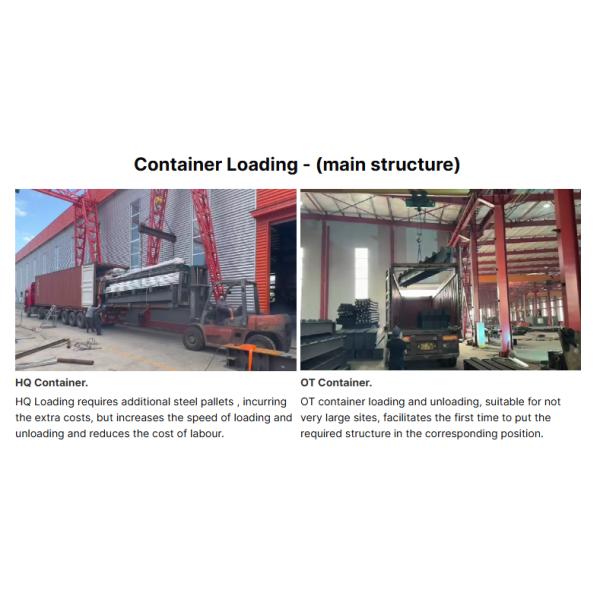
- Careful packaging and loading sequence
- Optional on-site erection services
Frequently Asked Questions
Q: Can I visit your factory before ordering?
A: Yes, we welcome factory visits. We can arrange airport pickup from Qingdao and assist with hotel bookings.
Q: What is your project cooperation process?
A: Our process includes: 1) Receiving your requirements, 2) Free design service, 3) 30% deposit after contract signing, 4) Design confirmation, 5) Production, 6) Optional installation services.
Q: What is the price range for steel warehouses?
A: Prices range from $19-$100+ per square meter depending on size, materials, and design complexity.
Q: Do you provide installation services?
A: We provide detailed construction drawings and manuals. On-site installation is available with the buyer covering travel and accommodation costs.
Q: What anti-rust treatments are available?
A: Options include normal anti-rust paint, epoxy zinc primer, hot-dip galvanization, galvanization+PU finish, or stainless steel (301/304/316).
Q: Why are your prices higher than some competitors?
A: We use premium steel from major mills, smarter designs for safety and economy, durable high-grade components (lasting 10-20 years), and avoid cost-cutting measures that compromise long-term value.