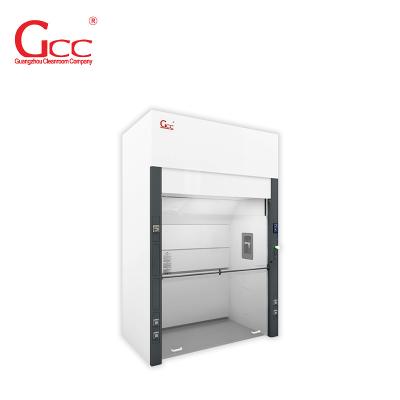
A Stainless Steel Explosion-Proof Fume Hood is a safety device specially designed for chemical laboratories, pharmaceutical workshops, petrochemical plants, and food testing centers. Made of 304 or 316 stainless steel, it resists corrosion from acids, alkalis, and organic solvents, withstands high temperatures, and is equipped with explosion-proof fans, lighting, and switches to prevent accidents caused by flammable gases or dust.
This fume hood not only ensures operator safety but also enhances overall laboratory compliance and a safer working environment.
Key Features
- Explosion-Proof Design:
Equipped with explosion-proof fans and electrical systems to prevent sparks from igniting flammable gases.
- Corrosion Resistant:
Made of stainless steel that resists strong acids, alkalis, and organic solvents, extending the product’s service life.
- Easy to Clean:
Smooth surfaces with no dead corners, making daily cleaning and disinfection simple and efficient.
- Durable Structure:
Fully welded construction with high load-bearing capacity for long-term and reliable use.
- Compliance:
Meets GMP, GLP, and safety standards required by chemical and pharmaceutical industries
Specifications
| Specification |
Description |
| Material |
304 Stainless Steel (general use) / 316 Stainless Steel (highly corrosive environments) |
| Size |
Customizable according to laboratory needs (e.g., 1200/1500/1800mm width) |
| Airflow |
Selected based on lab space and types of gases handled (recommended face velocity ≥0.5 m/s) |
| Explosion-Proof Rating |
Complies with national/international explosion-proof standards (Ex d, Ex e, or ATEX certified) |
| Lighting |
Explosion-proof LED lights, energy-saving and high brightness |
| Electrical System |
Explosion-proof switches and sockets, safe and reliable |
| Optional Accessories |
Sink, gas lines, power outlets, and other add-ons available |
FAQ
Q1. Where is the stainless steel explosion-proof fume hood suitable for use?
A1:Chemical laboratories, pharmaceutical workshops,petrochemical plants, and food testing centers, especially where flammable gases or organic solvents are handled.
Q2. What is the difference between 304 and 316 stainless steel?
A2:304 is suitable for general chemical environments with good corrosion resistance; 316 provides stronger corrosion resistance for highly corrosive acids, alkalis, or harsh environments.
Q3. How to select the right airflow?
A3:Based on laboratory size, workbench dimensions, and the types of gases handled. Recommended face velocity is ≥0.5 m/s.
Q4. How to confirm the explosion-proof rating?
A4:Ensure the fans, lighting, and switches are certified according to national or international explosion-proof standards.
Q5. Can the fume hood be customized?
A5:Yes.Dimensions, material, airflow, and optional features (sink, gas lines, power outlets) can be customized according to laboratory requirements.
Q6. Is after-sales service and certification provided?
A6:It is recommended to choose manufacturers providing CE/ISO certification and complete after-sales maintenance to ensure safe long-term use.