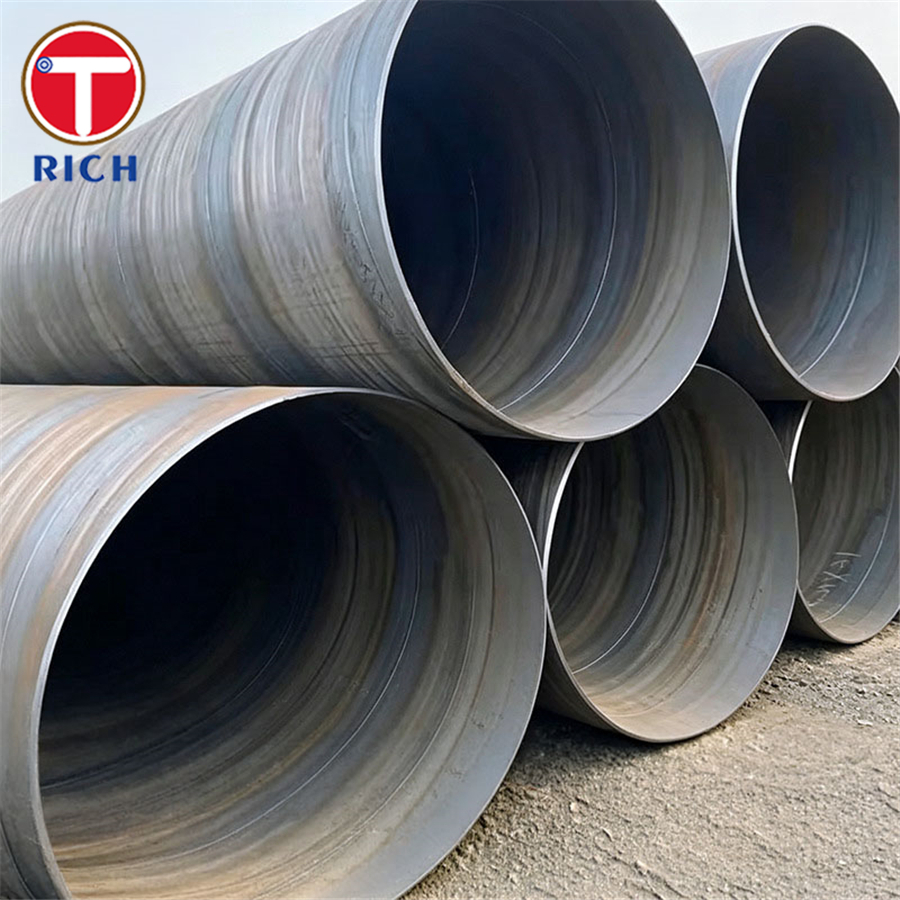
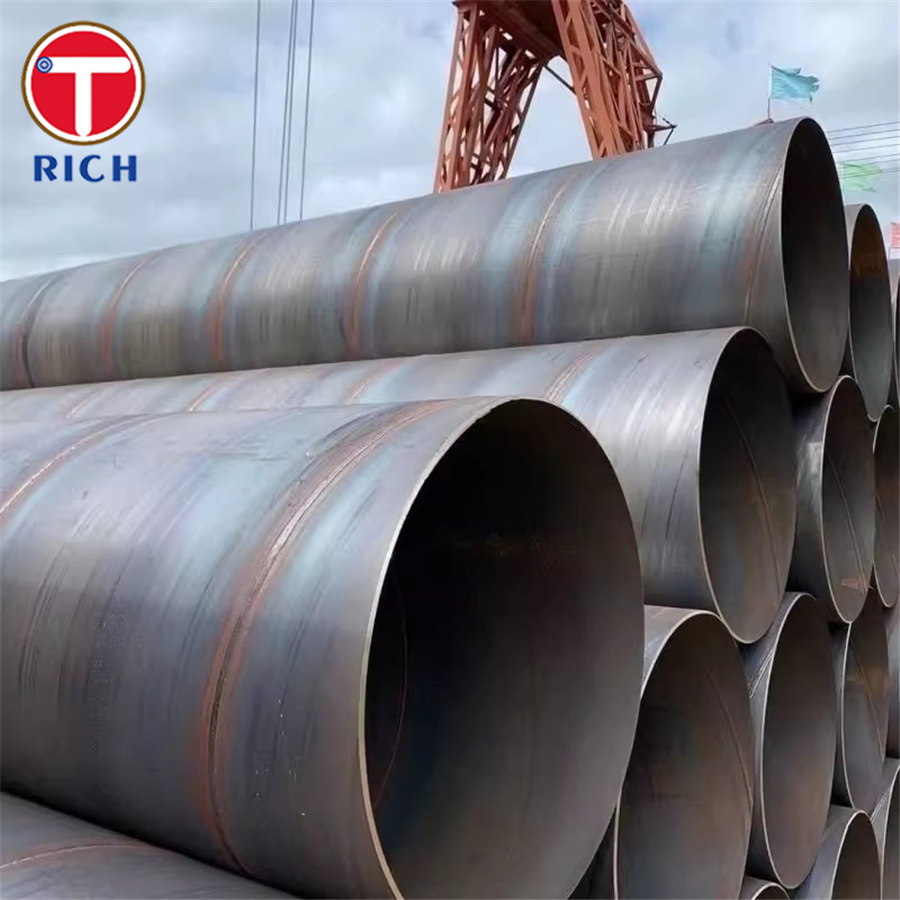
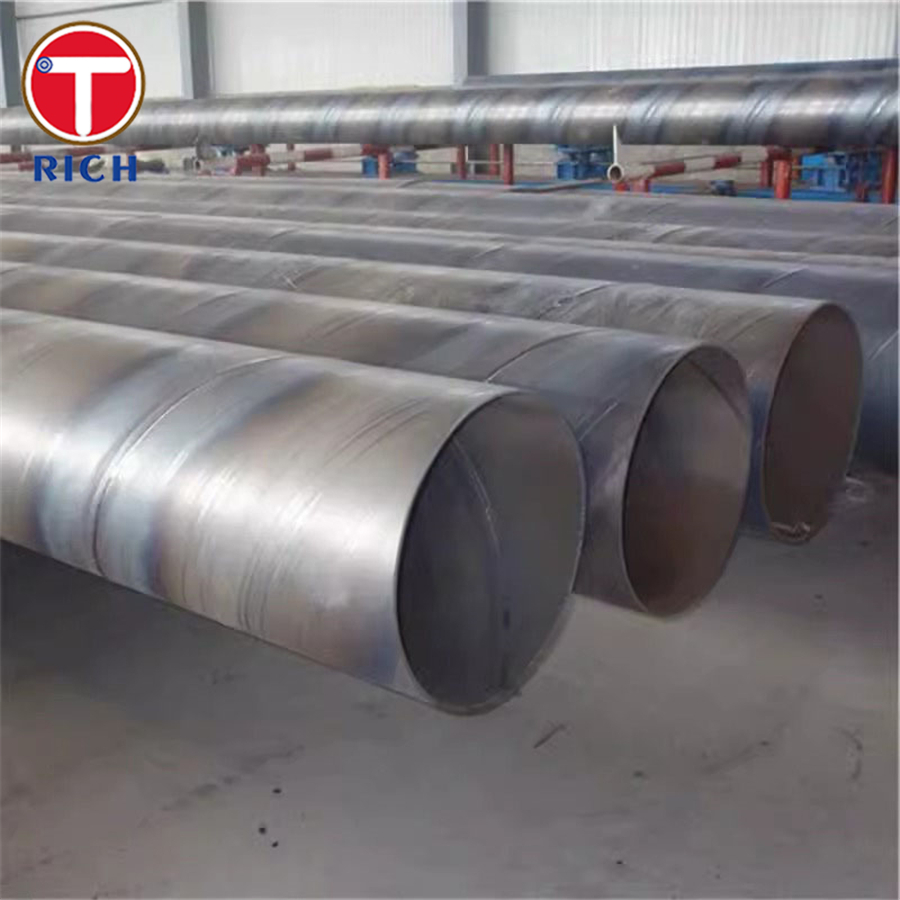
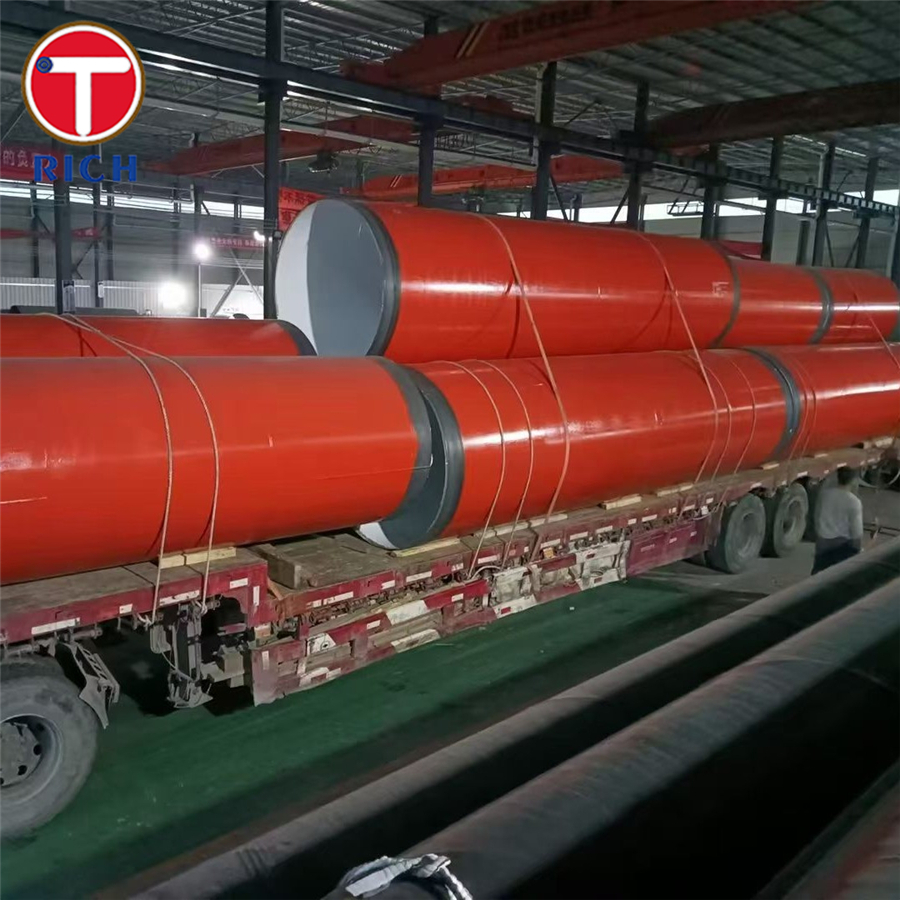
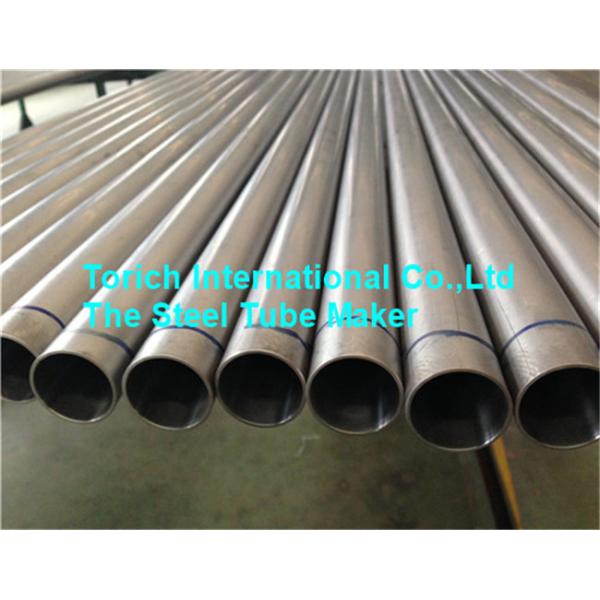
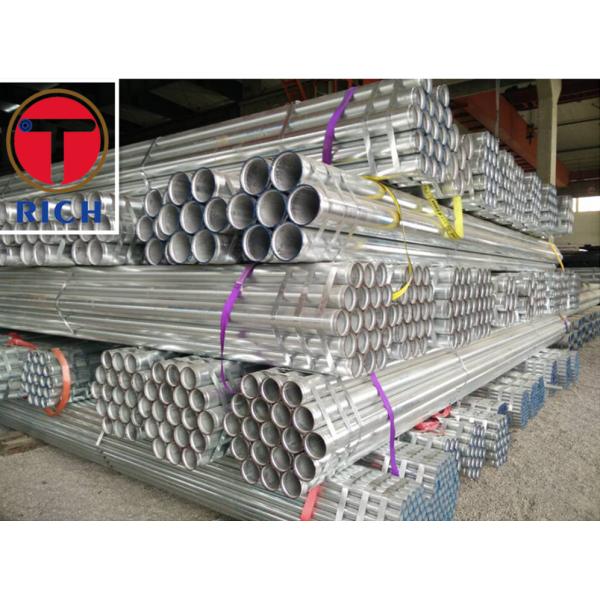
ASTM A252 Grade 2 seamless structural steel pipe is designed primarily for steel pipe pile and foundation engineering where the tubular section functions as a permanent load-bearing member or as a shell for cast-in-place concrete piles. ASTM A252/A252M explicitly covers both welded and seamless pipe piles, so the seamless construction stated in this product title is fully consistent with the standard.
For Grade 2, the specified minimum tensile strength is 415 MPa and the minimum yield strength is 240 MPa. Compared with general-purpose structural tubing, ASTM A252 focuses specifically on piling service, dimensional control, tensile performance, pipe weight, end preparation, traceability, and suitability for foundation installation.
The current active edition is ASTM A252/A252M-26. For project procurement, the exact edition required by the contract or engineering specification should be confirmed before production.
| Item | Specification |
|---|---|
| Product | Seamless Structural Steel Pipe / Steel Pipe Pile |
| Standard | ASTM A252/A252M |
| Grade | Grade 2 |
| Manufacturing Process | Seamless, hot-finished or other qualified seamless process |
| Material Type | Carbon Steel |
| Shape | Round Cylindrical Pipe |
| Outside Diameter | Common engineering range approximately 168.3-914 mm; other dimensions subject to production capability and purchase specification |
| Wall Thickness | Common range approximately 6-50 mm; customized according to structural design |
| Length | 1-12 m standard customized range; project-specific uniform lengths available |
| OD Tolerance | Maximum deviation ±1% of specified outside diameter |
| Wall Thickness Tolerance | Wall thickness at any point shall not be more than 12.5% below specified nominal wall thickness |
| Weight Tolerance | When individual weighing is specified: +15% / -5% from theoretical weight |
| Uniform Length Tolerance | Typically ±25.4 mm for uniform lengths according to ASTM requirements |
| Straightness | Controlled for piling and fabrication requirements; special straightness limits should be stated in the purchase order |
| Surface Condition | As-rolled / black steel surface; shot blasting or protective coating available when specified |
| End Condition | Plain end, machine-cut or flame-cut; beveled ends available when specified |
| Bevel | Typically 30° +5° / -0° when beveling is ordered |
| Heat Treatment | Not normally mandatory under ASTM A252; supplied according to manufacturing route and project requirement |
| Inspection | Dimensional inspection, visual inspection, tensile testing and chemical analysis |
| Identification | Heat number, manufacturing method, size, wall thickness, grade and standard identification as required |
| Certification | Mill Test Certificate / inspection documentation according to purchase order |
ASTM A252 Grade 2 pipe provides a minimum yield strength of 240 MPa and minimum tensile strength of 415 MPa, giving the section sufficient resistance for axial loading and installation stresses encountered in conventional pile foundations.
For nominal wall thicknesses of 7.9 mm or greater, Grade 2 requires a minimum elongation of 25% when measured over a 50.8 mm gauge length. For thinner walls, the minimum required elongation decreases according to the ASTM wall-thickness formula rather than being treated as one fixed value.
The outside diameter tolerance is limited to ±1%. This is important where pile sections must be aligned, spliced, fitted with pile shoes, connected to driving equipment or assembled with structural attachments.
The minimum permissible wall at any point is 87.5% of the specified nominal wall thickness. Therefore, a specified 20.0 mm wall, for example, must not locally fall below 17.5 mm under the standard wall-thickness tolerance.
Seamless construction eliminates a longitudinal or spiral weld seam from the pipe body. This can be useful for engineering projects where the designer, fabricator or purchaser specifically requires a seamless tubular section.
One of the main concerns in pile procurement is whether the actual wall thickness remains sufficient for the calculated section area, axial resistance and corrosion allowance.
Production can be controlled against the ASTM requirement that the measured wall thickness at any point must not be more than 12.5% below nominal. Thickness inspection can be incorporated into final dimensional verification, while tighter project-specific tolerances can be agreed before production where structural calculations require them.
Professional engineering buyers frequently require evidence that delivered pipe corresponds to the specified Grade 2 mechanical properties rather than relying only on nominal grade marking.
Production lots can therefore be identified by heat number and matched with chemical and tensile test records. Grade 2 acceptance is based on a minimum yield strength of 240 MPa and minimum tensile strength of 415 MPa, with elongation evaluated according to the applicable wall thickness.
Pile contractors often need controlled lengths because excessive site cutting increases labor, material loss and alignment work during field splicing.
Uniform lengths can be produced according to the project cutting schedule, including customized lengths within the manufacturing range. Plain cut, machine-cut and beveled ends can also be specified according to the intended field joining or pile installation method.
Equivalent grades or standards should not be substituted solely on the basis of similar strength. Chemical requirements, dimensional tolerances, manufacturing method, testing and inspection rules must also be reviewed by the project engineer.
ASTM A252 Grade 2 seamless pipe can be used as a driven steel pipe pile beneath a bridge pier foundation. The pipe transfers vertical structural load through weak upper soil layers into denser bearing strata or develops capacity through shaft friction along the embedded pile length.
Depending on the foundation design, the pile can remain hollow, be partially filled, or serve as a permanent steel shell for reinforced concrete. Final diameter, wall thickness, pile length, corrosion allowance and pile-tip configuration must be determined from geotechnical and structural design calculations.
ASTM A252 is unusual compared with many carbon steel pipe specifications because the standard historically does not define five separate chemistry-based material grades.
ASTM A252 contains only three strength grades: Grade 1, Grade 2 and Grade 3. Under the established ASTM A252 requirements, phosphorus is the principal explicitly restricted chemical element, with a maximum of 0.050%. Carbon, manganese, silicon and sulfur limits commonly shown on commercial websites should not automatically be presented as ASTM A252 mandatory limits unless they are supported by the specified edition, agreed steelmaking specification or purchase order.
For technical accuracy, five invented ASTM A252 grades should not be created.
| ASTM A252 Grade | C | Mn | Si | P Max. | S |
|---|---|---|---|---|---|
| Grade 1 | Not specifically limited by ASTM A252 | Not specifically limited | Not specifically limited | 0.050% | Not specifically limited |
| Grade 2 | Not specifically limited by ASTM A252 | Not specifically limited | Not specifically limited | 0.050% | Not specifically limited |
| Grade 3 | Not specifically limited by ASTM A252 | Not specifically limited | Not specifically limited | 0.050% | Not specifically limited |
| Grade | Minimum Tensile Strength | Minimum Yield Strength | Minimum Elongation in 50.8 mm for Wall ≥7.9 mm | Minimum Elongation in 203.2 mm |
|---|---|---|---|---|
| ASTM A252 Grade 1 | 345 MPa | 205 MPa | 30% | 18% |
| ASTM A252 Grade 2 | 415 MPa | 240 MPa | 25% | 14% |
| ASTM A252 Grade 3 | 455 MPa | 310 MPa | 20% | Not specifically required |