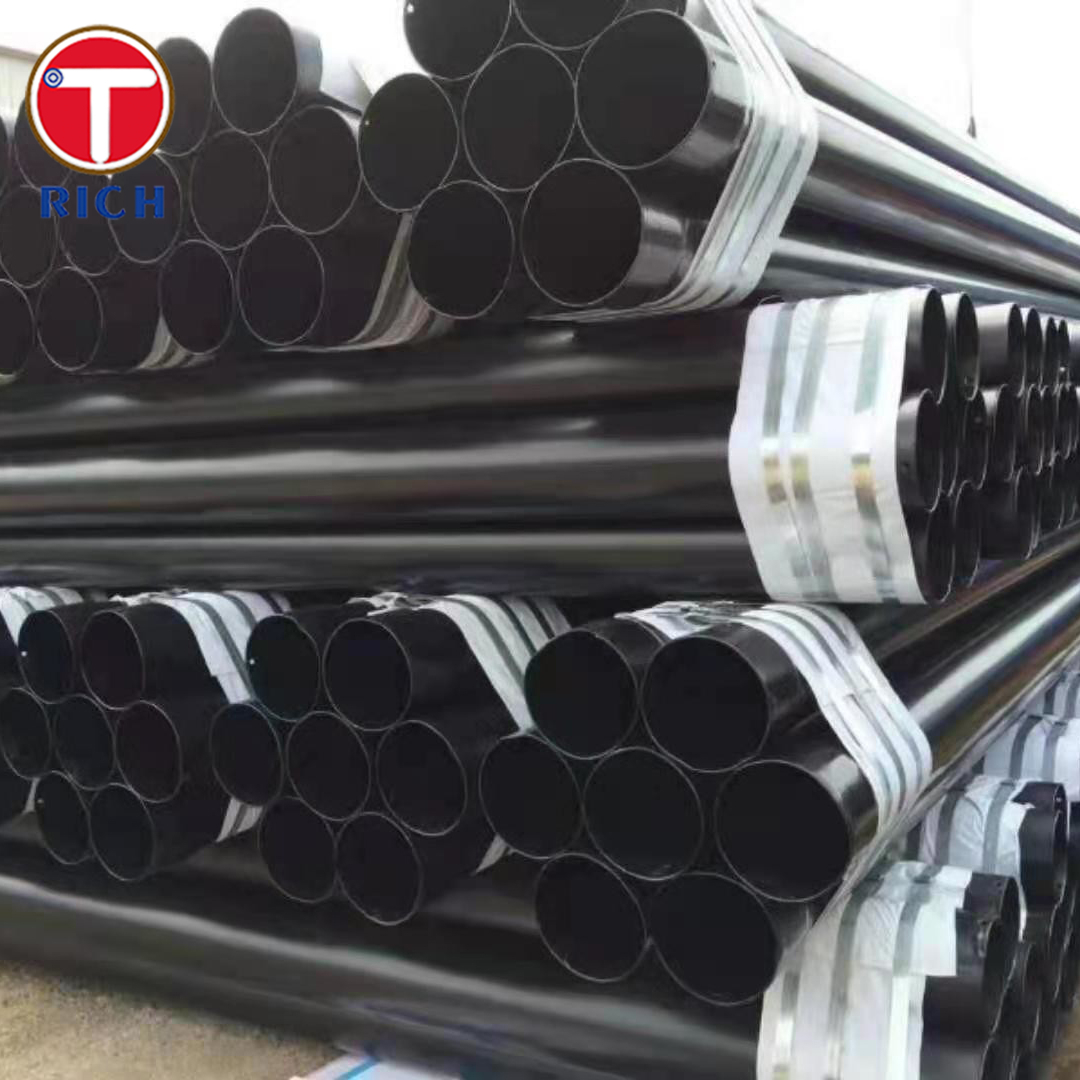
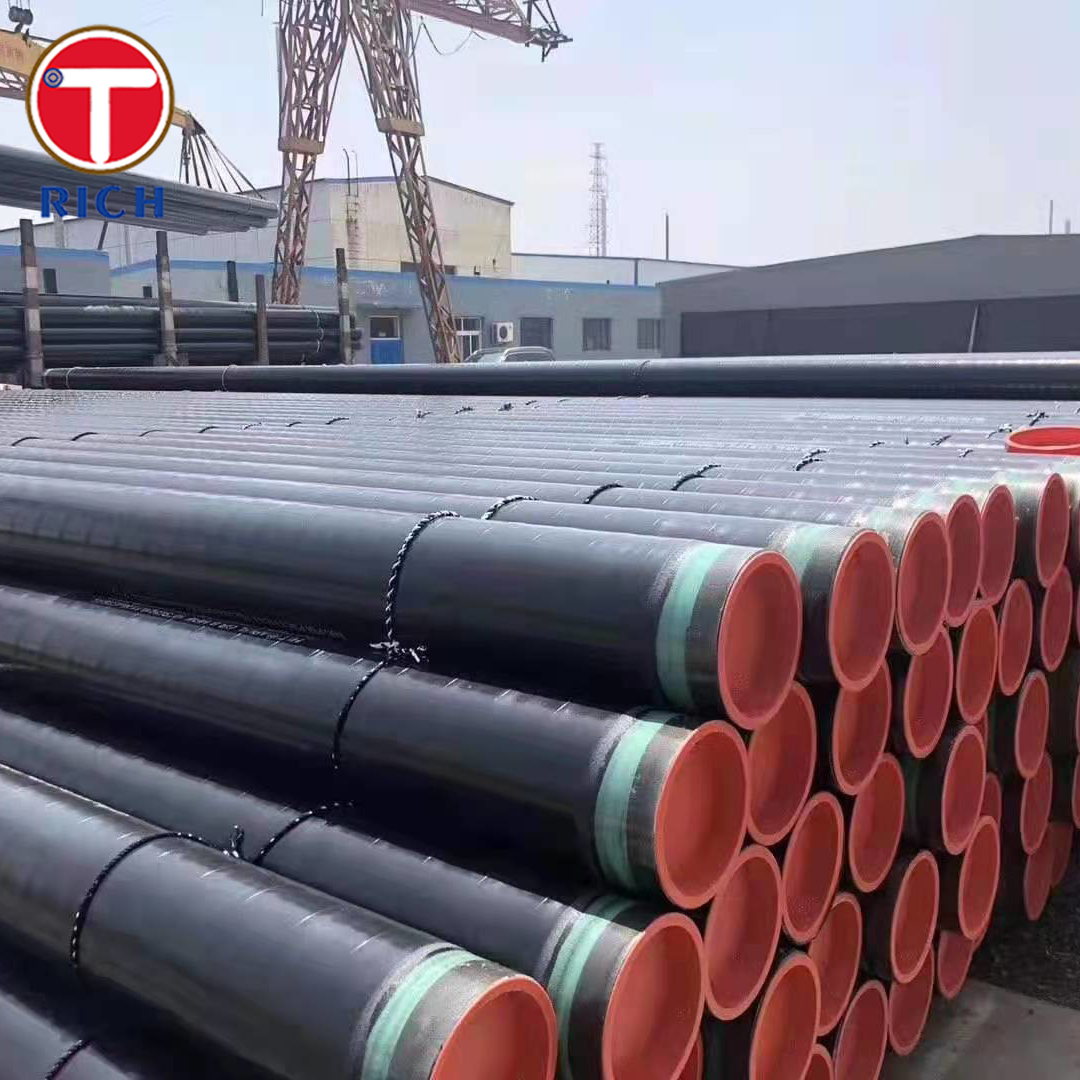
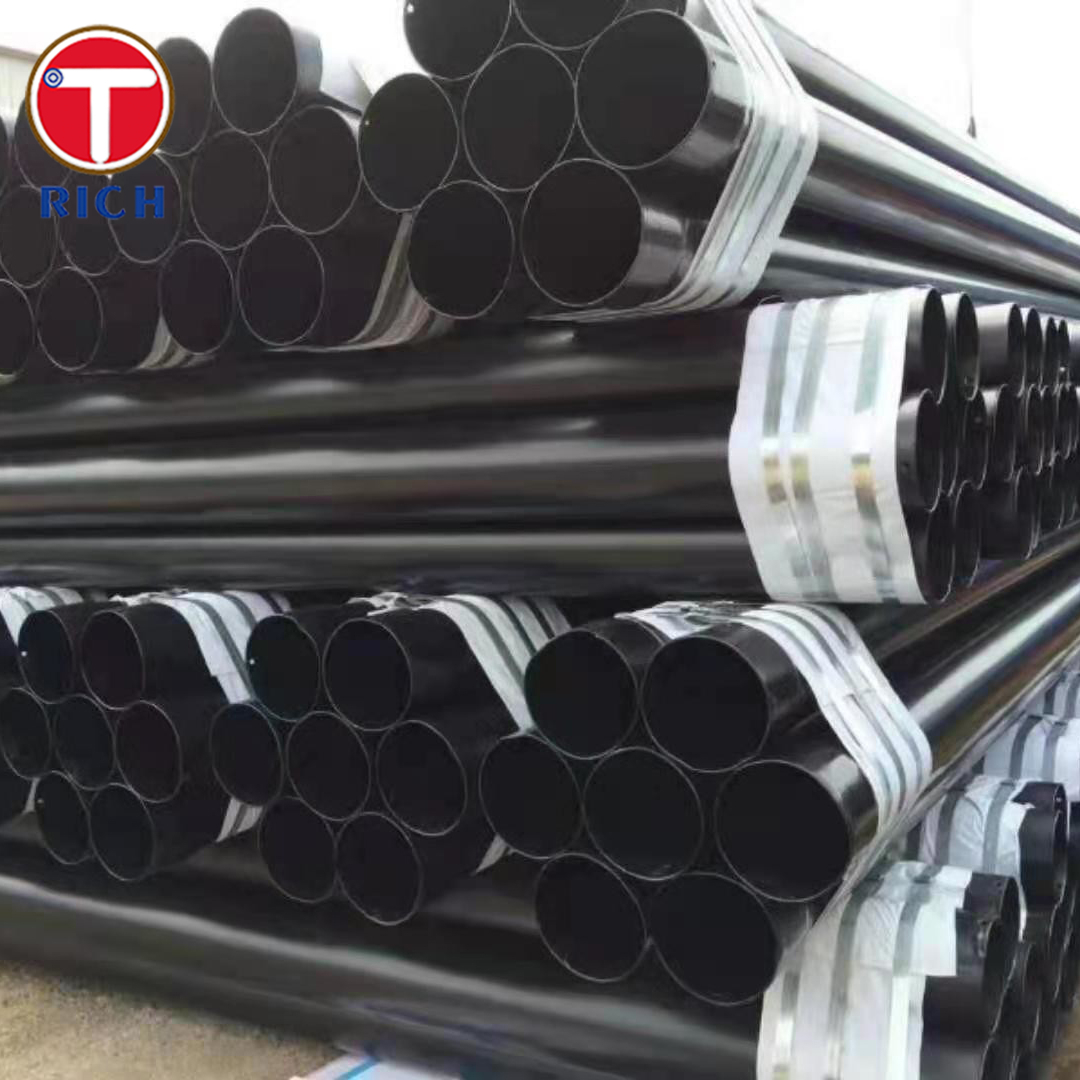
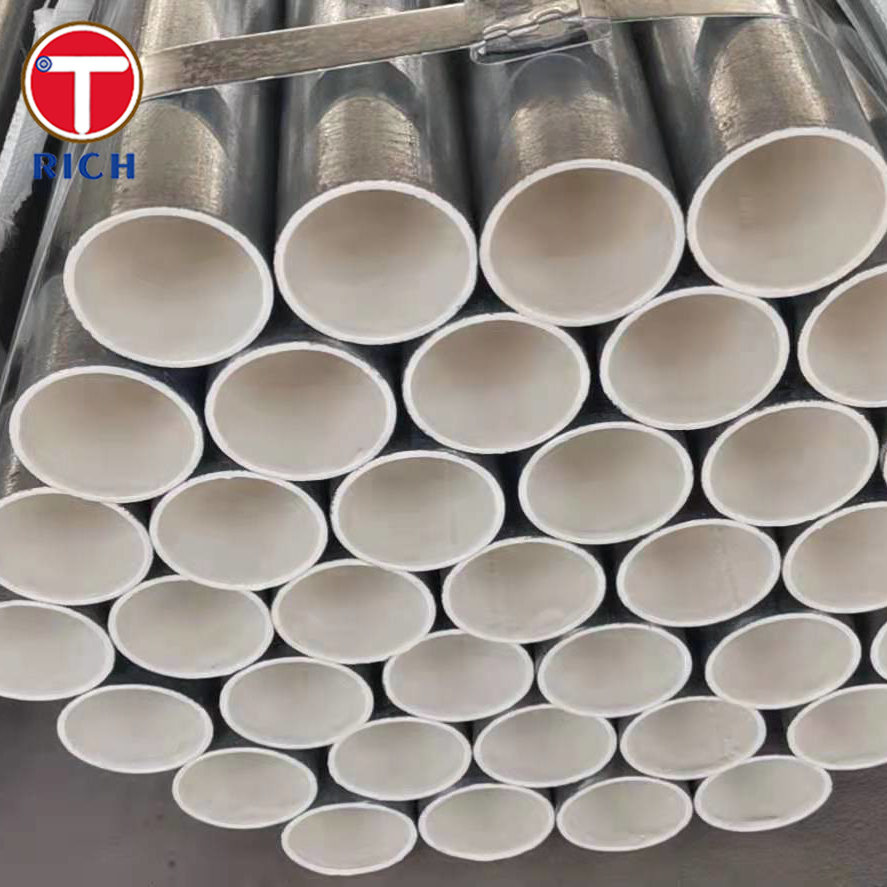
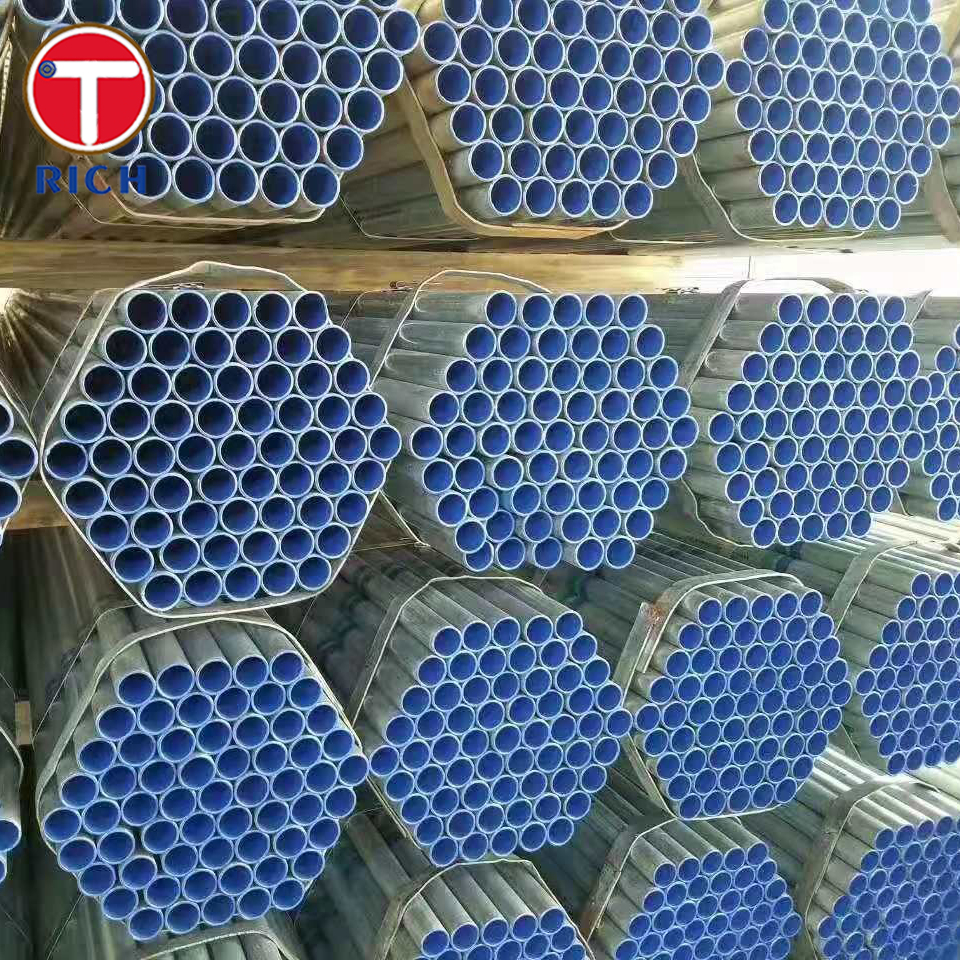
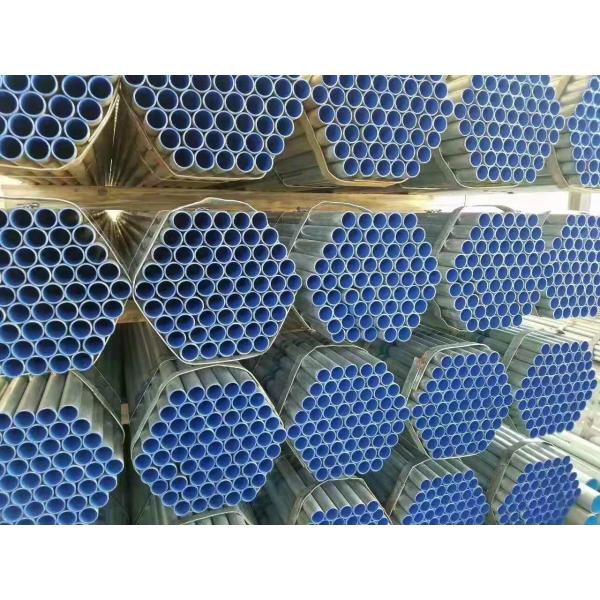
Flame Retardant Plastic Coated Q235 Steel Pipe for Mining Industry
Flame Retardant Plastic Coated Q235 Steel Pipe is designed for underground mining pipeline systems where corrosion resistance, coating adhesion, flame-retardant performance, antistatic properties, and mechanical reliability are required. The pipe combines a Q235 carbon steel load-bearing base pipe with a polyethylene or epoxy-based protective coating. Typical mining service includes underground water supply and drainage, where the steel substrate provides pressure-bearing strength while the plastic coating isolates the steel surface from moisture and corrosive mine environments.
For Chinese mining projects, the steel base pipe can be manufactured according to GB/T 3091, while coating quality may be evaluated with reference to CJ/T 120-2016. Mining-specific flame-retardant and antistatic requirements should be confirmed against the applicable mine-safety specification and project approval requirements. CJ/T 120-2016 specifies requirements including coating adhesion, pinhole inspection, bending or flattening performance, and impact resistance.
Specifications
| Item |
Specification |
| Product |
Flame Retardant Plastic Coated Steel Pipe |
| Base Material |
Carbon structural steel |
| Main Grade |
Q235A / Q235B |
| Alternative Grades |
Q195, Q215A, Q215B, Q275A, Q275B subject to design requirements |
| Base Pipe Standard |
GB/T 3091 |
| Coating Reference |
CJ/T 120-2016 |
| Mining Safety Reference |
MT/T 181-1988 or applicable project-specific mining safety requirements |
| Manufacturing Method |
ERW longitudinal welded steel pipe; other base-pipe constructions available by agreement |
| Nominal Size |
Typically DN15-DN2000, subject to base pipe and coating process |
| Outside Diameter |
According to specified base-pipe standard and project drawing |
| Wall Thickness |
According to pressure class, diameter and base-pipe standard |
| Length |
1-12 m, customizable |
| Length Tolerance |
According to specified base-pipe standard or purchase agreement |
| Straightness |
For DN >150 coated pipe, curvature can be controlled to ≤0.2% of total pipe length under CJ/T 120-2016 reference requirements |
| Coating Material |
PE or epoxy-based coating; flame-retardant/antistatic formulation available for mining service |
| Coating Position |
Internal coating, external coating, or internal and external coating |
| Surface Preparation |
Shot blasting or equivalent surface preparation before coating |
| Surface Preparation Level |
Sa 2½ commonly specified for larger coated base pipes |
| Surface Profile |
Approximately 40-100 μm under CJ/T 120-2016 reference preparation requirements |
| PE Coating Adhesion |
≥30 N/cm when evaluated according to CJ/T 120-2016 |
| Heat Treatment |
Normally supplied as welded condition; weld seam or full-body heat treatment can be specified when required |
| End Connection |
Flanged, grooved, plain end or other engineered connection |
| Color |
Customizable according to project identification requirements |
Main Features
Flame-Retardant and Antistatic Coating
For underground mine environments, ordinary industrial PE coating should not automatically be treated as mining-grade coating. The polymer formulation can incorporate flame-retardant and conductive or antistatic components, with final safety performance verified according to the applicable mining specification.
MT/T 181-1988 is a long-established Chinese reference for safety-performance testing of plastic materials used underground in coal mines, particularly flame-retardant and electrical-conductivity-related properties. Mining coated composite pipes are commonly evaluated through a combination of coating, base-pipe and mining-safety requirements rather than relying on a general water-pipe standard alone.
High Coating Adhesion
Coating adhesion is critical because separation between the polymer layer and steel substrate allows moisture to penetrate beneath the coating.
For polyethylene coating evaluated according to CJ/T 120-2016:
PE coating adhesion: ≥30 N/cm
Proper surface preparation is required before coating. For larger base pipes, the referenced standard requires rust removal to approximately Sa 2½ and an anchor profile of approximately 40-100 μm before coating.
Coating Integrity Under Mechanical Deformation
A mining pipe may experience handling impact, installation loads and local deformation. CJ/T 120-2016 therefore includes mechanical integrity tests for the coating.
For nominal sizes up to DN50, coated pipes are subjected to bending evaluation. For sizes above DN50, flattening evaluation is used. After the specified test, the coating should show no cracking or peeling. An impact test is also required without coating cracking or delamination.
Pinhole-Controlled Corrosion Protection
The coating is intended to isolate the Q235 steel substrate from mine water and other corrosive media. The coated surface can be checked using an electric-spark detector to identify discontinuities or pinholes before shipment. CJ/T 120-2016 specifically includes this inspection method for coating integrity.
Our Advantages
Controlled Surface Preparation Before Coating
A frequent technical concern with plastic-coated steel pipe is premature delamination caused by insufficient removal of rust, oil, mill scale or oxidation products.
The base pipe is therefore prepared before coating by shot blasting or an equivalent process. For relevant large-diameter coated pipe, surface cleanliness can be controlled to Sa 2½ with an anchor profile around 40-100 μm before coating. This provides a mechanically suitable surface for coating bonding rather than applying polymer directly over untreated steel.
Coating Adhesion and Pinhole Inspection Can Be Defined in the Purchase Specification
Professional purchasers normally need measurable coating acceptance criteria rather than descriptions such as "strong adhesion."
For PE-coated pipe, an adhesion requirement of ≥30 N/cm can be specified with reference to CJ/T 120-2016. Electric-spark pinhole inspection, coating thickness measurement, bending or flattening testing and impact testing can also be included in the inspection plan.
Base Pipe and Mining Safety Requirements Are Controlled Separately
A coated mining pipe has two different engineering functions: the steel tube carries pressure and mechanical load, while the coating provides corrosion protection and contributes to mine-safety performance.
For this reason, the purchase specification can separately define GB/T 3091 requirements for the steel base pipe, CJ/T 120-2016 requirements for coating performance, and the applicable mining flame-retardant and antistatic testing requirements. This avoids incorrectly using a single coating standard as evidence of complete underground mining suitability.
Execution Standards
| Standard System |
Reference Standard |
Scope |
| GB |
GB/T 3091-2025 |
Welded steel pipes for low-pressure fluid delivery; suitable reference for the Q235 steel base pipe |
| CJ |
CJ/T 120-2016 |
Plastic-coated composite steel pipe requirements including coating preparation, adhesion and integrity testing |
| MT |
MT/T 181-1988 |
Reference for flame-retardant and safety performance of plastic materials used underground in coal mines |
| ASTM |
ASTM A53/A53M |
Common reference for welded or seamless carbon steel pipe for mechanical and pressure applications |
| EN |
EN 10255 |
Non-alloy steel tubes suitable for welding and threading |
| JIS |
JIS G3452 |
Carbon steel pipes for ordinary piping |
| GOST |
GOST 3262 |
Steel water and gas pipes |
Application
Underground Mine Drainage Pipeline
A typical application is an underground mine drainage pipe carrying accumulated groundwater from working areas toward the mine drainage system.
The Q235 steel substrate provides mechanical strength and internal-pressure capacity, while the plastic coating reduces direct contact between the steel surface and corrosive mine water. Where the pipe is installed in a coal-mine environment, flame-retardant and antistatic performance of the coating should be qualified according to the applicable mining safety requirements before underground use.
Chemical Composition
| Grade |
C Max. % |
Si Max. % |
Mn Max. % |
P Max. % |
S Max. % |
| Q195 |
0.12 |
0.30 |
0.50 |
0.035 |
0.040 |
| Q215A |
0.15 |
0.35 |
1.20 |
0.045 |
0.050 |
| Q215B |
0.15 |
0.35 |
1.20 |
0.045 |
0.045 |
| Q235A |
0.22 |
0.35 |
1.40 |
0.045 |
0.050 |
| Q235B |
0.20 |
0.35 |
1.40 |
0.045 |
0.045 |
Mechanical Properties
| Grade |
Minimum Yield Strength, t ≤16 mm |
Minimum Yield Strength, t >16 mm |
Minimum Tensile Strength |
Minimum Elongation |
| Q195 |
195 MPa* |
185 MPa* |
315 MPa |
According to applicable specimen requirement |
| Q215A |
215 MPa |
205 MPa |
335 MPa |
20% |
| Q215B |
215 MPa |
205 MPa |
335 MPa |
20% |
| Q235A |
235 MPa |
225 MPa |
370 MPa |
20% |
| Q235B |
235 MPa |
225 MPa |
370 MPa |
20% |
Frequently Asked Questions
Q: Are you trading company or manufacturer?
A: Manufacturer, also can do trading.
Q: How long is your delivery time?
A: Generally speaking, it is 10-15 days if the goods are in stock, or it is 30-40 days if the goods are not in stock, it is according to quantity.
Q: Do you provide samples? Is it free or extra?
A: Yes, we could offer the sample for free charge but need pay the cost of freight.
Q: What is your terms of payment?
A: Payment ≤ 2000 USD, 100% in advance. Payment ≥ 2000 USD, 30% T/T in advance, balance before shipment. If you have another question, please feel free to contact with me.