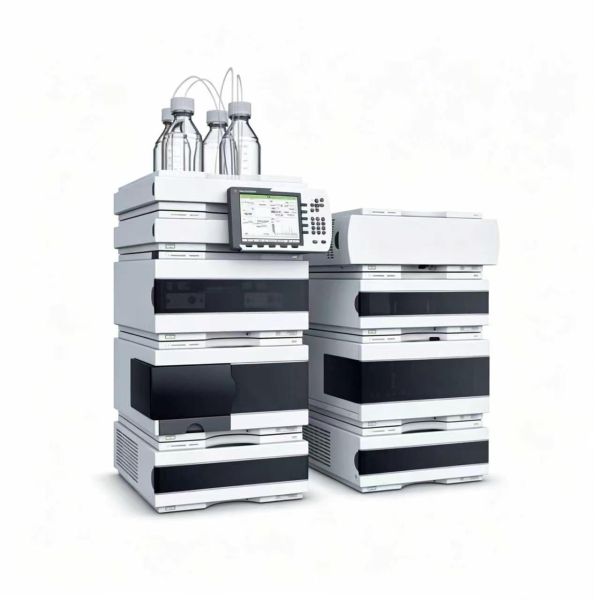
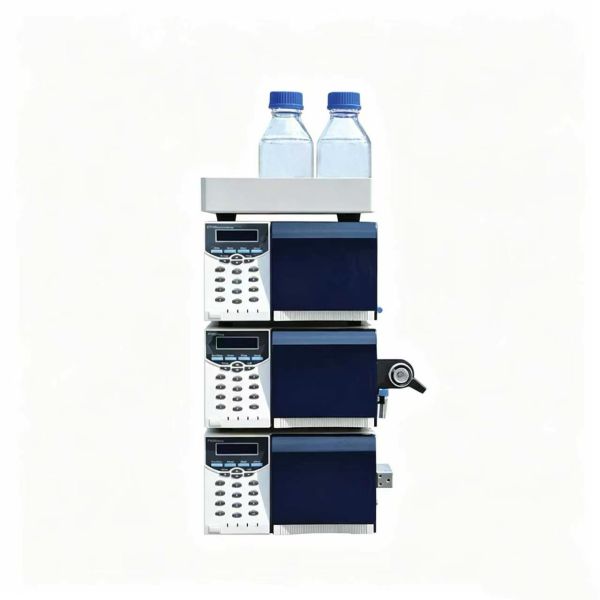
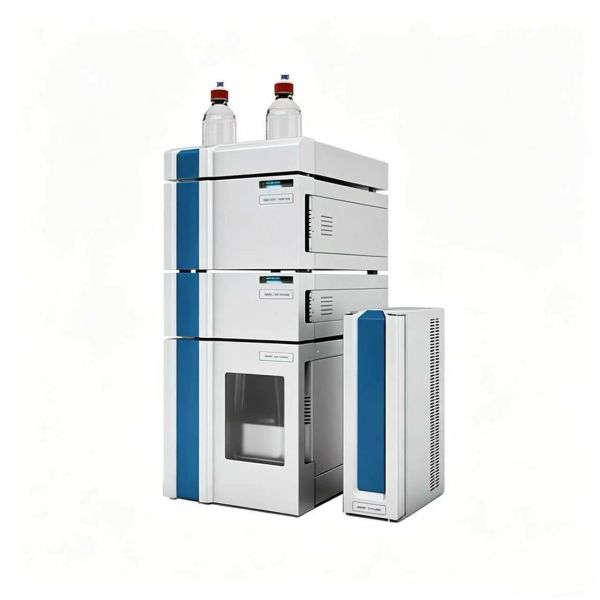
Specifications
Brand Name :
Echo
Model Number :
Echo
Certification :
CE/ISO
Place of Origin :
China
MOQ :
1 Set
Price :
Contact Us for Pricing
Payment Terms :
T/T
Supply Ability :
50+ Sets per Month
Delivery Time :
15–45 Days
Packaging Details :
Export-Standard Plywood Case
Wavelength Range :
190-800 nm
Number of Diodes :
512
Spectral Resolution :
1.2 nm
Acquisition Rate :
Up to 250 Hz
Baseline Noise :
< ±3 µAU (254 nm, 1 s time constant)
Flow Cell Volume :
1.7 µL
Description

High-Sensitivity Diode Array Detector for HPLC Peak Purity and Identity Confirmation

Product Overview

Our diode array detector (DAD) delivers full-spectrum UV-Vis acquisition from 190 to 800 nm at 250 Hz with a 512-element photodiode array and a deuterium/tungsten dual-lamp source. This DAD enables automated peak purity analysis, library spectrum matching, and multi-wavelength quantitation in a single run, achieving baseline noise below ±3 µAU. With its fiber-optic flow cell technology, temperature-insensitive optics, and built-in holmium oxide wavelength verification, the detector is the authoritative answer for identity confirmation in pharmaceutical QC and forensic toxicology.

Cause

Absorbance detection at a single wavelength misses co-eluting impurities that differ in UV profile. When a method monitors 254 nm only, a degradation peak absorbing at 310 nm can hide under the main API peak, leading to falsely passed purity tests. Pharmacopoeias now mandate peak purity checks via DAD for all stability-indicating methods. Using a VWD when DAD is required risks a regulatory observation. Additionally, older DADs suffer from baseline drift with temperature fluctuations and lose sensitivity in the deep UV (<210 nm), where many APIs and mobile-phase additives absorb.

Solution

Our DAD uses a fiber-optic flow cell coupling: the UV light travels through a 10 mm, 1.7 µL illuminated volume cell via fiber optic guiding, with the PDA chip thermally isolated from the lamp housing. This configuration slashes baseline drift to <0.5 mAU/hour. The dual-lamp design provides high energy across the entire range—deuterium for UV, tungsten for visible. The instrument auto-calibrates wavelength accuracy against the holmium oxide filter daily. Acquired spectra (1.2 nm resolution) are compared in real-time with a user-built or commercial spectral library. The peak purity algorithm reconstructs absorbance ratio chromatograms, flagging any impurity with a sip below threshold.

Specifications

Parameter Specification
Wavelength Range 190–800 nm
Number of Diodes 512
Spectral Resolution 1.2 nm
Acquisition Rate Up to 250 Hz
Baseline Noise < ±3 µAU (254 nm, 1 s time constant)
Drift < 0.5 mAU/h after warm-up
Flow Cell 10 mm pathlength, 1.7 µL volume, 50 bar max
Light Source Deuterium + tungsten, pre-aligned cartridge
Wavelength Accuracy ±0.5 nm, auto-calibrated
Communication Ethernet, analog output
Software Features Peak purity, 3D maps, spectral library match

Application

  • API peak purity testing in dru g substance release

  • Forced degradation study spectral profiling

  • Forensic dru g identification using UV library search

  • Polyphenol and flavonoid fingerprinting in botanicals

  • Cleaning validation with multi-wavelength quantification

  • Extractables and leachables screening

How It Works

The polychromatic light beam passes through the flow cell, where it is absorbed by eluting analytes. The transmitted light is diffracted by a holographic grating onto the 512-element array. Each diode integrates current proportional to the light intensity in its narrow wavelength band, generating a full spectrum every 4 ms. The software constructs a 3D data cube (absorbance vs. time vs. wavelength) and slices it to produce both chromatograms at user-specified wavelengths and UV spectra for any time point. The peak purity algorithm compares absorbance spectra across the peak; a perfect match gives a purity factor of 1.0.

How To Choose

Select the flow cell based on your LC system: standard 10 mm path for conventional and UHPLC, 60 mm extended path for low-concentration trace analysis. The data acquisition rate must exceed your peak width: 250 Hz can accurately model a 0.5-second UHPLC peak. Ensure the lamp envelope includes your wavelength of interest—if quantifying at 195 nm, a high-purity nitrogen purge prevents ozone build-up. We can benchmark the DAD with your current method’s challenging impurity pair to demonstrate resolution of co-eluting peaks by spectral contrast.

FAQ

Q1: How often should the lamps be replaced?
A: Deuterium lamp lifetime is typically 2,000 hours, tungsten 4,000 hours. The software tracks lamp hours and warns when intensity drops below 70% of the reference.

Q2: Can I build a custom spectral library?
A: Yes, our CDS allows you to create and store spectra with retention times and molecular weights. Libraries can be exported/imported as XML for multisite use.

Q3: How do I verify that peak purity results are valid?
A: Always check the purity angle vs. threshold plot. We recommend injecting a known co-eluting mix quarterly to confirm the algorithm sensitivity.

Q4: Is the flow cell easy to clean?
A: The fiber-optic cell can be flushed in forward or reverse direction. We supply a cleaning kit with 0.1M nitric acid and organic flush protocols.

Send your message to this supplier
Send Now

High Sensitivity Diode Array Detector Robust Dad Detector Easy Operation For HPLC

Ask Latest Price
Brand Name :
Echo
Model Number :
Echo
Certification :
CE/ISO
Place of Origin :
China
MOQ :
1 Set
Price :
Contact Us for Pricing
Contact Supplier
High Sensitivity Diode Array Detector Robust Dad Detector Easy Operation For HPLC

Echo Extraction Inc

Verified Supplier
1 Years
suzhou
Business Type :
Distributor/Wholesaler, Agent, Exporter
Total Annual :
2,000,000-USD 5,000,000
Employee Number :
15~30
Certification Level :
Verified Supplier
Contact Supplier
Submit Requirement