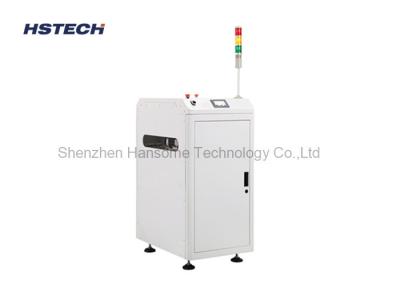
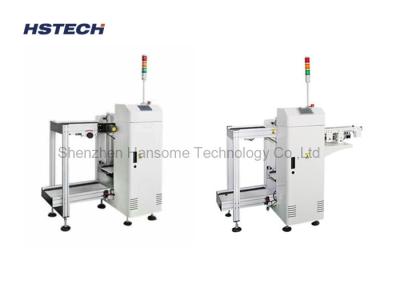
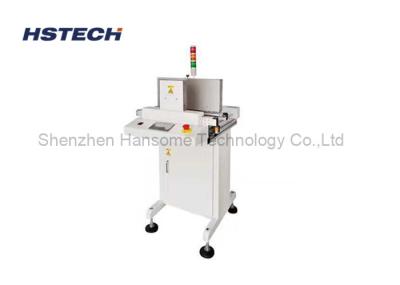
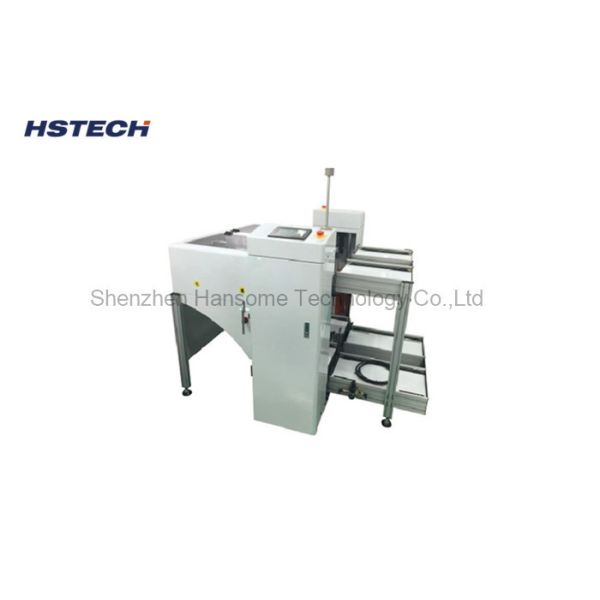
Touch screen control panel PCB Board Handling Equipment PCB Shuttle Conveyor
Introduce
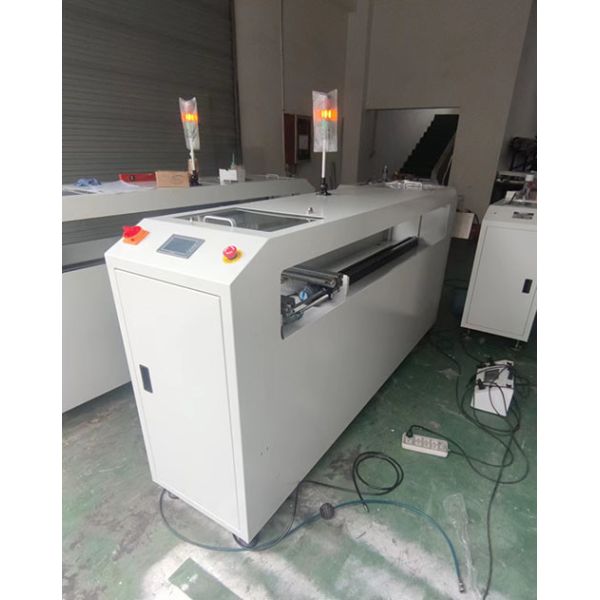
A PCB Shuttle Conveyor is a specialized conveyor system designed to facilitate the efficient transport of printed circuit boards (PCBs) within manufacturing environments. This type of conveyor is particularly useful in assembly lines where flexibility, space efficiency, and quick adjustments are essential.
Features
- 1, Module safety enclosed design.
- 2, Use stepper motor.
- 3, Stable,balanced, and precision moving.
- 4, Smooth and parallel width adjustment.
- 5, PCB transporting direction follow customer requirement.
- 6, Touch screen control panel.
- 8,SMEMA compatible.
Specification
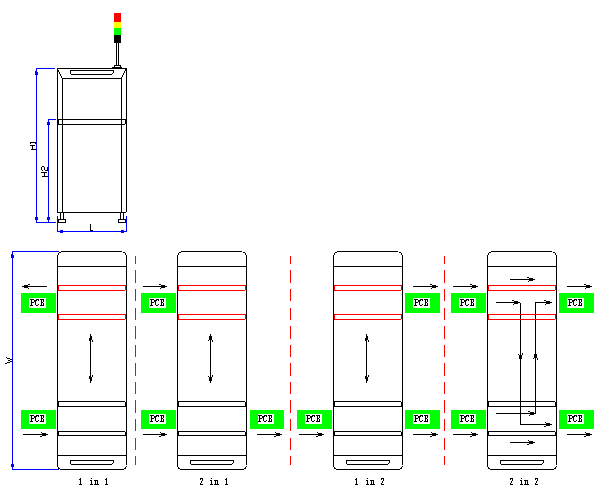
| Function | This unit used to redirect PCB flow to different channels, from 2 line to 1 line, or from 1 line to 2 lines. |
| Model | HS-PYJ250 |
| Transport height | 910±20mm |
| Translation distance | Standard 2200mm(1~4th rail) or customized |
| Translation time | Customized |
| Translation method | Stepper motor+conveyor belt |
| Rail fixed | 1st and 4th rail fixed |
| Suitable PCB size | 50*50~400*250mm |
| Transfer direction | L-R, or R-L |
| PCB transfer mode | 2 in 1 out, 1 in 2 out, or 2 in 2 out. |
| Air pressure | 4-6bar |
| PCB thickness | Min 0.4mm |
| Machine dimension | 600*2600*1200mm |
| Signal | SMEMA |
Applications
- PCB Assembly Lines:
- Used to transport PCBs between different stages of assembly, such as soldering, component placement, and inspection.
- Testing Stations:
- Facilitates the movement of PCBs to and from testing equipment, ensuring efficient quality control processes.
- Rework Stations:
- Can shuttle PCBs to rework areas for repairs or modifications, streamlining the workflow.
- Storage and Logistics:
- Assists in managing the flow of PCBs within manufacturing facilities, ensuring they are readily available for the next processing stage.
Benefits
- Increased Efficiency:
- Reduces manual handling, speeding up production processes and enhancing overall efficiency.
- Improved Workflow:
- Enhances the flow of materials between production stages, minimizing potential bottlenecks and downtime.
- Space Optimization:
- The compact design allows for better use of available space, contributing to a more organized manufacturing environment.
- Flexibility:
- The ability to move PCBs in various directions allows for adaptable production layouts, accommodating changes as needed.
- Enhanced Quality Control:
- Consistent transport helps maintain the integrity of PCBs, reducing the risk of damage during handling.
Product details: