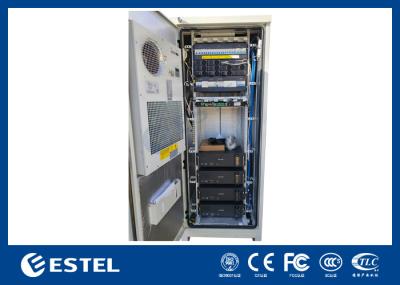
The Integrated Modular DC Power System is an advanced power solution designed to meet the evolving demands of modern telecom networks and energy applications. With a multi-layer architecture, this system provides integrated AC input, DC distribution, rectifier slots, and intelligent monitoring in a compact yet highly functional chassis.
|
Item |
Specification |
|
Product Type |
Integrated Modular DC Power System |
|
AC Input |
220–240V AC, single-phase, with surge protection (AC SPD) |
|
DC Output Voltage |
-48V DC (Telecom standard) |
|
Rated Output Power |
Up to 12 kW, scalable based on rectifier configuration |
|
Rectifier Slots |
4 slots for modular rectifier expansion |
|
Feeder Output Channels |
F1 to F14 for power distribution to multiple devices |
|
Battery Protection Modules |
LLVD and BLVD for battery over-discharge protection |
|
Communication Interface |
RS485 for remote monitoring and diagnostics |
|
Operating Temperature |
-20°C to +50°C |
|
Storage Temperature |
-40°C to +70°C |
|
Humidity |
5% to 95% non-condensing |
|
Weight |
7 kg |
|
Surge Protection |
Built-in AC SPD for surge protection |
|
Monitoring |
Integrated intelligent controller with LCD display and RS485 communication |


Installation:
Install the Integrated Modular DC Power System into a 19-inch rack using the provided side mounting brackets. Ensure proper clearance around the unit for ventilation and cable routing.
Cable Connections:
Connect the AC input (220–240V AC) to the system via the input terminal. Ensure that the polarity for -48V DC output is correct and securely connected to the telecom or network equipment.
Rectifier Modules:
The system supports up to 4 modular rectifiers. Install and configure the rectifiers based on your power requirements. Each rectifier module increases the system’s total output power, with a typical configuration providing up to 12 kW.
Battery Protection and Monitoring:
Connect the battery backup system to the LLVD and BLVD terminals. These modules prevent over-discharge of the battery and ensure the longevity of the energy system, especially important in remote telecom base stations.
Remote Monitoring and Diagnostics:
Use the RS485 communication interface to connect the system to a centralized monitoring platform. The LCD display on the integrated controller provides local status and diagnostics, allowing operators to monitor voltage, current, power output, and alarm conditions in real-time.