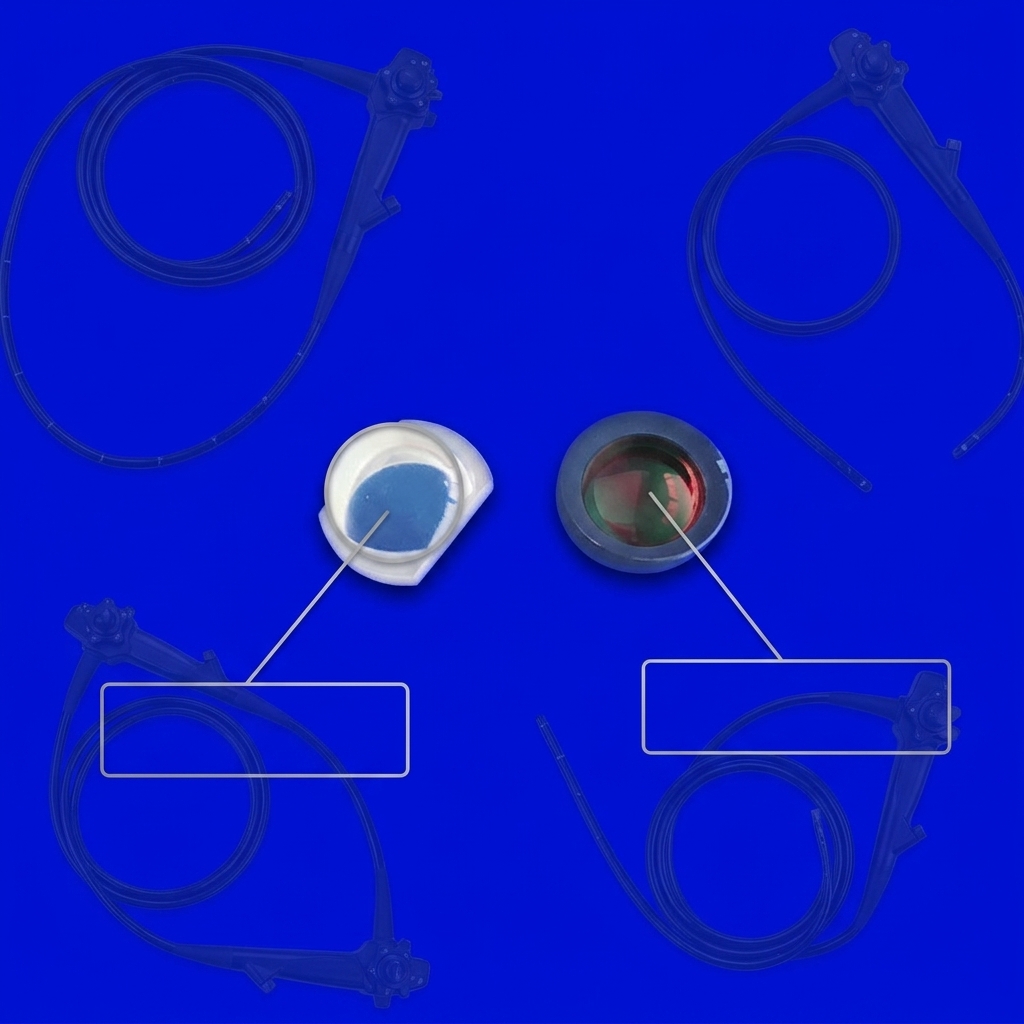
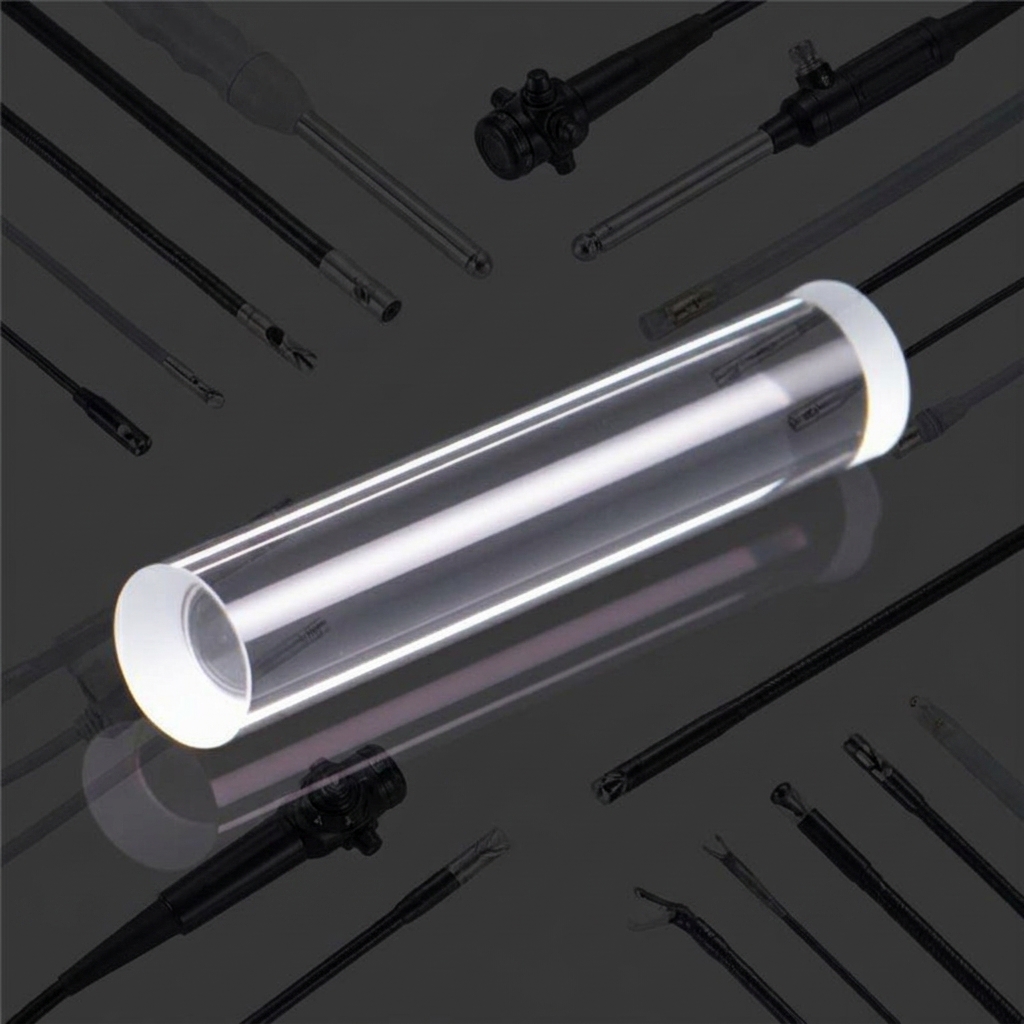
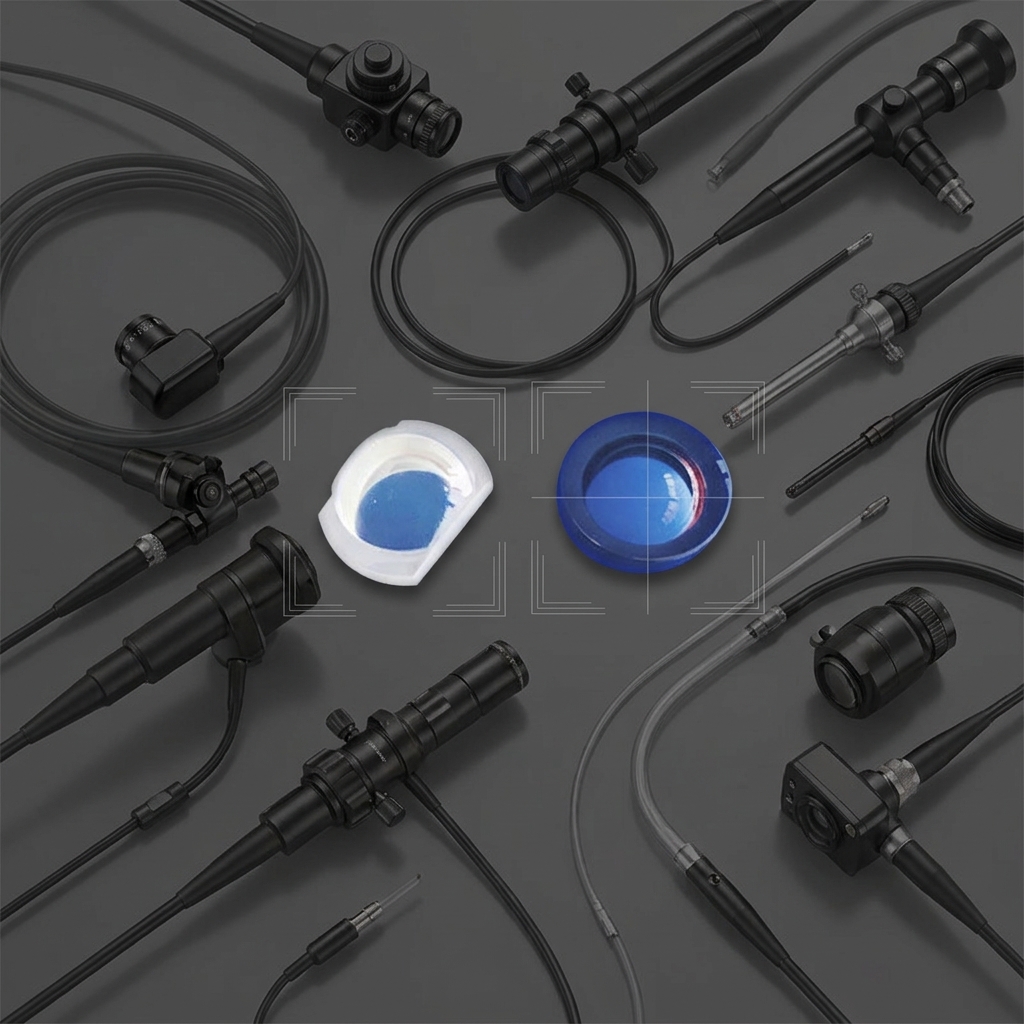
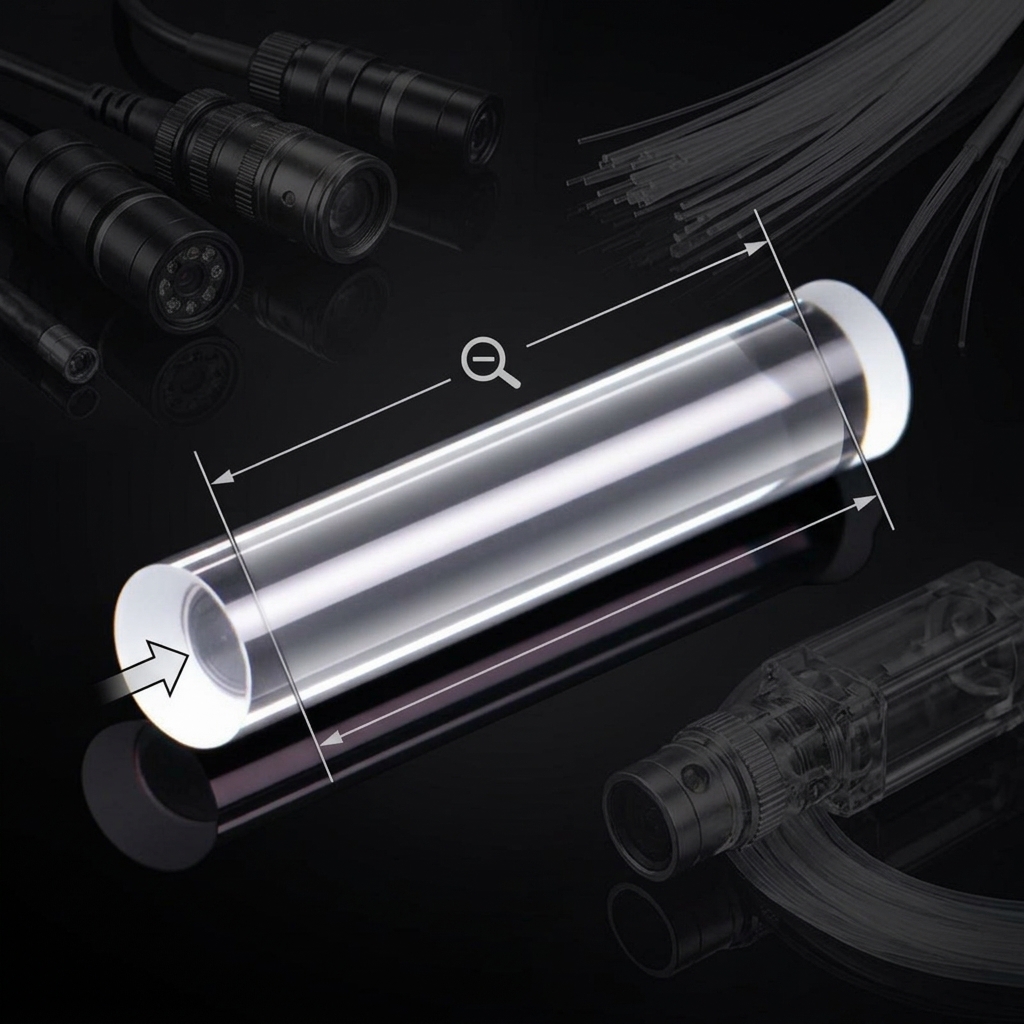
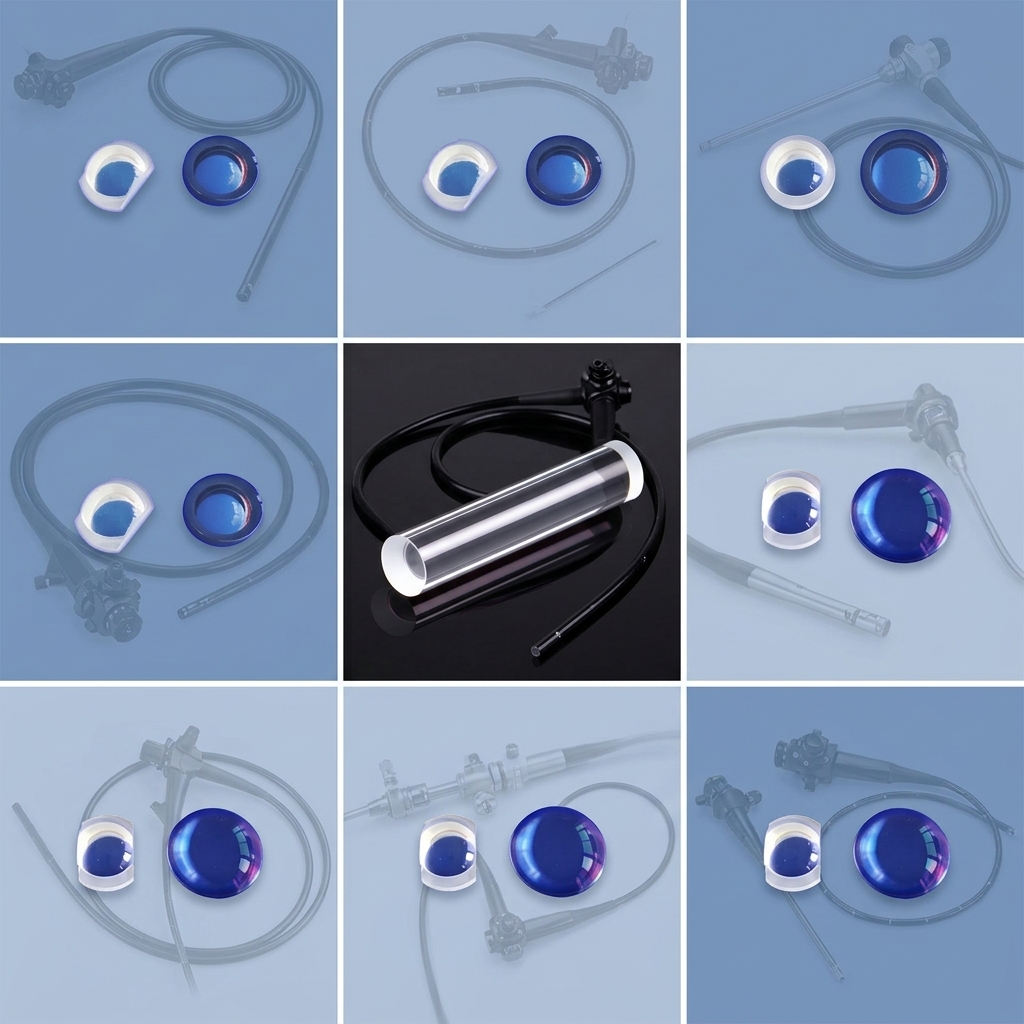
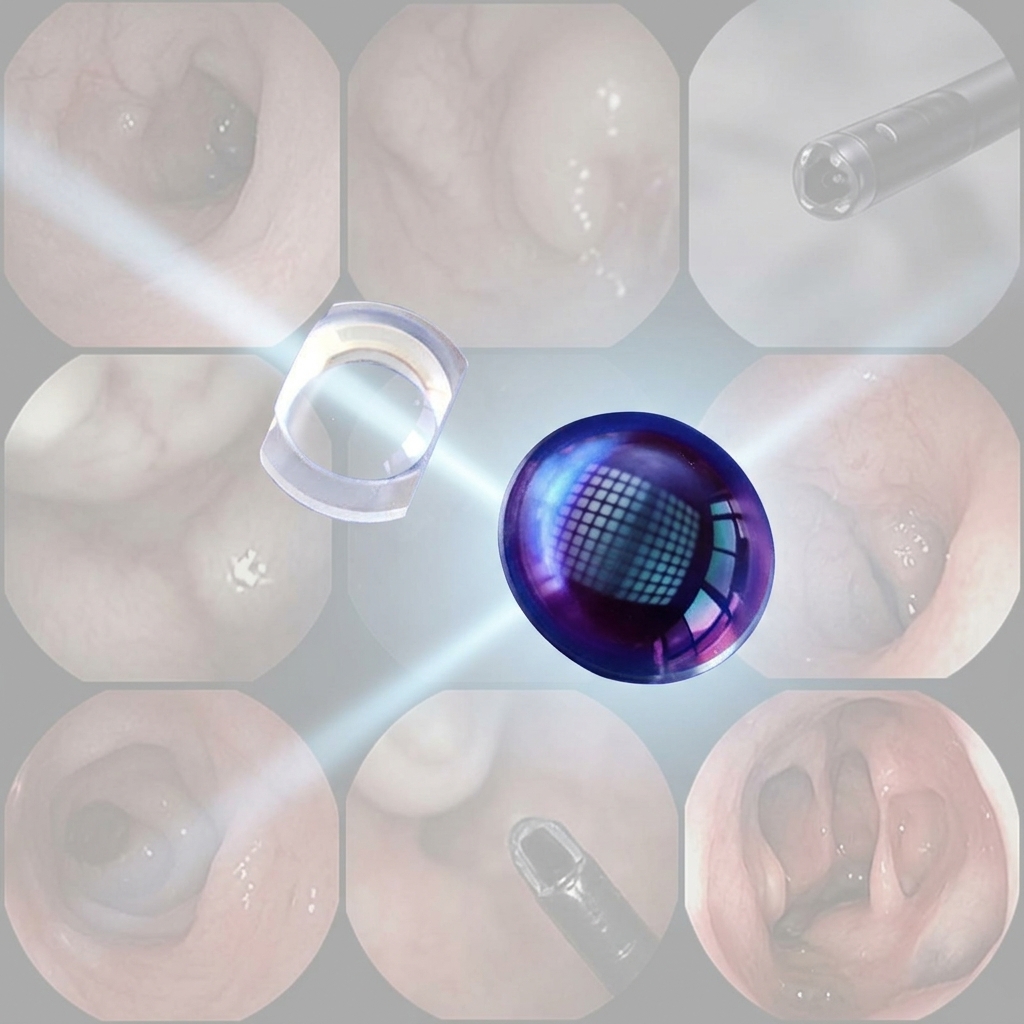
This UV IR broadband coated endoscope lens is purpose-built for spectral medical imaging applications such as fluorescence guided surgery, where the optical train must transmit excitation light and emission signal across widely separated wavelength bands. The rod lens is fabricated from UV fused silica, a substrate with exceptional transmission from 250nm to 2000nm, and coated with a broadband multi-layer stack that maintains high transmission at both the excitation and emission wavelengths. This spectral endoscope lens eliminates the contrast loss that occurs when standard visible-only optics attenuate fluorescence signals.
Fluorescence imaging systems depend on precise spectral management, and this UV IR coated endoscope lens is designed to preserve the integrity of both channels. The coating design is optimized for common fluorophore pairs such as ICG at 800nm and blue-green dyes in the 450-550nm range, with transmission above 95 percent at the design wavelengths. Each broadband spectral optics rod is polished to a 40-20 scratch-dig surface quality and supplied with a measured spectral transmission curve. Custom band combinations, rod diameters from 1mm to 10mm, and multi-element assemblies are available for OEM fluorescence imaging platforms.
Product Q&A
Why is broadband coating critical for fluorescence endoscopy?
Fluorescence systems send excitation light into tissue and read the much weaker emission signal coming back. If the endoscope lens attenuates either band, contrast drops and tumors become harder to see. A UV IR broadband coating keeps both channels above 95 percent transmission, preserving the signal-to-noise ratio the system was designed for.
Which fluorophores is this lens optimized for?
The standard coating is optimized for ICG at approximately 800nm excitation and emission, and for blue-green fluorophores in the 450-550nm range. Because coating designs are adjustable, we can also target Cy5, Cy7, or proprietary dye combinations used in your imaging platform.
Can the rod lens be integrated into an existing fluorescence scope?
Yes. The rod diameter, length, and end face geometry are customized to your optical train, and we provide the measured spectral curve for your system integration. Our engineers routinely support OEM programs that retrofit existing rigid endoscopes for fluorescence capability.
What documentation supports regulatory submission?
We supply spectral transmission measurements, material certificates for UV fused silica, surface quality inspection records, and RoHS declarations. For medical device programs, this documentation package supports the optical component section of your technical file.