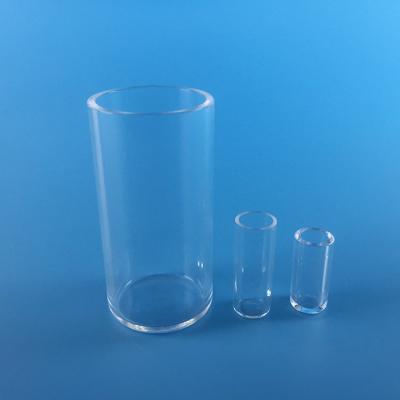
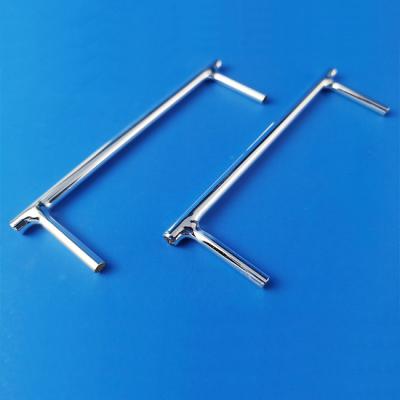
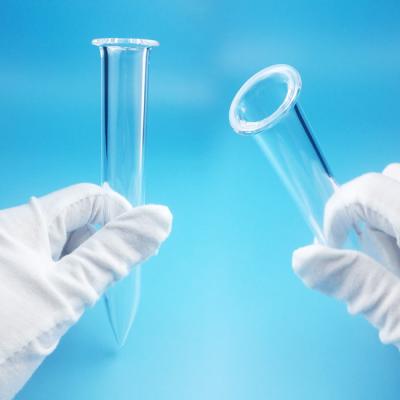
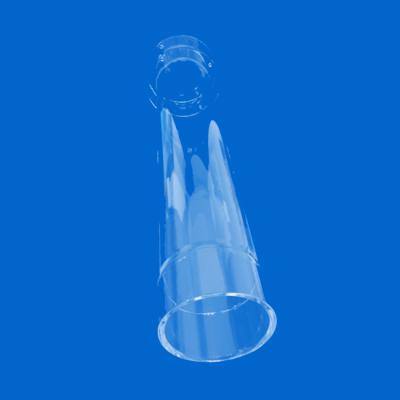
The Borosilicate 3.3 Glass Tube is a premium laboratory and industrial glass tubing solution manufactured from high-quality borosilicate 3.3 material with excellent thermal and chemical performance characteristics. Engineered to withstand sudden temperature fluctuations without cracking or structural failure, this glass tube delivers reliable long-term operation at working temperatures up to 500°C. The material composition provides moderate resistance to dilute acids, weak alkalis, and pure water, making it well suited for routine chemical laboratory environments and general industrial processing tasks. With its high visible light transmittance exceeding 90%, operators can easily observe liquid levels, monitor bubble formation, and track flow characteristics inside the tube during experiments and production runs. Available with fully customizable dimensions including outer diameter, wall thickness, and length, these borosilicate glass tubes can be precisely tailored to match your specific project specifications. Offering a compelling cost advantage over high-purity quartz tubes, the Borosilicate 3.3 Glass Tube represents an ideal solution for applications with low-to-medium demanding thermal and chemical working conditions where reliable performance and budget efficiency are equally important.
Key Features| Parameter | Specification |
|---|---|
| Material | Borosilicate 3.3 Glass |
| Outer Diameter | Customizable (Typical Range: 3mm – 200mm) |
| Wall Thickness | Customizable (Typical Range: 0.5mm – 10mm) |
| Length | Customizable (Typical Range: 10mm – 3000mm) |
| Maximum Working Temperature | ≤500°C |
| Coefficient of Thermal Expansion | ~3.3 × 10−&sup6;/K |
| Density | ~2.23 g/cm³ |
| Light Transmittance (Visible) | ≥90% |
| Softening Point | ~820°C |
| Chemical Resistance | Excellent against water, dilute acids, saline solutions, and organic substances |
The Borosilicate 3.3 Glass Tube is widely utilized across multiple industries and disciplines, including chemical laboratories, pharmaceutical manufacturing, scientific research institutions, educational facilities, and industrial processing plants. Common applications encompass glass apparatus fabrication, fluid transfer and delivery systems, sight glass assemblies for tanks and reactors, laboratory glassware construction including beakers and test tubes, chemical reaction vessels and condensers, distillation columns and extraction equipment, as well as precision measurement instruments such as burettes and pipettes. The excellent thermal stability makes these tubes particularly suitable for applications involving rapid temperature cycling, continuous heat exposure, or environments where thermal gradients are present. The high optical transparency facilitates visual monitoring and verification of internal processes, which is essential for quality assurance protocols, experimental observation, and real-time production line inspection in regulated manufacturing environments. In the pharmaceutical sector, borosilicate glass tubes are frequently employed in ampoule and vial production lines, where material purity and consistent dimensional tolerances are critical to product integrity and patient safety. Educational laboratories benefit from the material durability and processing ease, allowing students to gain hands-on experience with professional-grade glassworking techniques at manageable material costs.