Stable Signal Black Oil Double - Layer PCB for Medical Sensors & Monitors
A black oil double - sided PCB is a two - layer circuit board coated with black solder mask, featuring copper traces on both sides for compact component integration. In medical fields, it’s widely adopted in portable diagnostic devices, patient monitors and medical sensors, delivering stable signal transmission, excellent insulation and reliable performance to meet strict healthcare safety standards.
Why choose this double-sided circuit board?
1.Dual-Sided Copper Cladding: Conductive copper foil on both top and bottom of the insulating substrate.
2.Plated Through-Holes (PTHs): Enable electrical connection between the two copper layers for signal/current transmission.
3.Balanced Performance-Cost: Higher component density and routing flexibility than single-sided PCBs, yet more cost-effective than multi-layer PCBs.
4.Moderate Component Density: Supports more components (e.g., SMDs, through-hole parts) than single-sided PCBs, suitable for devices needing moderate functional integration without the complexity of multi-layer boards.
5.Flexible Routing: Reduces wire crossing issues via two-layer routing, simplifying the layout of signal and power circuits for better performance.
6.Wider Application Adaptability: Compatible with diverse electronic devices across consumer, industrial, automotive, and medical fields due to its balanced cost and functionality.
Documents required for custom double-sided PCBs:
Please send us your:
1. Gerber files (RS-274X)
2. BOM (if PCBA needed)
3. Impedance requirements & stack-up (if available)
4.Test requirements (TDR, network analyzer, etc.)
Noted:Normally,Gerber files includes: PCB type,thickness, ink color, surface treatment process, and if SMT processing is required, you can provide a component BOM and reference designation diagram, etc.
We’ll reply within 24 hours with a free quote, DFM report, and material recommendation.
Custom Double-Sided PCB Manufacturing Process
1. Design & DFM Optimization: Develop detailed circuit layout using professional CAD software; conduct Design for Manufacturability analysis to optimize trace width, hole size and spacing, ensuring compliance with custom requirements and production feasibility.
2. Core Board Fabrication: Cut copper-clad laminate to target size; etch circuits on both sides via photolithography; drill vias and perform metallization to achieve reliable interlayer electrical connection.
3. Surface Finishing & Marking: Apply solder mask for insulation and corrosion resistance; print silkscreen (component labels, logos); conduct surface treatment (ENIG, HASL, etc.) based on needs.
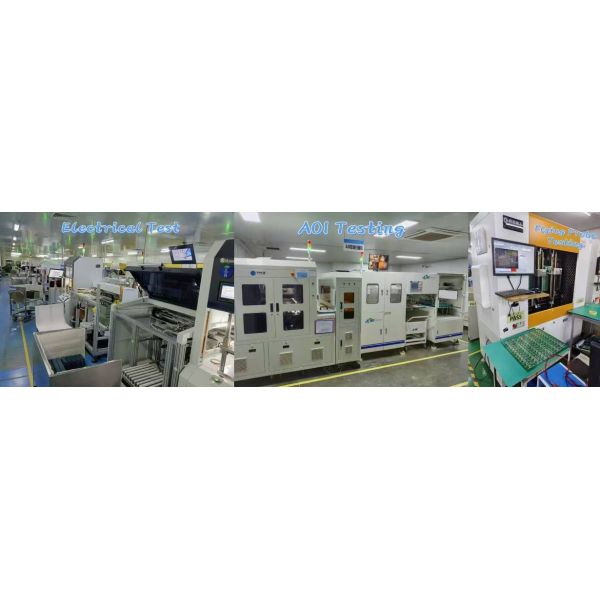
4. Quality Control & Delivery: Carry out AOI inspection and electrical testing to eliminate defective boards; cut to final dimensions, package and deliver to customers.

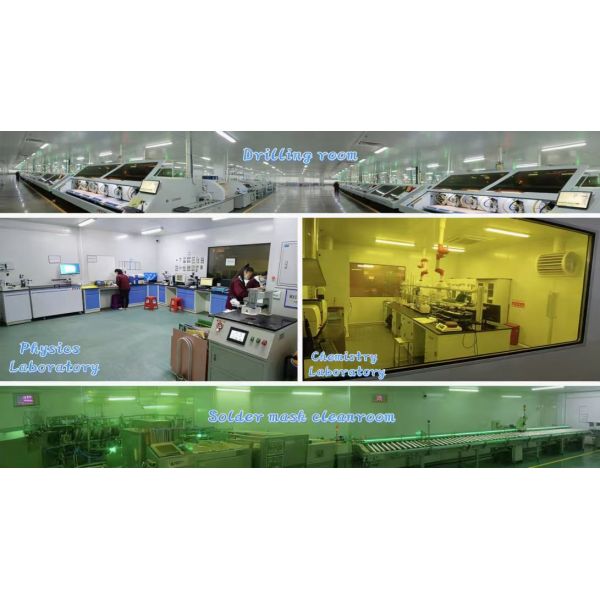
Factory showcase

PCB Quality Testing

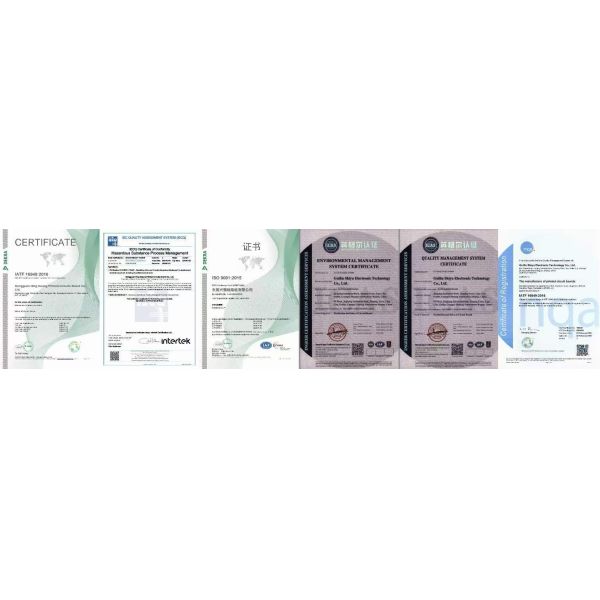
Certificates and Honors