1:1000 Mathaba Concept Model Showcase
Model Manufacturer: QZYMODELS
1. Natural Wood Tone Model
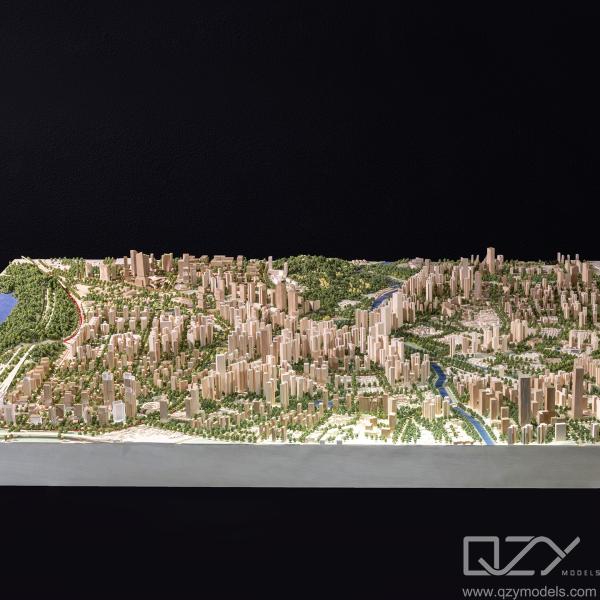
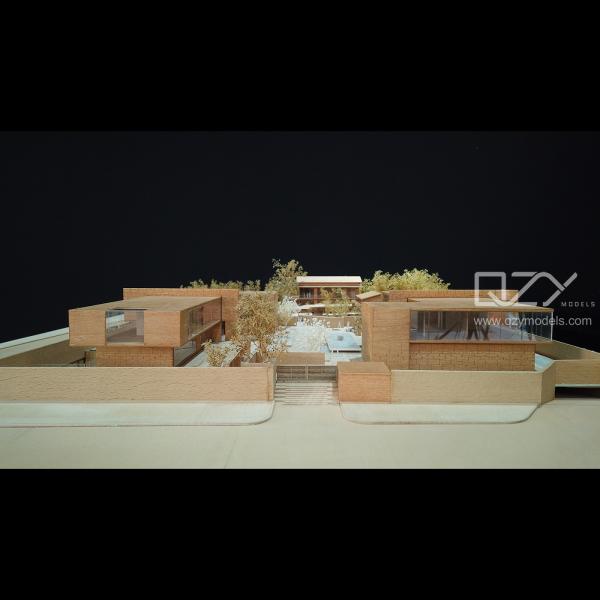
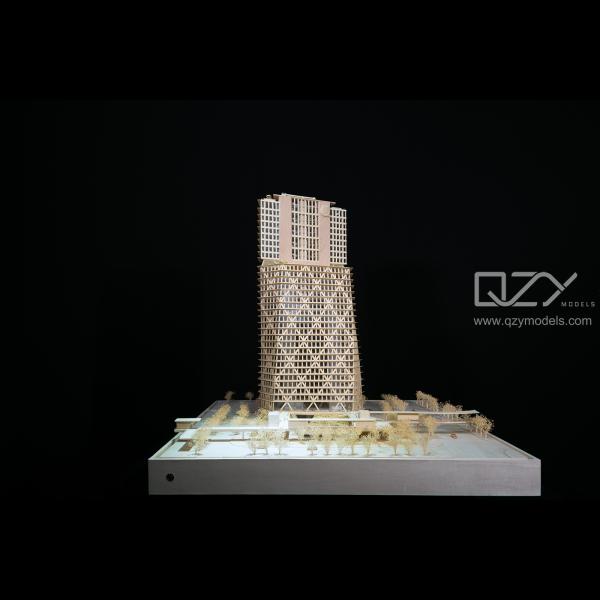
Crafted with solid natural wood, this model features a warm, unified light wood finish, relying entirely on the material’s inherent texture and the building’s geometric lines to convey the design vision.
- Visual Effect: The warm, organic texture of the wood contrasts beautifully with the building’s crisp, structured lines, eliminating color distractions to focus attention entirely on the architectural massing, facade rhythm, and spatial proportions. The soft, diffused light reflecting off the wood grain lends the model a natural, premium feel—minimalist, restrained, and full of warmth.
- Design Philosophy: This "decoration-free" approach perfectly captures the purity and order of the architecture. Stripping away surface details like materials and colors, it lays bare the building’s core structure, facade modular logic, and overall planning, highlighting the beauty of its form, proportion, and structural integrity. It also echoes the project’s pursuit of modernity, rationality, and order.
2. White Minimalist Concept Model
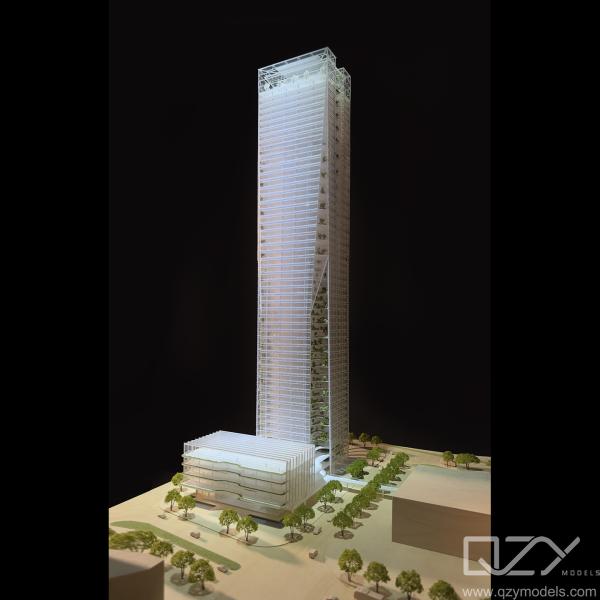
This model adopts a pure white base with subtle two-tone accents (warm brown and light gray), offering a conceptual interpretation of the design.
- Visual Effect: The clean white base creates a strong sense of modernity and futurism, sharply defining the building’s silhouette and volume. Precisely reproduced window openings and facade details, paired with color-coded material accents, make the building’s solid-void contrasts and material layers immediately clear. When illuminated, soft, even light glows from the windows, enhancing the building’s transparency and dimensionality for a crisp, visually striking look.
- Design Philosophy: This style focuses on conveying the project’s spatial atmosphere and material narrative. While the pure white base emphasizes the building’s essential form, the color accents and lighting effects restore its material relationships and experiential qualities. This allows viewers to intuitively grasp the solid-void interplay, facade material composition, and overall ambiance, communicating the project’s core design values of modernity, openness, and order.
Together, the two styles present the Mathaba project’s design philosophy from two complementary perspectives—structural order and spatial experience—capturing the architecture’s full expression from skeletal logic to final user experience.