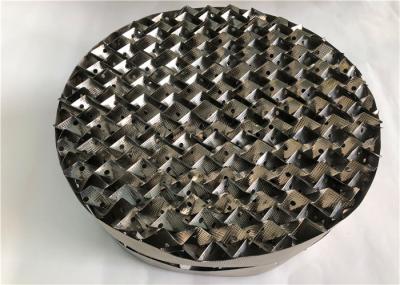
250Y Metal Structured Packing Mass Transfer for Distillation Columns
Metal Structured Packing Introduction
Metal structure packing refers to a professional packaging solution designed for metal structural components, including steel beams, columns, trusses, brackets, metal plates, and custom metal parts. It integrates protection, stability, and logistics adaptability to ensure that metal structures remain intact, free from corrosion, deformation, or damage during storage, transportation, and on-site handling. This packaging method is widely used in construction, machinery manufacturing, aerospace, shipbuilding, and other industries where metal components are critical to project quality and safety.
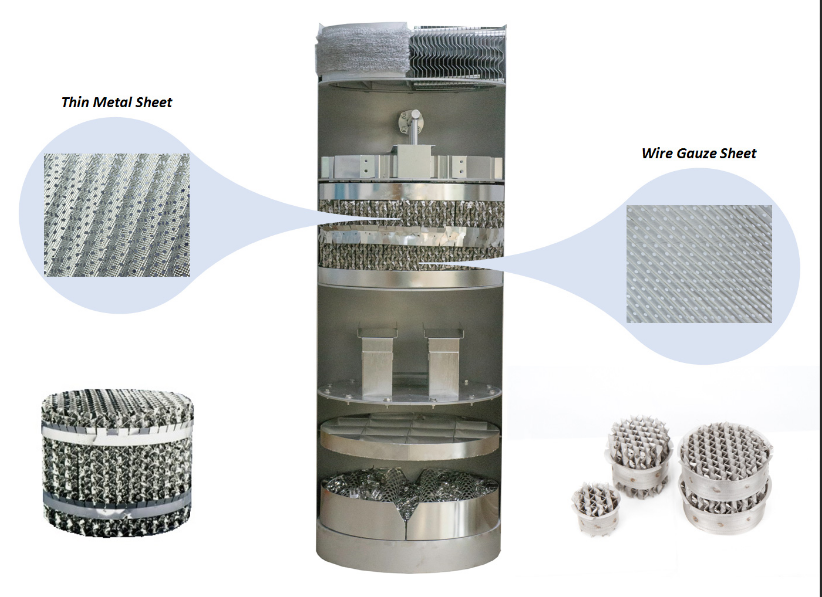
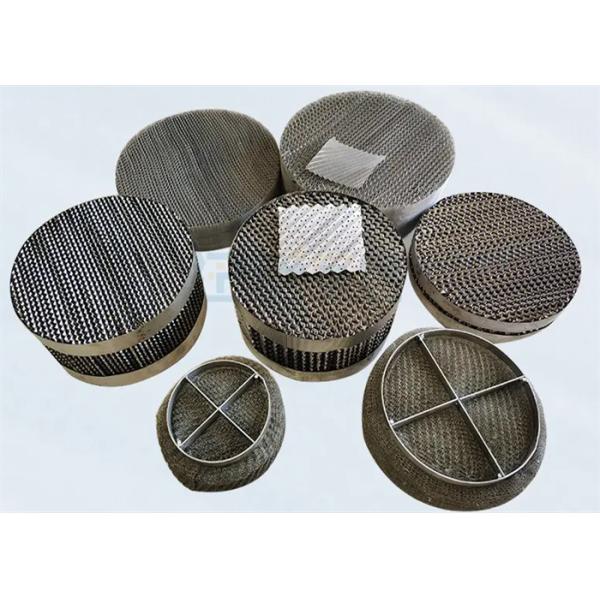
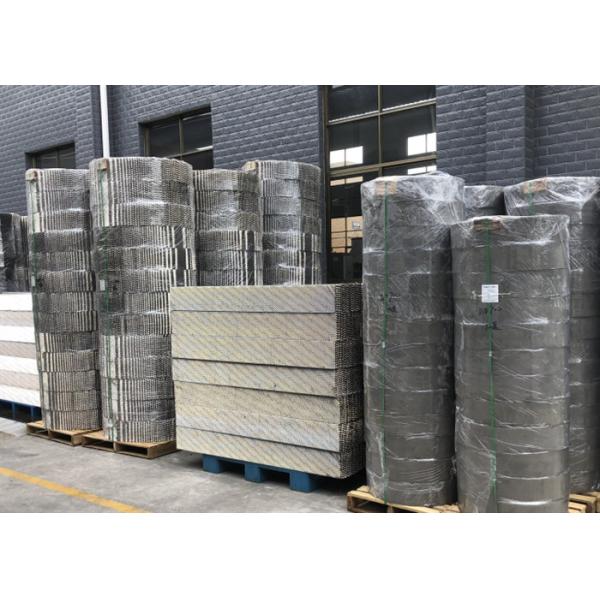
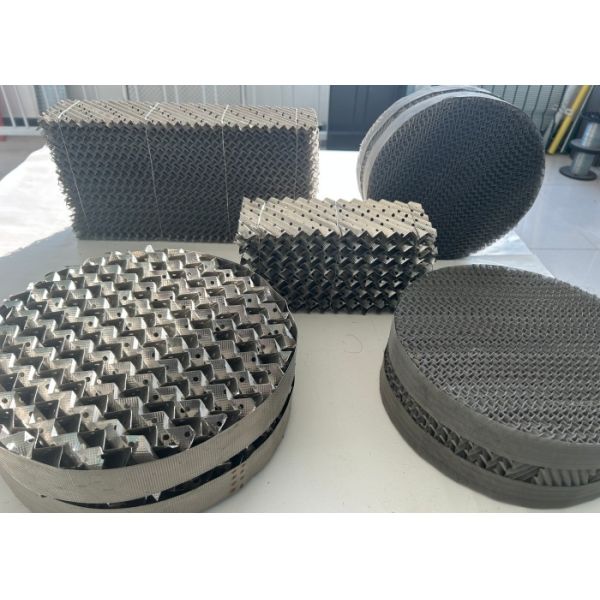
Metal structured packing refers to a type of packing material designed for use in mass transfer operations, such as distillation, absorption, and extraction. Unlike random packing, which consists of small, irregular shapes that are randomly arranged within a column, structured packing features a highly organized, geometric design, often made from materials like metal, plastic, or ceramic.
Metal Structured Packing Technical Specification
The specification is based on SS304 material:
| Item | Surface Aream2/m³ | Free Volume % | P Pa/m | Theo. plate pc/plate | F factor m/s(kg/m³)0.5 |
| SB-125Y | 125 | 98 | 2x10⁻⁴ | 1-1.2 | 3 |
| SB-250Y | 250 | 97 | 2x10⁻⁴ | 2-2.5 | 2.6 |
| SB-350Y | 350 | 94 | 2x10⁻⁴ | 3.5-4 | 2 |
| SB-500Y | 500 | 92 | 3x10⁻⁴ | 4-4.5 | 1.8 |
| SB-125X | 125 | 98 | 1.4x10⁻⁴ | 0.8-0.9 | 3.5 |
| SB-250X | 250 | 97 | 1.8x10⁻⁴ | 1.6-2 | 3.5 |
| SB-350X | 350 | 94 | 1.3x10⁻⁴ | 2.3-2.8 | 2.2 |
| SB-500X | 500 | 92 | 1.8x10⁻⁴ | 2.8-3.2 | 2 |
Metal Structured Packing Features
-
Superior Protection Performance: Aiming at the vulnerability of metal structures to corrosion (moisture, oxidation), scratch, and impact, the packaging adopts multi-layer protection measures. Common materials include moisture-proof films, anti-rust paper, EPE foam, wooden pallets, and steel frames, which effectively isolate external factors such as humidity, dust, and mechanical collision, maintaining the surface finish and structural integrity of metal components.
-
Strong Load-Bearing & Stability: Metal structures are often heavy and bulky. The packaging uses high-strength materials (such as thick wooden boards, steel strips, and reinforced corrugated paper) and scientific fixing methods (binding, clamping, welding positioning) to prevent displacement, tilting, or deformation during transportation, even under long-distance haulage or multi-modal transport conditions (land, sea, air).
-
Customization for Diverse Components: Metal structures vary widely in size, shape, and weight—from small precision metal brackets to large-span steel trusses. The packaging can be tailored to specific dimensions: for irregularly shaped parts, customized foam liners or wooden fixtures are used for contour fitting; for oversized components, split packaging or integral hoisting packaging is adopted to meet logistics and on-site assembly requirements.
-
Corrosion Resistance & Long-Term Storage: For metal components requiring long-term storage or marine transportation, anti-rust treatments are integrated into the packaging, such as vacuum packaging, anti-rust oil coating, or VCI (Volatile Corrosion Inhibitor) packaging. These measures form a protective barrier against moisture and oxygen, preventing rust and extending the service life of the metal structures.
-
Logistics Efficiency & Cost-Effectiveness: The packaging is designed with logistics adaptability in mind—reasonable volume planning reduces transportation space occupation, and standardized palletization facilitates loading, unloading, and stacking with forklifts or cranes, improving handling efficiency. Meanwhile, the selection of cost-effective packaging materials and modular design balances protection and cost, avoiding unnecessary waste.
Metal Structured Packing Application
-
Distillation Columns: Used in separation processes to efficiently separate mixtures based on differences in boiling points, such as in the production of chemicals, alcohol, or crude oil refining.
-
Absorption Towers: In air pollution control, metal structured packing is used to remove gases like carbon dioxide, sulfur dioxide, and ammonia from industrial exhaust streams.
-
Gas Scrubbing: Applied in systems where pollutants need to be absorbed by a liquid, such as in chemical scrubbers for removing volatile organic compounds (VOCs) or other harmful gases.
-
Heat Exchange Systems: Metal structured packing is used to enhance heat transfer efficiency in heat exchangers, cooling towers, and other thermal management systems.
-
Pharmaceutical and Food Processing: In pharmaceutical manufacturing and food production, metal structured packing is used for solvent recovery, purification, and separation processes.