Methylated Melamine Resin-303G
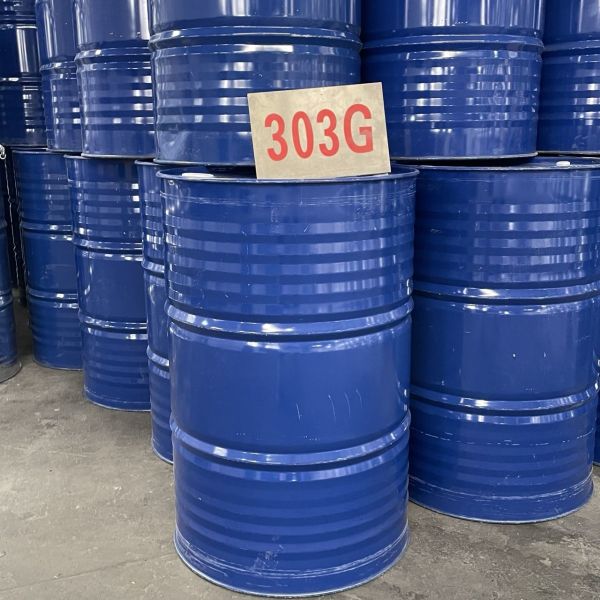
Haminol 303G is an advanced methylated amino-based crosslinking agent engineered with negligible formaldehyde emissions (<0.01%) and ultra-high non-volatile content (≥98%). This formaldehyde-exempt formulation demonstrates exceptional compatibility as a reactive curing component for hydroxyl-functional polymers including alkyds, polyesters, acrylics, epoxy systems, PU derivatives, and specialty fiber-reinforced composites. Its low-VOC profile supports applications in solventless high-build coatings, waterborne automotive refinishes, coil coating systems, industrial bake-on finishes, and heat-resistant graphic inks requiring minimal hazardous air pollutants.
Advantages
- Solvent-free formulation
- Wide compatibility and solubility
- Excellent stability
- Excellent hardness-film flexibility balance
- Fast catalyzed cure response
- Low free formaldehyde content
- Economical performance
Application Areas
- High solids finishes
- Water borne finishes
- Coil coatings
- Automotive finishes
- Container coatings
- General metals finishes
- Inks
Typical Characteristics
| Property |
Specification |
| Appearance |
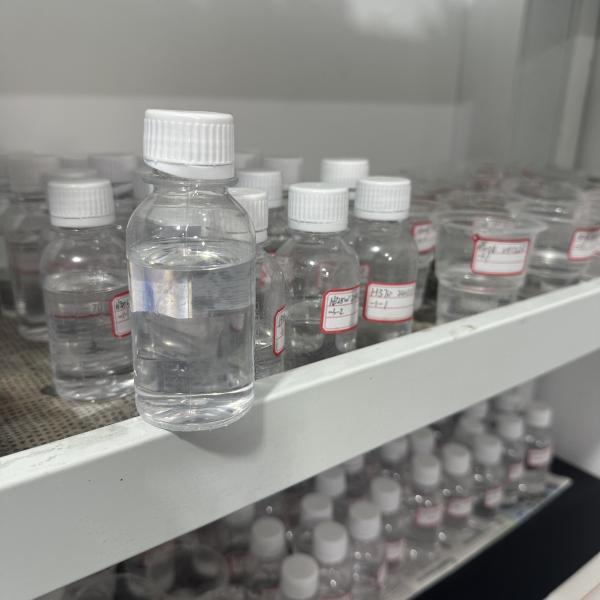
Clear, viscous liquid |
| Non-volatile, % by weight* |
98.0 minimum |
| Color, Gardner 1963 |
1 maximum |
| Viscosity, Gardner-Holdt, 25°C |
Y-Z2 |
| Viscosity, Cone/Plate, cps |
2000-6000 |
| Weight/gallon, pounds, approximate |
10.0 |
| Specific gravity, 25°C, approximate |
1.20 |
| Refractive index |
1.515-1.520 |
| Flash point, Setaflash, °F |
>200 |
| Flash point, Tag open cup, °F |
>200 |
| Free formaldehyde, weight % |
<0.01 |
Solubility Profile
Haminol 303G exhibits broad compatibility with conventional organic solvents such as aromatics, alcohols, esters, and ketones. While its water solubility is restricted, the resin demonstrates excellent aqueous dilution stability when formulated with water-reducible polymer blends.
Curing Mechanism & Catalyst Requirements
Owing to its advanced methylation degree, Haminol 303G efficiently crosslinks hydroxyl-, carboxyl-, and amide-functionalized co-resins (e.g., alkyds, acrylics, polyesters) under acidic conditions. Optimal curing necessitates catalytic activation by strong acids (pKa ≤1), though dosage adjustments may be required to counteract alkaline additives or pigments in the system.
The resin's high functional density and resistance to self-polymerization enable superior crosslinking efficiency. In polyester-based formulations, it imparts exceptional film flexibility and thermoformability. The reactive equivalent weight typically spans 130-190 g/eq; however, precise formulation optimization—tailored to target performance metrics (e.g., adhesion, hardness)—is recommended to determine ideal loading ratios.