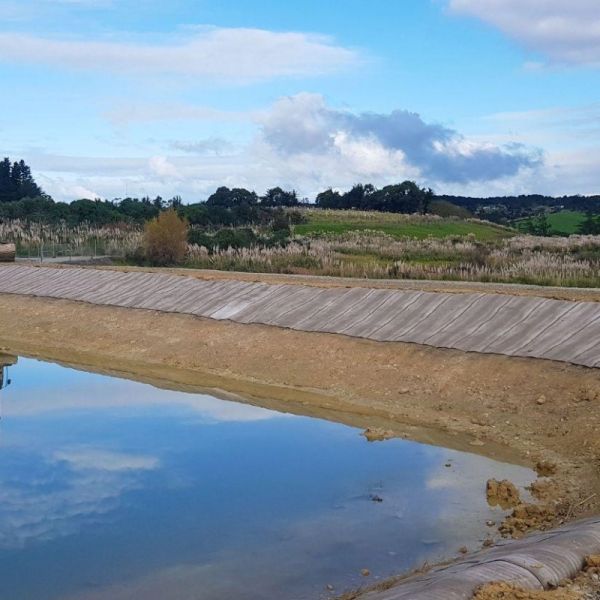
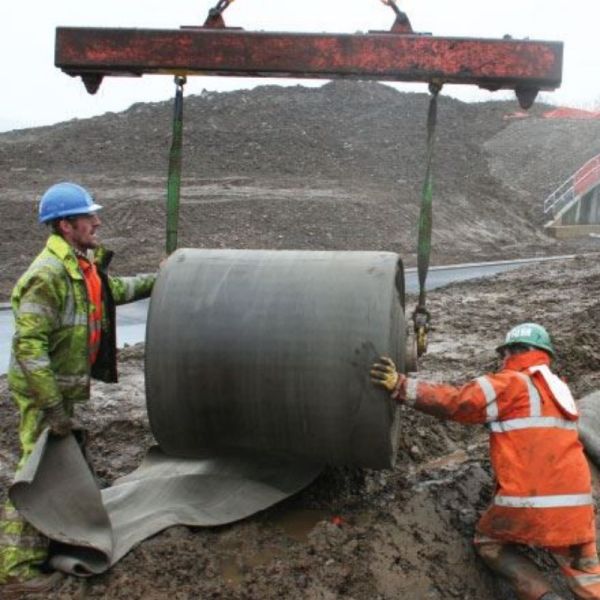
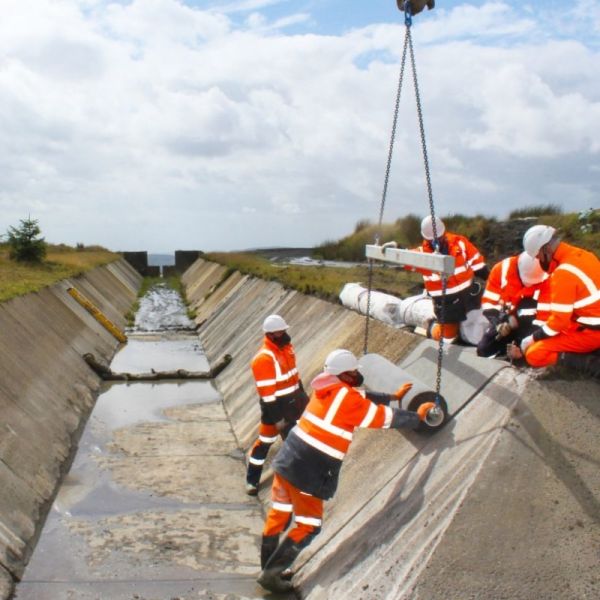
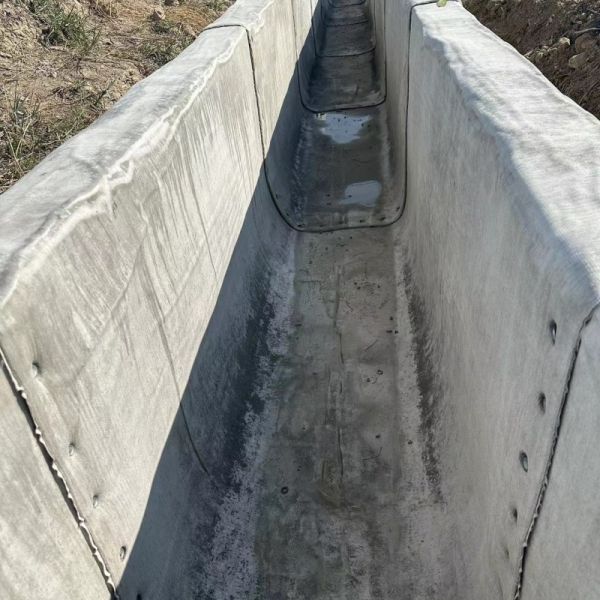
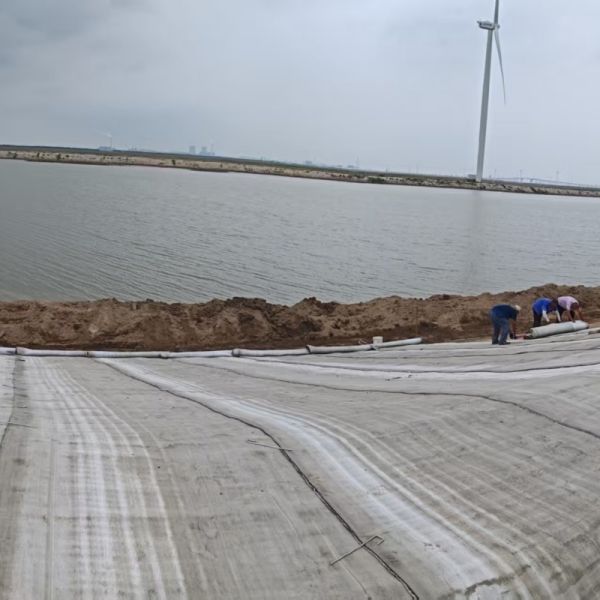
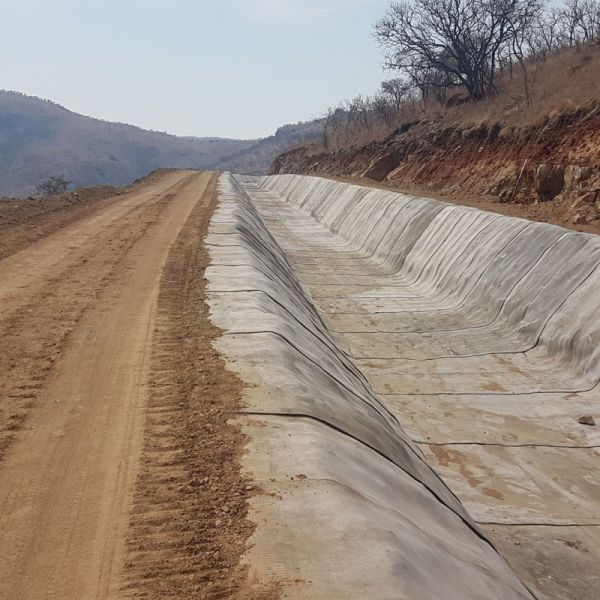
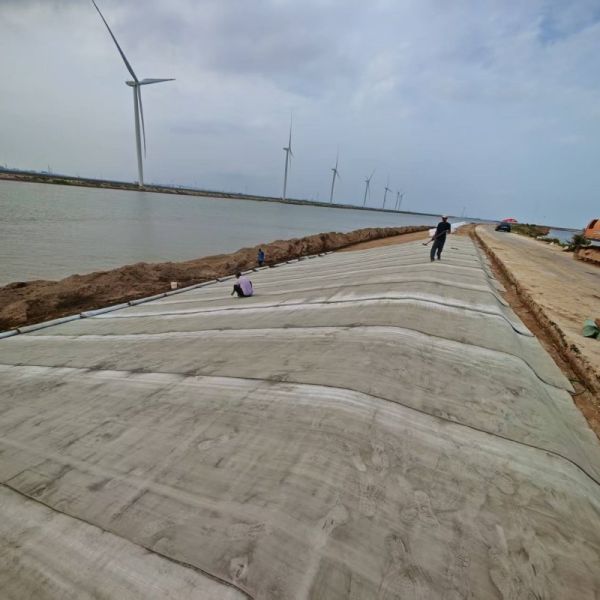
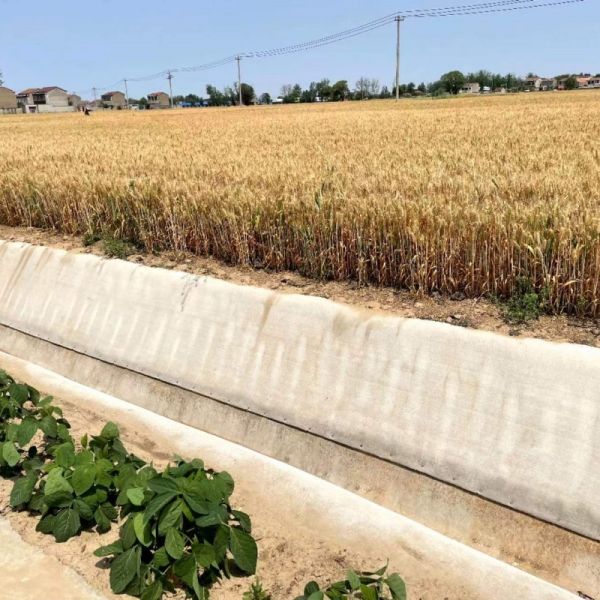
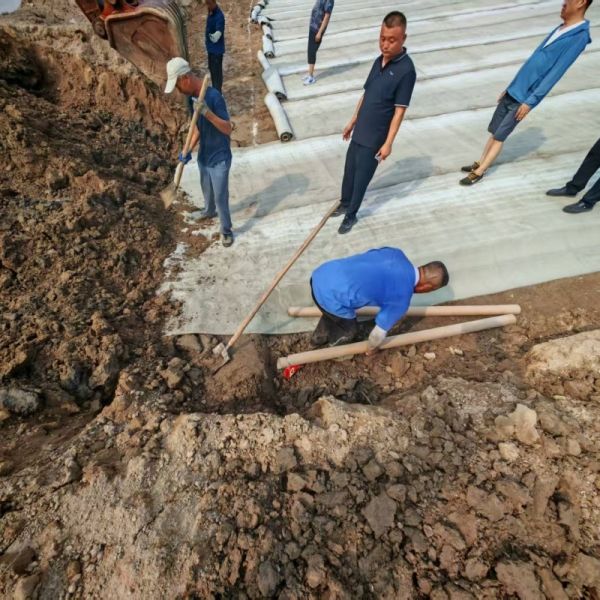
Cement blanket, also widely known is an innovative construction material that combines the flexibility of fabric with the durability of concrete. It is manufactured using a three-dimensional fiber matrix woven from polyethylene and polypropylene filaments, which is then impregnated with a specially formulated cement mixture.
Once hydrated with water, the material undergoes a rapid chemical reaction, forming a thin, durable, waterproof, and fire-resistant concrete layer. Compared to traditional concrete methods, this product eliminates the need for mixing, pouring, and heavy equipment, making it a highly efficient solution for modern engineering projects.
Its unique structure allows it to adapt to uneven or soft ground conditions before curing, and after setting, it provides strong mechanical performance and long-term protection.
Traditional concrete requires multiple steps including mixing, forming, and curing.
✔ Cement blanket simplifies installation into a roll-out and hydrate process, saving time and labor.
Rain, water flow, and remote locations often delay projects.
✔ This material can be installed directly in water or under rainy conditions, ensuring project continuity.
Unprotected slopes are vulnerable to rainfall and flood erosion.
✔ Forms a continuous protective concrete layer that resists erosion and scouring.
Ground movement can damage rigid concrete structures.
✔ Flexible before curing, rigid after curing, preventing cracks and displacement.
| Test Item | 1 Day | 3 Days | 7 Days | 28 Days |
|---|---|---|---|---|
| Flexural Strength (MPa) | 7 | 9.8 | 10.7 | 11 |
| Compressive Strength (MPa) | 51 | 52.3 | 61.5 | 66.1 |
| Property | Value | Standard |
|---|---|---|
| Density | 1590 kg/m³ | ASTM C1185 |
| Impermeability | 1.3 MPa | JG/T70 |
| Tensile Strength | 21.2 / 18.7 MPa | ASTM C1185 |
| Average Strength | 37.1 MPa | ASTM C109 |
| Element | Limit (mg/kg) | Result |
|---|---|---|
| Lead (Pb) | 90 | ND |
| Antimony (Sb) | 60 | ND |
| Arsenic (As) | 25 | ND |
| Barium (Ba) | 1000 | ND |
| Cadmium (Cd) | 75 | ND |
| Chromium (Cr) | 60 | 8 |
| Mercury (Hg) | 60 | ND |
| Selenium (Se) | 500 | ND |


Q1: Can cement blanket be used underwater?
Yes, it is specifically designed for wet environments and can be installed underwater.
Q2: How long does it take to harden?
Initial setting occurs within 24 hours, full strength develops over time.
Q3: Is it better than traditional concrete?
For many applications, it is faster, more flexible, and more cost-effective.
Q4: What thickness should I choose?
Depends on project requirements; thicker options provide higher durability.
Q5: Is it environmentally safe?
Yes, heavy metal content meets international safety standards.