Underwater Salvage Bags Heavy Duty Stable Performance Long Service Life
Descripation
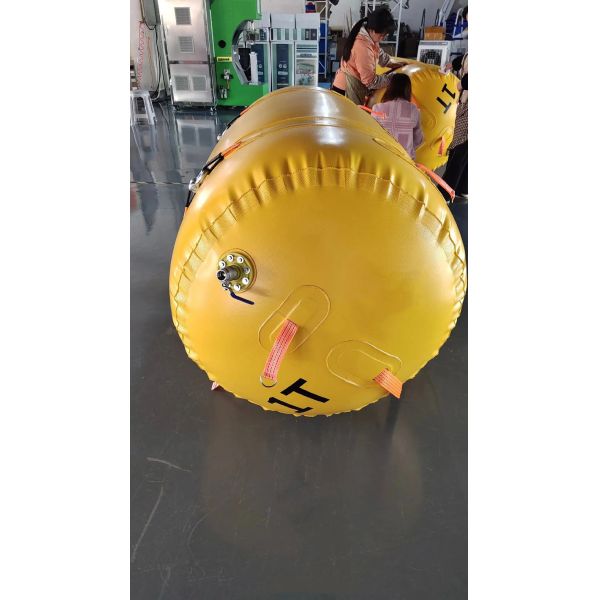
Heavy Duty Inflatable Air Bags constructed from reinforced PVC composite materials are specialized buoyancy tools designed for demanding underwater lifting, salvage recovery, and subsea engineering support operations. Engineered to deliver reliable flotation force under challenging marine conditions, these air bags provide an efficient solution for raising submerged vessels, recovering offshore equipment, and assisting underwater installation work.
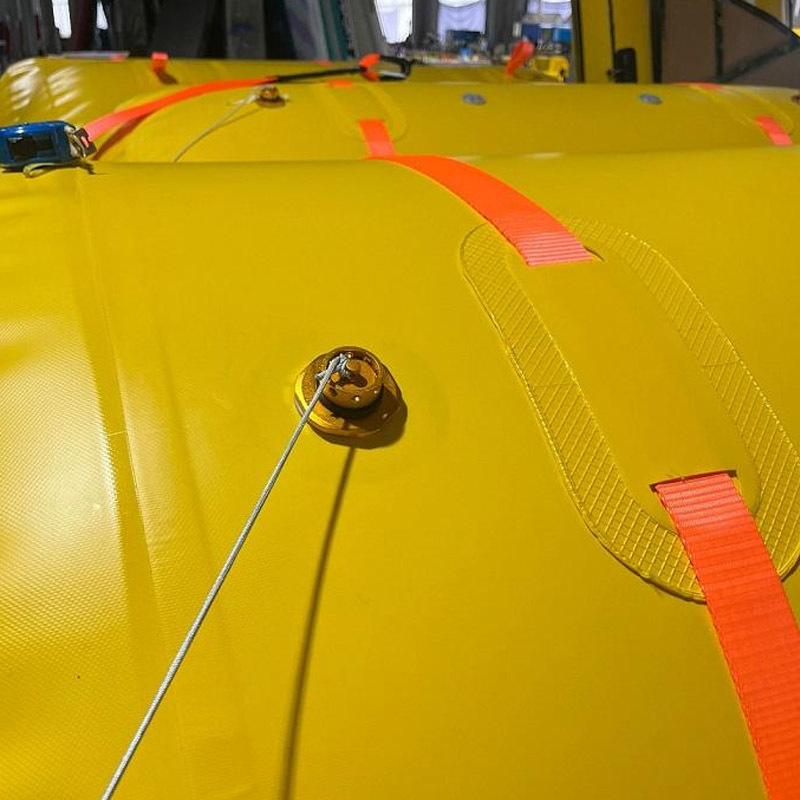
The air bags utilize high-tenacity polyester fabric coated with marine-grade PVC to achieve a balance of structural strength, flexibility, and airtight sealing. This construction ensures excellent resistance to saltwater corrosion, hydrostatic pressure, UV exposure, and mechanical abrasion. The reinforced PVC structure maintains dimensional stability during repeated inflation cycles while remaining flexible enough for easy diver handling and deployment.
A primary advantage of PVC inflatable air bags lies in their controllable buoyancy. Operators can gradually regulate lifting force by adjusting air pressure, allowing submerged objects to be raised safely without sudden load shifts or structural stress. This precision is critical for delicate salvage operations where hull integrity, equipment alignment, or diver safety must be carefully protected.
These air bags are widely used by marine salvage companies, offshore engineering contractors, port authorities, and professional diving teams. Their lightweight transport characteristics, rapid deployment capability, and reusable design make them a cost-effective alternative to rigid lifting equipment while maintaining high safety standards.
Case Study – Sunken Steel Barge Recovery in Coastal Waters
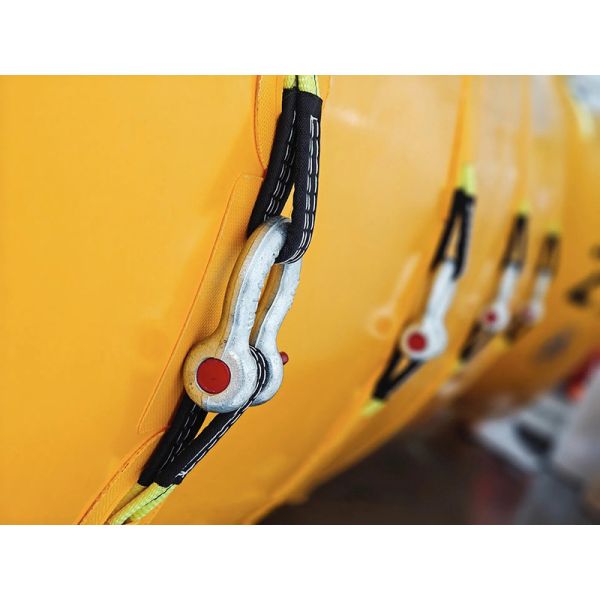
Following a severe storm along a coastal industrial zone, a 900-ton steel cargo barge partially submerged near a channel entrance, creating both navigational hazards and environmental concerns. Limited crane access, soft seabed conditions, and structural uncertainties made conventional lifting approaches risky. A salvage team deployed multiple PVC Heavy Duty Inflatable Air Bags to provide controlled buoyancy along critical structural sections of the barge. Divers positioned the air bags carefully beneath reinforced hull points, ensuring balanced lift distribution during gradual inflation. The flexible PVC structure allowed close conformity to the vessel’s irregular submerged surfaces, reducing stress concentration and preventing additional hull damage. Over a controlled lifting sequence coordinated with tidal conditions, the barge was successfully refloated and stabilized for towing. The operation demonstrated improved safety margins, reduced equipment mobilization costs, and efficient recovery time, leading the client to adopt inflatable air bags as a preferred solution for similar coastal salvage scenarios.
Specifications
| Product Name | Heavy Duty Inflatable Air Bags |
| Raw Material | PVC Coating Fabric |
| Type | Cylindrical |
| Size | 500kg, 1000kg, 5000kg 10000kg,etc |
| Thickness | 0.4-1.2mm, or as request |
| Color | Yellow, Blue, Black, etc |
| Density | 0.33-0.9g/cm3 |
| Safety Factor | 7:1 |
|
Tolerances |
+/- 0.03 on Densities +/- 0.2 mm on Thickness +/- 0 to +3mm on Width +/- 0 to +3mm on Length |
| Model | Buoyancy | Diameter | Length | Appr. Weight | ||
| Cylindrical | [kg] | [lbs] | [mm] | [mm] | [kg] | |
| HM-C01 | 200 | 441 | 500 | 1,000 | 5 | |
| HM-C02 | 500 | 1,103 | 800 | 1,000 | 8 | |
| HM-C03 | 1,000 | 2,205 | 1,000 | 1,500 | 11 | |
| HM-C04 | 2,000 | 4,410 | 1,300 | 1,500 | 20 | |
| HM-C05 | 4,000 | 8,820 | 1,600 | 2,000 | 50 | |
| HM-C06 | 6,000 | 13,230 | 2,000 | 2,000 | 66 | |
| HM-C07 | 8,000 | 17,640 | 2,000 | 2,600 | 75 | |
| HM-C08 | 10,000 | 22,050 | 2,400 | 2,400 | 80 | |
| HM-C09 | 15,000 | 33,075 | 2,600 | 3,000 | 110 | |
| HM-C10 | 20,000 | 44,100 | 3,000 | 3,000 | 130 | |
| HM-C11 | 30,000 | 66,150 | 3,000 | 4,500 | 170 | |
| HM-C12 | 50,000 | 110,250 | 4,000 | 4,000 | 220 | |
| HM-C13 | 70,000 | 154,350 | 4,000 | 5,700 | 310 | |
| HM-C14 | 100,000 | 220,500 | 4,000 | 8,000 | 450 | |
| HM-C15 | 150,000 | 330,750 | 5,000 | 8,000 | 660 | |
| HM-C16 | 200,000 | 441,000 | 5,000 | 10,000 | 900 | |
| *Note: Other sizes can be customized according to the requirements. | ||||||
Features
High-Strength PVC Reinforcement Technology
The air bags incorporate advanced PVC-coated fabric engineered for high tensile strength and durability in underwater environments. The reinforced textile core ensures resistance to tearing and structural deformation even under heavy loads, while the PVC coating maintains airtight integrity. This combination supports consistent buoyancy performance across repeated salvage operations and harsh marine conditions.
Stable Buoyancy Control for Complex Salvage Tasks
Precise buoyancy adjustment is essential when lifting submerged vessels or sensitive equipment. These air bags allow gradual inflation with controlled air input, ensuring stable lifting without sudden displacement. This feature significantly enhances operational safety and allows salvage teams to maintain better control over lifting dynamics in challenging underwater conditions.
Resistance to Harsh Marine Environmental Factors
PVC materials used in these air bags demonstrate excellent resistance to saltwater corrosion, UV radiation, biological growth, and chemical contaminants. This durability ensures long service life even when frequently exposed to offshore environments, reducing replacement frequency and overall operational costs.
Compact Handling and Deployment Efficiency
Deflated air bags are lightweight and easily transportable, simplifying logistics for offshore and remote operations. Divers can position them efficiently underwater, and inflation systems can be quickly connected to achieve operational readiness. This flexibility helps reduce project preparation time and improves overall operational efficiency.
Applications
Deep and Shallow Water Salvage Operations
PVC inflatable air bags are extensively used for recovering submerged vessels, sunken cargo, offshore structures, and underwater equipment. Their adjustable buoyancy enables controlled lifting in both shallow harbors and deeper offshore environments.
Subsea Construction Assistance
During offshore installation projects, these air bags help provide temporary flotation for pipelines, structural modules, and anchors. They assist in positioning heavy components accurately before final installation.
Environmental Recovery and Hazard Removal
Inflatable air bags are often used to remove submerged debris, containers, or damaged marine infrastructure that pose environmental or navigational risks. Their efficient deployment minimizes operational disruption in busy waterways.
Why Choose Hongruntong Marine
Proven Expertise in Marine Buoyancy Solutions
Hongruntong Marine has accumulated extensive experience supplying buoyancy equipment for marine salvage, offshore engineering, and underwater construction projects. This expertise ensures products are engineered with practical operational challenges in mind, including diver handling requirements and environmental stress factors.
Reliable PVC Material Engineering Standards
Material quality is critical for safety and longevity. Hongruntong Marine selects reinforced PVC fabrics that undergo strict inspection and performance testing. Each air bag is manufactured under controlled processes to ensure airtight sealing, structural strength, and consistent durability.
Tailored Design for Project-Specific Requirements
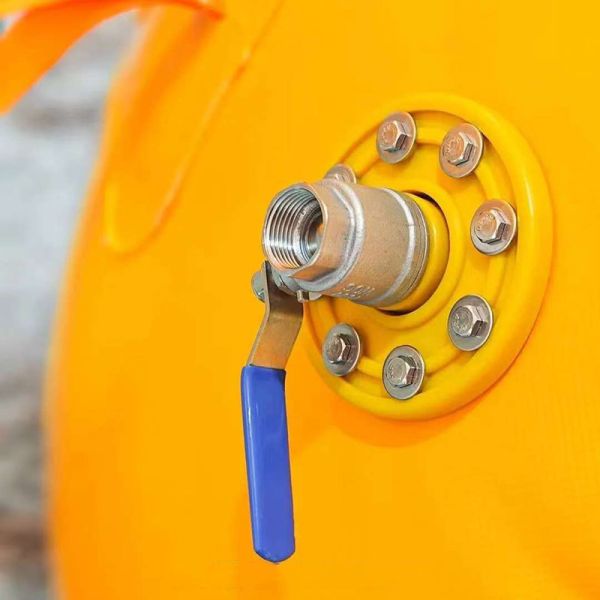
Different salvage scenarios require customized buoyancy capacity, size configurations, and valve systems. Hongruntong Marine provides engineering support to optimize air bag specifications according to water depth, load characteristics, and operational constraints.
Comprehensive Customer Support and Technical Guidance
The company offers ongoing support including operational recommendations, maintenance advice, and technical consultation. This ensures clients can maximize performance, safety, and service life across multiple salvage operations.
FAQ
1. What lifting capacity can PVC inflatable air bags provide?
Capacity depends on air bag size, internal pressure rating, and water conditions. Custom engineering allows lifting capacities suitable for small equipment up to large marine structures.
2. Are the air bags suitable for repeated underwater use?
Yes. With proper maintenance such as cleaning, inspection, and appropriate storage, they can be reused multiple times with reliable performance.
3. How do divers control buoyancy during lifting?
Air supply systems with pressure regulators allow gradual inflation and deflation, enabling precise buoyancy control throughout the lifting process.
4. Can these air bags withstand harsh offshore environments?
Marine-grade PVC materials provide strong resistance to saltwater, UV exposure, abrasion, and chemicals commonly found in offshore conditions.
5. What maintenance is recommended after salvage operations?
Freshwater rinsing, visual inspection for damage, proper drying, and storage away from direct sunlight are recommended to maintain optimal performance.