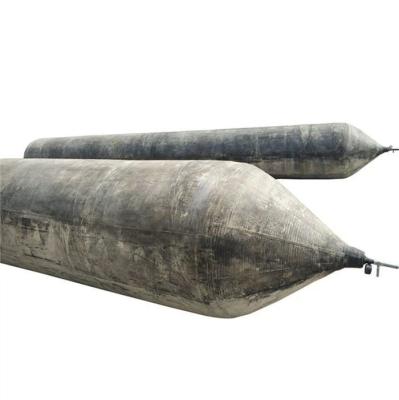
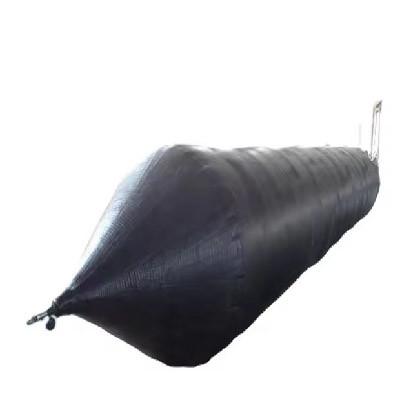
Ship Launching Balloon High Buoyancy Wear Resistant And Durable
Description
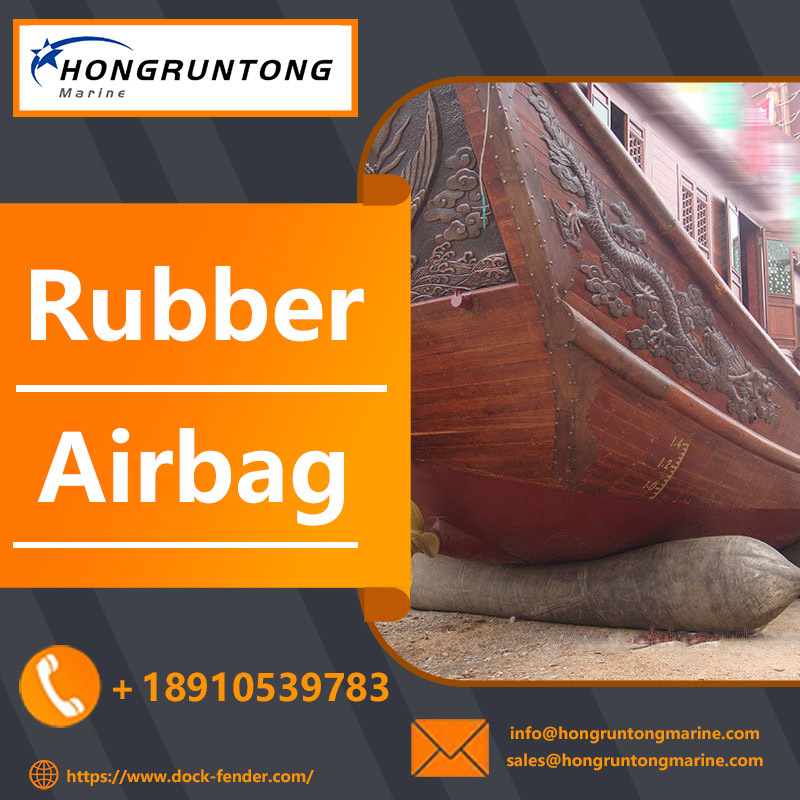
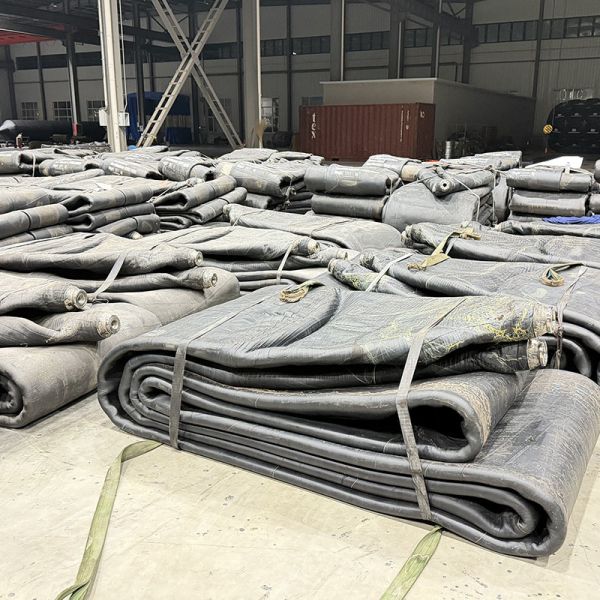
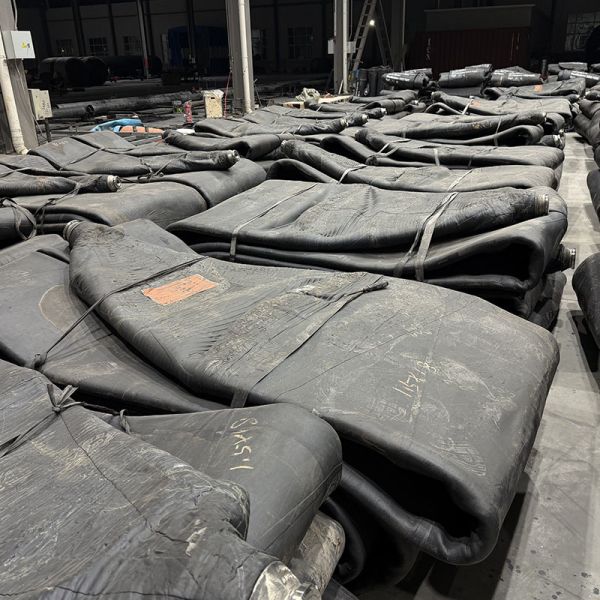
Rubber Airbag is an advanced marine and industrial pneumatic solution designed for heavy-load handling, precise movement, and structural support in extreme operational environments. Manufactured with multiple layers of high-strength tire cord fabric embedded in premium natural and synthetic rubber, it combines elasticity, tensile strength, and long-term durability. Each airbag undergoes stringent engineering design to ensure uniform stress distribution, high load-bearing capacity, and reliable performance under complex conditions.
Its reinforced multi-layer structure allows the airbag to maintain stable cylindrical geometry under high internal pressure, while the outer abrasion-resistant rubber provides excellent wear protection. Internal air pressure can be adjusted precisely, allowing operators to control lifting force and movement velocity. The flexible design adapts to uneven surfaces, inclines, and confined spaces, making it ideal for projects where conventional rigid equipment is unsuitable.
Rubber Airbags are widely deployed in shipyards, offshore construction sites, port facilities, and industrial heavy-lifting projects. Their superior resistance to UV, saltwater, extreme temperatures, and mechanical abrasion ensures long-term operational reliability. The product’s reusability, combined with low maintenance requirements, delivers significant cost savings and operational efficiency for demanding industrial applications.
Case Study – Offshore Oil Platform Module Deployment
A Middle Eastern offshore contractor faced the challenge of positioning a prefabricated oil platform module weighing over 2,500 tons onto a concrete foundation in shallow coastal waters. The site presented uneven seabed conditions, limited crane access, and strong tidal currents, which made traditional lifting or rail systems unsafe and impractical.
Hongruntong Marine supplied a set of custom-diameter Rubber Airbags specifically engineered for extreme load conditions and offshore deployment. The airbags were positioned beneath the module using a combination of temporary scaffolding and pressure-controlled inflation. By incrementally adjusting internal air pressure, operators rolled the module into its final location with precision, while the airbags absorbed vibrations and shocks caused by tidal movement.
The operation was completed without hull or structural damage. Compared with conventional crane deployment, the airbag solution reduced setup time by over 50% and minimized the need for specialized heavy-lifting equipment. Post-project inspection confirmed minimal wear on the airbags, and the client praised the solution for its adaptability, safety, and cost-effectiveness in challenging offshore conditions. The airbags were reused for subsequent offshore modules, demonstrating long-term durability and repeatability.
Specifications
| Item | Description |
| Place of Origin | China |
| Brand Name | Hongruntong Marine |
| Material | NBR |
| Diameter | 0.5m-3.0m, or as Request |
| Length | 1.0m-28.0m, or as Request |
| Working Pressure | 0.05-0.25 Mpa |
| Technics | High Pressure, Overall Winding, Explosion-Proof |
| Use | Ship Launching and Docking |
| Thickness | 5-13 ply |
| Standard | Conducted by ISO14409 and GB/T1590-2006 system. |
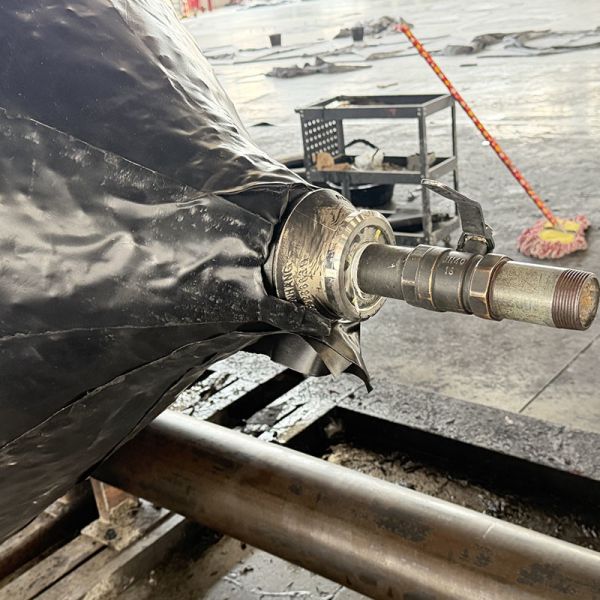
| Accessories | Q355/SS304/SS316, Pressure Gauge, Tee, Plug, Switch, Inflation Tube |
| Packaging | Inner-Plastic Bag; Outer-Standard Wooden Pallets. |
| Keywords | Rubber Airbag |
| Certificates | ABS, BV, KR, LR, GL, NK, RINA, DNV, RMRS |
| MOQ | 1 |
| OEM | Welcome |
| Diameter |
Working Pressure |
Working Height |
Bearing Capacity | |
| KN/m | Ton/m | |||
| D=1.0m | 0.14Mpa | 0.6m | 87.96 | 8.98 |
| 0.5m | 109.96 | 11.22 | ||
| 0.4m | 131.95 | 13.46 | ||
| D=1.2m | 0.12Mpa | 0.7m | 94.25 | 9.62 |
| 0.6m | 113.10 | 11.54 | ||
| 0.5m | 131.95 | 13.46 | ||
| 0.4m | 150.80 | 15.39 | ||
| D=1.5m | 0.10Mpa | 0.9m | 94.25 | 9.62 |
| 0.8m | 109.96 | 11.22 | ||
| 0.7m | 125.66 | 12.82 | ||
| 0.6m | 141.37 | 14.43 | ||
| 0.5m | 157.08 | 16.03 | ||
| D=1.8m | 0.09Mpa | 1.1m | 98.96 | 10.10 |
| 1.0m | 113.10 | 11.54 | ||
| 0.9m | 127.33 | 12.98 | ||
| 0.8m | 141.37 | 14.43 | ||
| 0.7m | 155.51 | 15.87 | ||
| 0.6m | 169.65 | 17.31 | ||
| D=2.0m | 0.08Mpa | 1.2m | 100.53 | 10.26 |
| 1.1m | 113.10 | 11.54 | ||
| 1.0m | 125.66 | 12.82 | ||
| 0.9m | 138.23 | 14.11 | ||
| 0.8m | 150.80 | 15.39 | ||
| 0.7m | 163.36 | 16.67 | ||
| 0.6m | 175.93 | 17.95 | ||
| * Other size can be produced follow client's requirements. | ||||
Features
Fully Customizable Design
Rubber Airbags can be tailored in diameter, length, reinforcement layers, and pressure capacity to meet specific project requirements. This customization ensures optimal load distribution, controlled movement, and structural safety, even under unique or non-standard operational scenarios.
Extreme Load and Pressure Resistance
Reinforced multi-layer construction allows the airbag to sustain extremely high loads and internal pressures. The precise engineering of cord angles and layer thickness ensures predictable deformation under stress, providing operational safety even under high-pressure applications.
Adaptable to Complex Environments
Rubber Airbags maintain stability and functionality on uneven, sloped, or irregular surfaces. Their flexible cylindrical structure absorbs mechanical vibrations, distributes stress evenly, and ensures smooth movement of vessels, heavy modules, or industrial components in confined or challenging workspaces.
Long Term Material Durability
High-quality synthetic and natural rubber compounds provide resistance to abrasion, UV radiation, saltwater, and extreme temperature variations. Combined with fatigue-resistant reinforcement layers, this ensures multiple reuse cycles and extended service life even in offshore or harsh industrial environments.
Applications
Complex Offshore Module Placement
Ideal for positioning large offshore prefabricated modules where cranes or rigid platforms cannot operate safely, including oil and gas installations and marine infrastructure components.
Shipyard Operations in Confined Spaces
Enables safe handling and precise movement of vessels or hull sections in tight shipyard environments, supporting maintenance, docking, and construction operations.
Heavy Industrial Equipment Relocation
Used for transporting and positioning oversized industrial components, steel structures, and prefabricated units across uneven ground surfaces or limited-access sites, ensuring controlled movement and minimal surface damage.
Why Choose Hongruntong Marine
Expertise in Extreme and Complex Projects
Hongruntong Marine brings extensive experience in designing and deploying pneumatic solutions for complex, high-risk, or extreme industrial environments. Our engineers analyze each project’s unique conditions to optimize airbag performance and safety.
Engineering Driven Customization
Every Rubber Airbag can be engineered for diameter, length, reinforcement layers, and pressure capacity tailored to specific project requirements. This ensures that even the most unusual vessel types, industrial modules, or offshore platforms are handled safely and efficiently.
Rigorous Material and Performance Testing
From raw material selection to finished product inspection, all Rubber Airbags undergo comprehensive quality control, including tensile strength testing, internal pressure verification, and abrasion resistance evaluation. This guarantees consistent, reliable performance in challenging applications.
Full Technical and Operational Support
Clients receive complete guidance from project planning through deployment. Hongruntong Marine’s engineers provide on-site support, operational training, and maintenance recommendations, ensuring safe, efficient, and cost-effective operation even under extreme conditions.
FAQ
1. Can Rubber Airbags be designed for unusual vessel shapes or industrial modules?
Yes. Every airbag can be customized in diameter, length, reinforcement, and pressure rating to fit unique shapes and project requirements.
2. Are these airbags suitable for offshore use?
Absolutely. They are engineered to resist saltwater corrosion, UV exposure, temperature extremes, and dynamic environmental forces encountered offshore.
3. How do you ensure safe operation in challenging environments?
Load capacity, air pressure, and deployment configuration are calculated and tested for each project. Reinforced layers and precise inflation control minimize the risk of deformation or failure.
4. What maintenance is required after offshore or heavy-duty use?
Routine inspection for abrasions, pressure check, and cleaning are sufficient. High-quality materials ensure minimal wear and long-term reliability.
5. Can Rubber Airbags handle repeated heavy-duty cycles in extreme conditions?
Yes. The multi-layer reinforced design and high-quality rubber compounds allow safe reuse over many operational cycles, maintaining load capacity, elasticity, and surface protection.