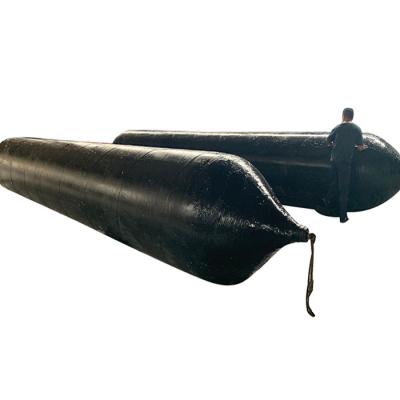
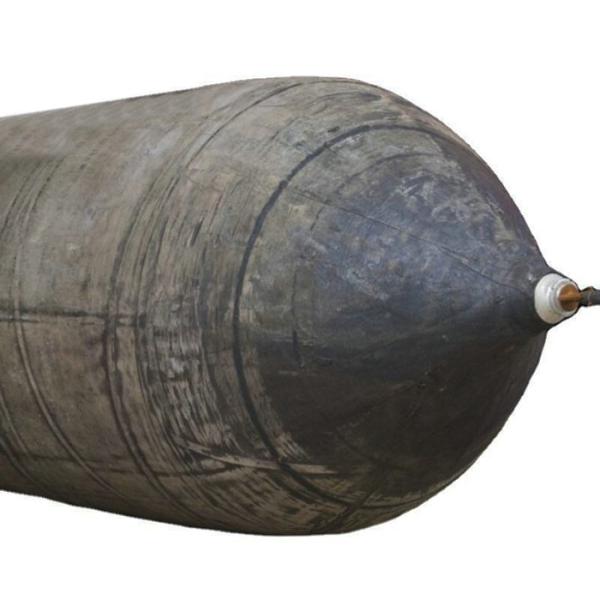
8m Ship Launching Balloon Large Capacity Easy Handling Damage Resistant
Description
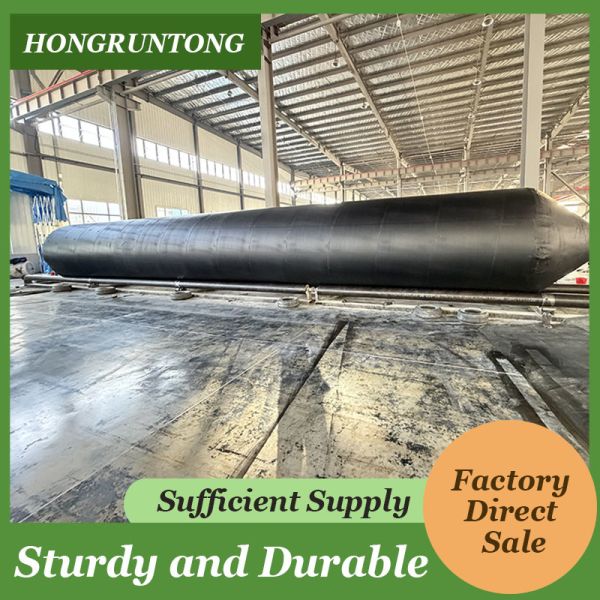
The 8.5m Ship Launching Balloon is a state-of-the-art solution tailored for heavy-duty vessel launching and marine operations in challenging conditions. Built with multi-layer reinforced rubber and high-tensile synthetic fibers, the balloon offers outstanding load-bearing capacity, exceptional elasticity, and remarkable durability. Its design ensures uniform pressure distribution along the hull, minimizing structural stress and reducing the risk of deformation during launch. The material is highly resistant to abrasion, punctures, UV exposure, saltwater corrosion, and extreme temperature fluctuations, guaranteeing long-term reliability even in the most demanding maritime environments. The 8.5m balloon is particularly suited for shipyards, dry docks, and offshore construction projects with limited crane access, uneven surfaces, or high operational demands. By streamlining vessel launches, reducing labor dependency, and providing a repeatable, safe procedure, it improves operational efficiency and safeguards both vessels and personnel.
Case Study
In 2021, a shipyard in Thailand faced the challenge of launching a 2,200-ton bulk carrier with limited dock space and insufficient crane capacity. The shipyard implemented an 8.5m Ship Launching Balloon system from Hongruntong Marine. The balloons were positioned beneath the hull and inflated gradually to maintain uniform pressure. The launch was completed successfully within 55 minutes, with no hull deformation or structural damage. Post-launch, the client reported that the system significantly reduced labor requirements, shortened preparation and launch time, and enhanced overall safety. Workers found the balloons easy to handle and highly adaptable to the dock’s uneven surface. This case demonstrates the balloon’s efficiency, reliability, and versatility for large vessel operations under constrained conditions.
Specifications
| Product Name | Ship Launching Balloon |
| Material | 100% High Tensile Natural Rubber (NR) |
| Dimensions | Diameter 0.2m - 4.0m, Length 3.0m - 28.0m, or As Request |
| Working Pressure | 0.05-0.25MPA |
| Technology | Overall Winding, High Pressure, Explosion-Proof |
| Metal Parts | Q355 / SS304 / SS316 |
| OEM | Supported |
| MOQ | 1 |
| Repair Tools | Electric Heating Plate, Repair Materials, Glue, Free of Charge |
| Standard | ISO 17357 |
| Certificate | ABS, BV, KR, LR, GL, NK, RINA, DNV, RMRS |
| Package | Pallets, Wooden Cases |
| Service Life | 20 Years |
| Warranty | 36 Months |
| Diameter | Working Pressure | Working Height | Bearing Capacity | |
| KN/m | Ton/m | |||
| D=1.0m | 0.14Mpa | 0.6m | 87.96 | 8.98 |
| 0.5m | 109.96 | 11.22 | ||
| 0.4m | 131.95 | 13.46 | ||
| D=1.2m | 0.12Mpa | 0.7m | 94.25 | 9.62 |
| 0.6m | 113.10 | 11.54 | ||
| 0.5m | 131.95 | 13.46 | ||
| 0.4m | 150.80 | 15.39 | ||
| D=1.5m | 0.10Mpa | 0.9m | 94.25 | 9.62 |
| 0.8m | 109.96 | 11.22 | ||
| 0.7m | 125.66 | 12.82 | ||
| 0.6m | 141.37 | 14.43 | ||
| 0.5m | 157.08 | 16.03 | ||
| D=1.8m | 0.09Mpa | 1.1m | 98.96 | 10.10 |
| 1.0m | 113.10 | 11.54 | ||
| 0.9m | 127.33 | 12.98 | ||
| 0.8m | 141.37 | 14.43 | ||
| 0.7m | 155.51 | 15.87 | ||
| 0.6m | 169.65 | 17.31 | ||
| D=2.0m | 0.08Mpa | 1.2m | 100.53 | 10.26 |
| 1.1m | 113.10 | 11.54 | ||
| 1.0m | 125.66 | 12.82 | ||
| 0.9m | 138.23 | 14.11 | ||
| 0.8m | 150.80 | 15.39 | ||
| 0.7m | 163.36 | 16.67 | ||
| 0.6m | 175.93 | 17.95 | ||
| * Other Size Can Be Provided Follow Client's Requirements. | ||||
Features
Unmatched Load Management and Dynamic Stability
The core of its design is the ability to handle extreme distributed loads while maintaining stability. The internal cord structure is engineered to control expansion under pressure, ensuring the balloon maintains a predictable cylindrical shape without dangerous bulging, even when supporting uneven weight distributions from complex hull forms.
Engineered for Abrasive and Chemically Harsh Environments
Beyond basic waterproofing, the outer layer is compounded with specific additives for ultra-high abrasion resistance and protection against marine pollutants, oils, and sunlight. This materially extends service life in real-world conditions where contact with abrasive surfaces like concrete slipsways or coral rock is unavoidable.
Rapid Deployment and Intuitive Operational Handling
Designed for field efficiency, the system features large, standardized pneumatic valves for fast inflation/deflation with common industrial compressors. The fabric’s flexibility and manageable weight allow for manual positioning and retrieval by a small crew without cranes, and its deflated state allows for compact storage in limited shipyard or vessel hold space.
Broad Spectrum Temperature and Elasticity Retention
The specialized rubber compound retains its flexibility and elastic rebound properties across a wide temperature spectrum, from freezing Arctic conditions to hot tropical sun. This ensures consistent performance, reliable grip, and effective shock absorption regardless of climatic extremes, preventing material brittleness or excessive softening.
Applications
Controlled Vessel Launching and Landing
The primary application is for the safe, graded launch of newly built or repaired vessels from slipways, or their recovery onto land. The balloons act as a rolling, cushioning bed, allowing for precise control over the vessel’s descent into or ascent from the water, significantly reducing structural shock compared to traditional side-launch methods.
Dry Docking, Hull Maintenance, and Emergency Support
Ideal for creating temporary dry docks or supporting vessels during emergency repairs in locations without fixed infrastructure. The balloons can be used to lift a vessel’s hull clear of the water for inspection and patch repairs, or to provide stable, adjustable support to a listing or grounded vessel to prevent further damage.
Offshore and Heavy Engineering Support
Used in offshore logistics for the transfer of heavy modules onto barges, as fenders during heavy load movements, or as adjustable buoyancy aids in subsea construction projects. Their portability and high capacity make them valuable for temporary support and stabilization tasks in remote or constrained engineering sites.
Vessel Transportation and Positioning
Facilitates the inland transportation of boats and small ships on trailers or railway cars by providing a conforming, protective cushion. Within shipyards, they are used for precise lateral movement and rotation of vessels on hard stands, optimizing limited space without the need for heavy rail systems.
Advantages
Decades of Specialized Engineering Experience
We are not just manufacturers but solution engineers with deep, practical experience in maritime logistics. Our team understands the unique stresses and challenges of ship handling, allowing us to provide not just a product, but actionable technical support and system design for your specific project.
Proven Custom Design Capability for Complex Challenges
While we offer reliable standard products like the 7m balloon, our core strength is in developing custom solutions. We engineer airbags in non-standard sizes, with specific pressure ratings, unique shapes, or tailored material properties to meet extraordinary load, space, or environmental constraints.
Uncompromising Commitment to Material Quality and Traceability
Every layer of fabric and every batch of rubber compound is sourced from certified suppliers and subjected to rigorous in-house testing. We maintain full traceability and perform batch testing for tensile strength, adhesion, and environmental resistance, ensuring every unit meets our stringent performance benchmarks before shipment.
Comprehensive Global Technical and After-Sales Support
Our partnership includes full lifecycle support. We provide detailed, project-specific calculation and operation manuals, on-site or remote technical guidance during critical first-use operations, and a responsive after-sales service network for maintenance advice and rapid turnaround on repairs, ensuring long-term operational reliability and ROI.
FAQ
1. What is the maximum load capacity of a single 7m balloon?
The working load capacity is pressure-dependent. At a standard safe working pressure of 0.12 MPa, a single 7m x 2.5m diameter balloon can typically support approximately 220-250 metric tons. Capacities can be adjusted by varying the inflation pressure within the designed safe limits, and detailed load-pressure tables are provided with each unit for precise engineering planning.
2. How is the balloon positioned under a heavy vessel, and is special equipment needed?
For most operations, no heavy machinery is required for positioning. The deflated balloon is lightweight and flexible enough to be manually slid or winched into the required position under the hull by a small crew. For initial lifting from a hard stand, thin, high-pressure water jets or air lubrication techniques are often used to create a film that allows the balloon to be inserted. The primary equipment needed is a standard industrial air compressor capable of reaching the required pressure.
3. Can these balloons be reused, and what is their typical service life?
Yes, they are designed specifically for repeated reuse. Service life is measured in operational cycles and is heavily influenced by the working environment (e.g., abrasive surfaces). With proper care, inspection, and maintenance—such as cleaning after use and avoiding sharp debris—a balloon can typically last for dozens to over a hundred major lifting cycles. We provide detailed inspection and maintenance guidelines to maximize longevity.
4. What safety certifications and testing do your marine airbags undergo?
Our manufacturing process and final products comply with international standards such as ISO 14409 for marine inflation systems. Each batch of material undergoes tensile, adhesion, and elongation tests. Completed airbags are subjected to rigorous proof pressure testing (exceeding maximum working pressure) and held for a stabilization period. A comprehensive test certificate detailing the results is supplied with every shipment.
5. Are these suitable for use in cold climates or with extreme temperature variations?
Absolutely. The synthetic rubber and fabric composite is specifically formulated for a wide operational temperature range. It retains critical elasticity and performance properties in temperatures as low as -30°C, preventing brittleness and cracking. In high-temperature environments up to 70°C, the material resists softening and excessive expansion. This makes them reliable for use in Arctic projects, tropical shipyards, and anywhere with significant daily or seasonal temperature swings.