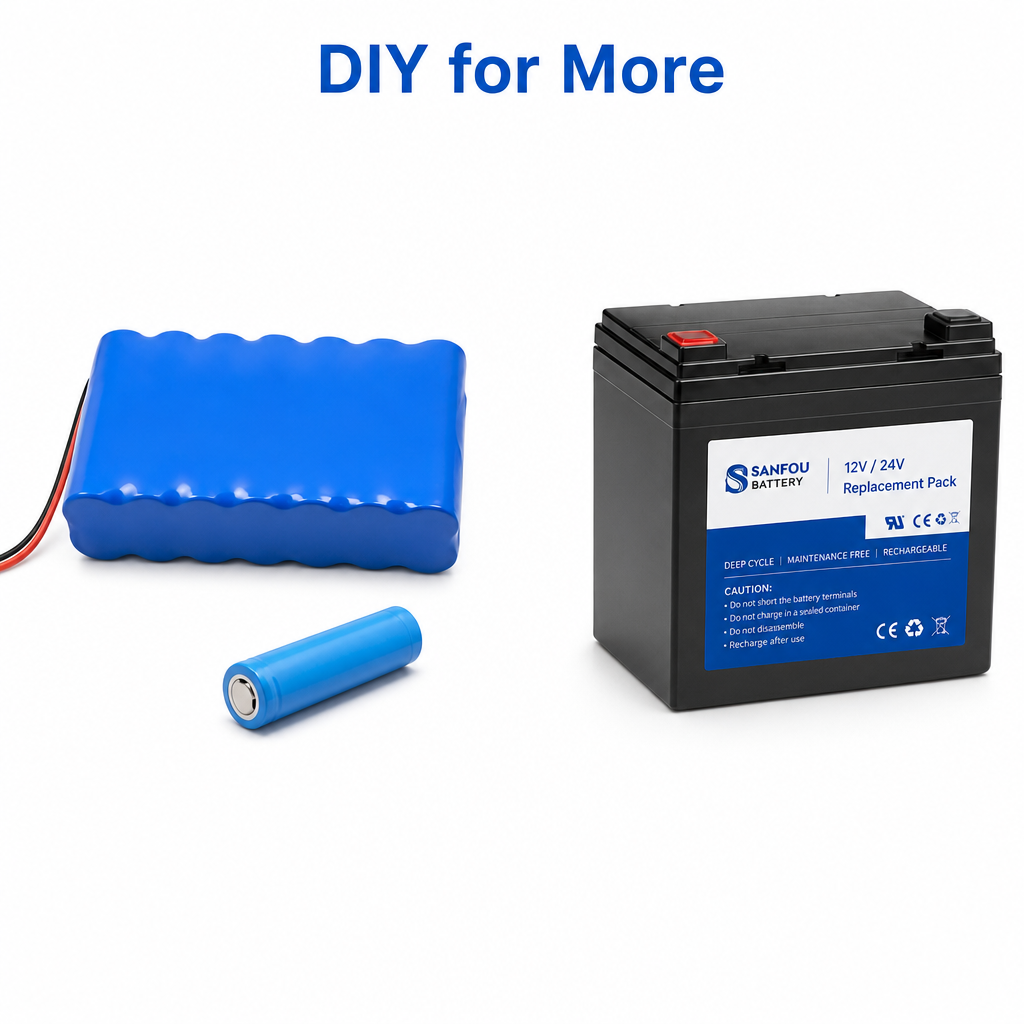
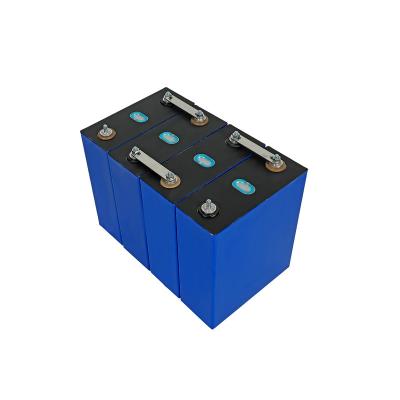
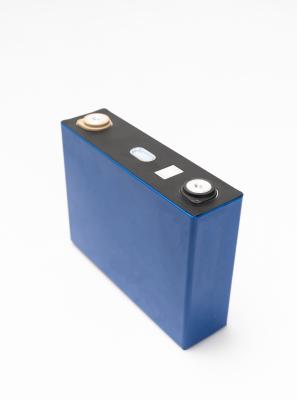
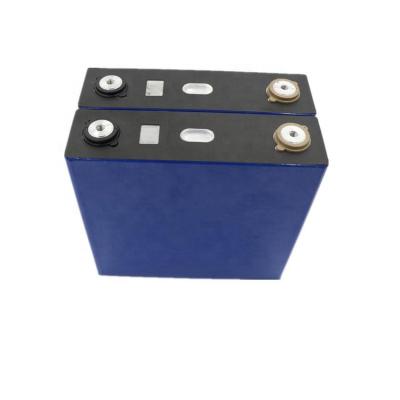
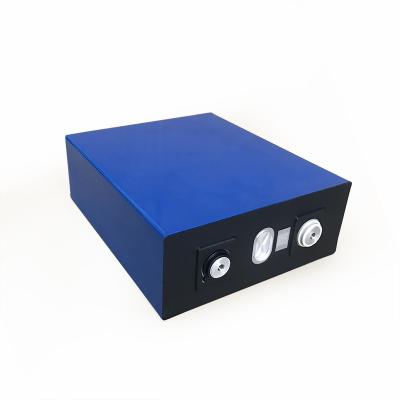
| Battery Type | LifePO4 Battery | Lead Acid Battery |
|---|---|---|
| Nominal Voltage | 3.2V | 2V |
| Energy Density | 180Wh/kg | 30WH/KG |
| Weight | Light | Heavy |
| CBM | Small | Big |
| Safety Rate | High | Low |
| Cycles | 3500 | 500 |
| Memory | No | Yes |
| Environmental Protection | Environmental protection and pollution-free | Pollution |
| Items | Specification | Remarks |
|---|---|---|
| Nominal Capacity | 3400mAh | 0.2 C5A Discharge |
| Nominal Voltage | 3.2V | |
| Discharge Cut-off Voltage | 2.0V | 0.2 C5A Discharge |
| Charge Limited Voltage | 3.65±0.03V | 0℃~60℃ |
| Standard Charge Current | 0.2 C5A | 0℃~60℃ |
| Standard Discharge Current | 0.2 C5A | -10℃~ +60℃ |
| Rapid Charge Current | 0.5C5A | 0℃~60℃ |
| Rapid Discharge Current | 0.5C5A | -10℃~ +60℃ |
| Max. Discharge Current | 3C5A | Limited Voltage 2.0V |
| Max. Pulse Discharge Current | 5C5A | ms |
| Internal Impedance | ≤25mΩ | At AC 1kHz |
| Weight | 大约 About 86.0g | ±2g |
| Storage Duration | Temperature Range | Voltage of Shipment |
|---|---|---|
| ≤ one month | -20℃ ~ 45℃ | 3.2V~3.4V |
| ≤ three months | -20℃ ~ 35℃ | |
| ≤ a year | -20℃ ~ 25℃ |
| Items | Test Conditions | Specification |
|---|---|---|
| Standard Charge | The "Standard Charge" means charging with constant current 0.2C5 to 3.65V, then charging with constant voltage 3.65V to 0.01C5 under 28±3℃, charging time will not more than 8h. (Use Lithium-ion battery charger, which with an accuracy ±0.05V.) | |
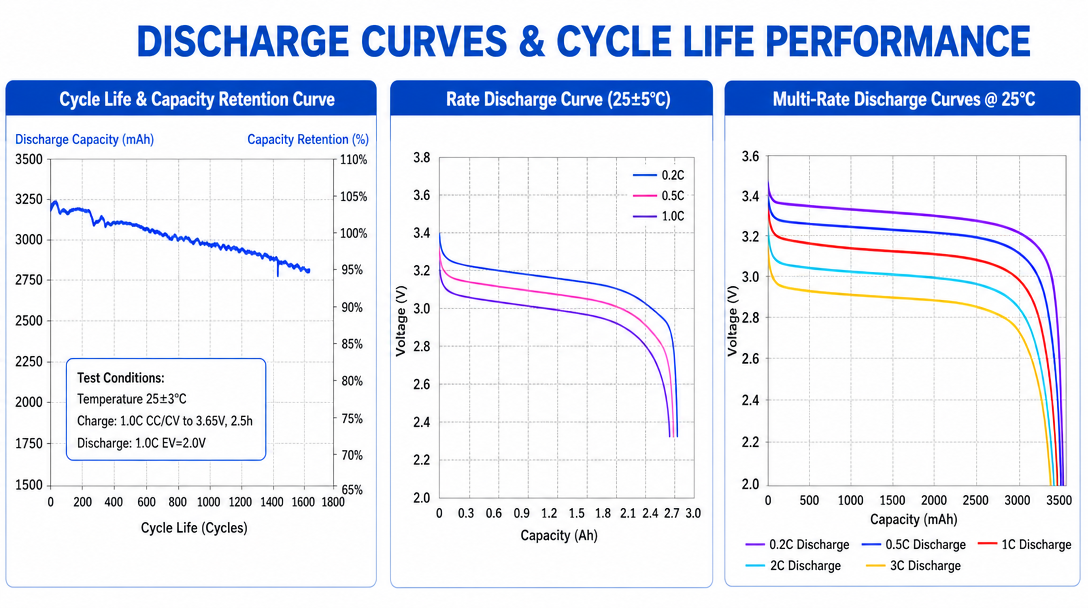
| Nominal Capacity | The capacity means the discharge capacity of the cell, which is measured with discharge current 0.2C5 to cut-off voltage at 2.0V at 28±3℃ rest for 30 minutes after the Standard Charge. | Nominal Capacity ≥3400mAh |
| Cycle Life | After 2000 cycles of charge and discharge, the discharge capacity is measured with 0.2 C5A discharge current and 2.0V cut-off voltage. | ≥80% Nominal Capacity |
| Storage Characteristic | Test the cell initial capacity using 0.2C5 current at 23±2℃ and record, then charge the cells with 45% capacity, then storage for 3, 6, 12 months respectively at 28±3℃ and relative humidity of 45%~75%, then the cell is cycled for 5 times with charge with 0.2C5 and discharge with 0.2C5 at 28±3℃, The maximum discharge capacity (longest discharge time) is recorded. | 0.2C discharge time: After 3 months storage ≥4.5hrs; After 6 months storage ≥4.25hrs; After 12 months storage ≥4.0hrs |
| Capacity Retention | The cell is charged and discharged using 0.2C5 at 28±3℃. The discharge capacity is C1. The cell is stored for 28 days in 28±3℃ after fully charged and then is discharged using 0.2C5 at 28±3℃. The capacity is defined as C2. | C2/C1≥85% |
| Capacity Recoverable Ratio | After the test as C2, The cell is charged and discharged using 0.2C5 at 28±3℃, The discharge capacity is C3. | C3/C1≥90% |
| Rate Capacity |
The discharge capacity is measured with 0.2 C5A discharge current and 2.0V cut-off voltage after full charged. The discharge capacity is measured with 0.5 C5A discharge current and 2.0V cut-off voltage after full charged. The discharge capacity is measured with 1 C5A discharge current and 2.0V cut-off voltage after full charged. The discharge capacity is measured with 3 C5A discharge current and 2.0V cut-off voltage after full charged. |
≥100% Nominal Capacity 0.5C/0.2C=96% 1C/0.2C=93% 3C/0.2C=85% |
| Items | Test Conditions | Specification |
|---|---|---|
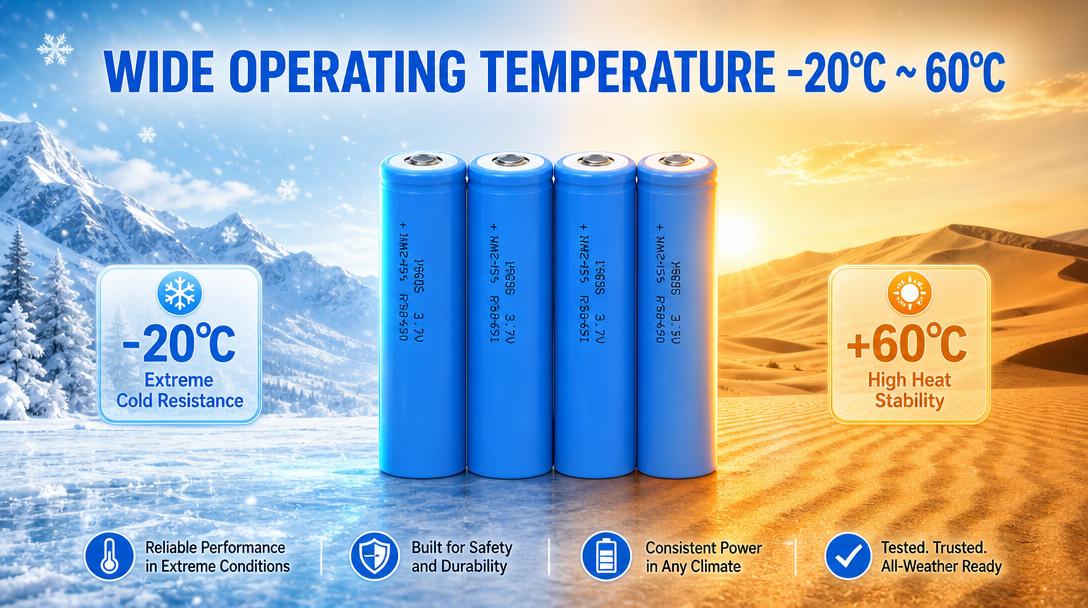
| Temperature Performance | Cells shall be charged according to 5.1 and discharged at 0.2C5 to 2.0 V. Cells shall be stored for 4 hours at the test temperature prior to discharging and then shall be discharged at the test temperature, The percentage shall be calculated using discharging capacity compared to the minimum capacity. |
No leakage, No Appearance defect -20℃/25℃≥40% -10℃/25℃≥60% 0℃/25℃≥85% 25℃/25℃≥100% 60℃/25℃≥96% |
| Constant Temperature and Humidity | Under the temperature of 28±3℃, after charging the cell with 0.2C5, then put the cell into the constant temperature and humidity oven with 40±2℃ and 90~95% for 48h, then store the cells at RT for 2hrs, and discharge the cells with 0.2C5 to 2.0 volts. | The cell should be no deformation, no rust, no leakage, no fire, no smoking and no explosion. Discharge time ≥3h |
| Free Fall Test | The fully charged cell is dropped three times from a height of 1000 mm (the lowest point of the cell) onto a concrete floor. The cells or batteries are dropped so as to obtain impacts in random orientations. After the test, the cell shall be put on rest for a minimum of one hour and then a visual inspection shall be performed. | No explosion, No fire, No smoke. The OCV after the test no less than 90% before free-fall test. |