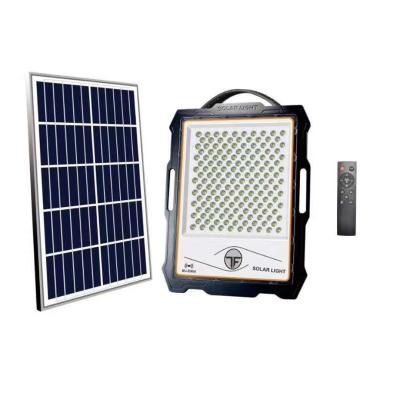
Solar Flood Light Ip66 Outdoor Die-Cast Aluminum Adjustable Solar Panel LED Light
| Power | Solar Panel | Lamp Source | Battery | Installation Height |
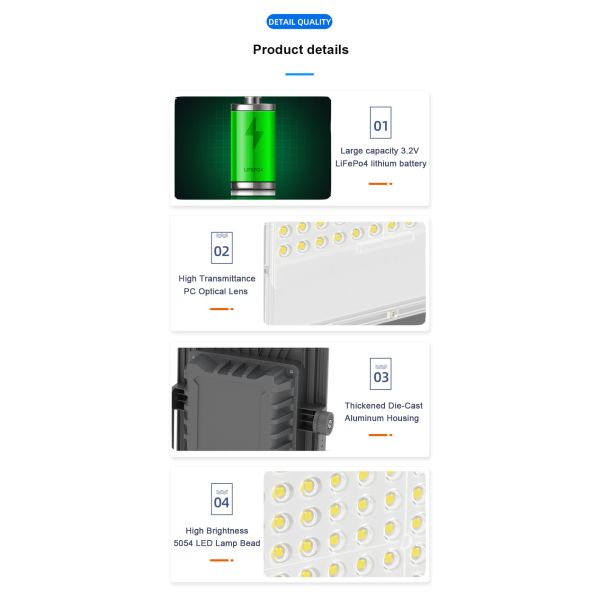
| 20W | 40W/5V 390*590*25mm | 5050SMD chips 160PCS | 3.2V/40AH LiFePo4 Lithium battery | 3-5m |
| 30W | 60W/5V 450*600*25mm | 5050SMD chips 160PCS | 3.2V/60AH LiFePo4 Lithium battery | 4-6m |
| 40W | 70W/5V 510*670*30mm | 5050SMD chips 160PCS | 3.2V/75AH LiFePo4 Lithium battery | 5-7m |
| 50W | 90W/5V 670*700*30mm | 5050SMD chips 216PCS | 3.2V/105AH LiFePo4 Lithium battery | 6-8m |
| 60W | 100W/18V 880*640*30mm | 5050SMD chips 216PCS | 3.2V/120AH LiFePo4 Lithium battery | 7-9m |
In the era of advocating sustainable development and green energy, solar floodlights have emerged as a prominent outdoor lighting solution, gaining widespread popularity for their energy-saving, eco-friendly, and convenient features. This article aims to elaborate on the working principle, core advantages, practical application scenarios, and significant environmental value of solar floodlights, providing readers with a comprehensive understanding of this green lighting technology.
Working Principle of Solar Floodlights
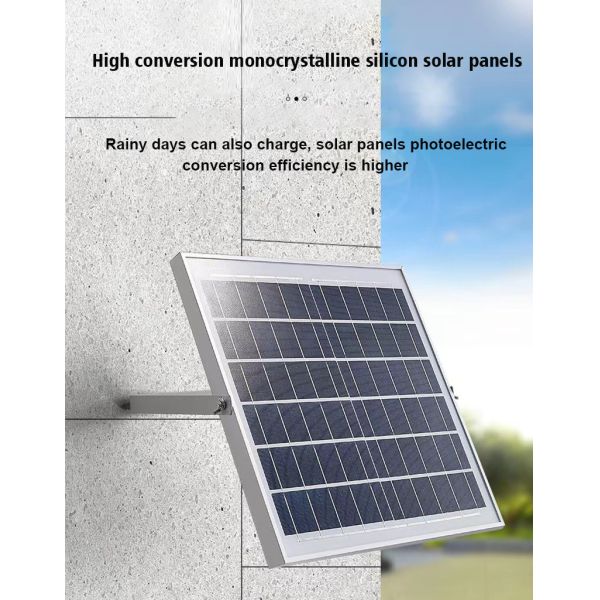
Solar floodlights operate based on the principle of converting solar energy into electrical energy for storage and subsequent lighting. The key components include a solar panel, a storage battery, an intelligent controller, and LED lamp beads, each playing an indispensable role. During daylight hours, the solar panel, typically made of high-efficiency monocrystalline or polycrystalline silicon, captures sunlight and converts it into direct current (DC) through the photovoltaic effect. The intelligent controller then regulates the charging process, ensuring the electrical energy is safely and efficiently stored in the rechargeable lithium-ion or lead-acid battery. As night falls and the ambient light intensity drops below a preset threshold, the controller automatically activates the LED lamp beads, converting the stored electrical energy into visible light to fulfill the lighting requirement. This entire process is fully automated, eliminating the need for manual intervention and enabling seamless day-and-night operation.
Core Advantages of Solar Floodlights
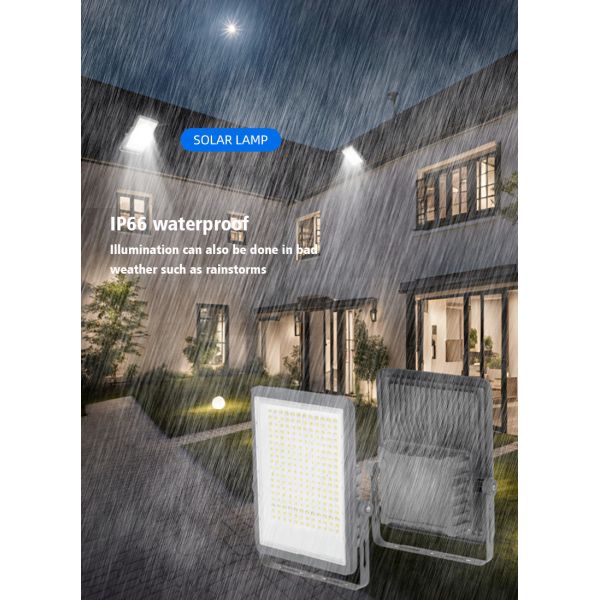
Solar floodlights offer a multitude of advantages that set them apart from traditional wired lighting fixtures. Firstly, they are energy-efficient and cost-saving. By harnessing solar energy, an infinite renewable resource, they require no connection to the municipal power grid, resulting in zero electricity bills. This not only reduces long-term operational costs but also alleviates the burden on the public power supply system. Secondly, easy installation and flexibility are notable features. Without the need for complex wiring or trenching work, solar floodlights can be installed in any location with sufficient sunlight, such as remote areas, construction sites, or outdoor venues where laying cables is difficult or costly. The simple installation process also saves time and labor expenses. Thirdly, reliable performance and durability are guaranteed. Equipped with high-quality batteries and waterproof, dustproof casings (usually with an IP65 or higher protection rating), solar floodlights can withstand harsh weather conditions like heavy rain, strong winds, and extreme temperatures. Most products can maintain stable lighting for 6-15 hours per night, and some high-end models can even work continuously for 2-3 rainy days thanks to their large-capacity batteries. Additionally, intelligent control enhances usability. Many solar floodlights are equipped with timing functions, motion sensors, or dimming features, allowing users to customize lighting modes according to specific needs, further optimizing energy efficiency and user experience.