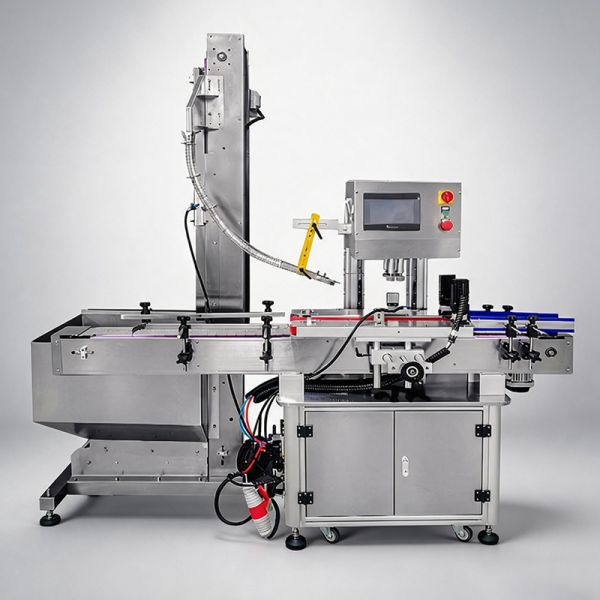
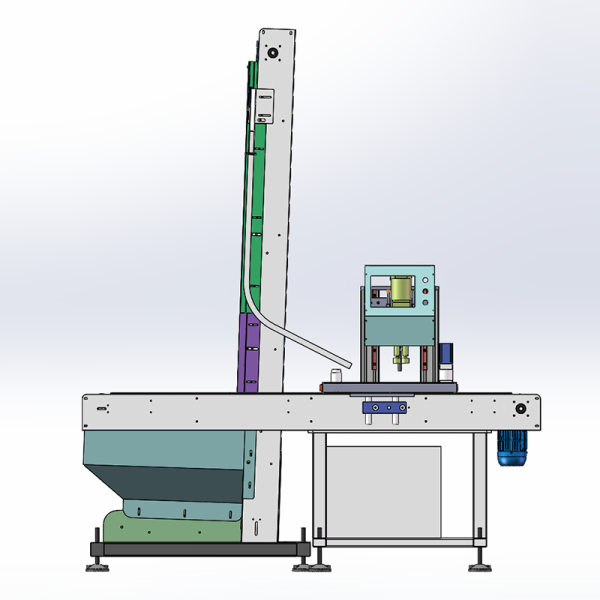
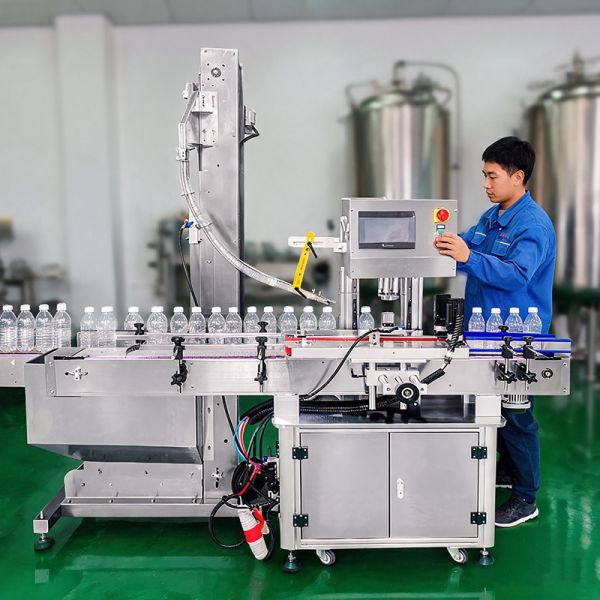
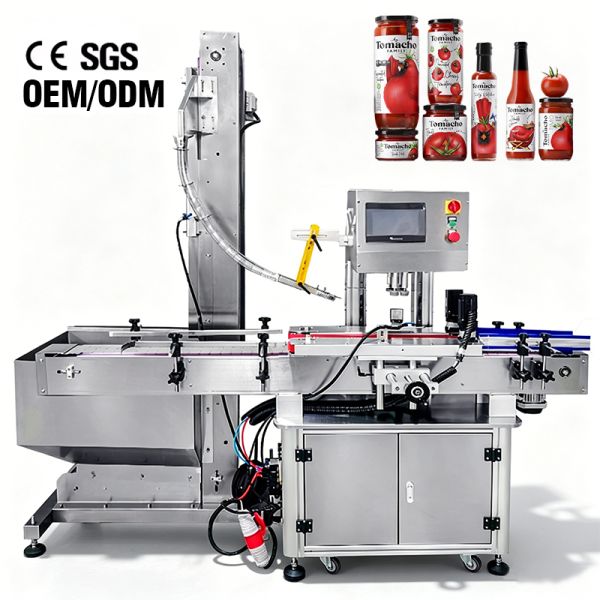
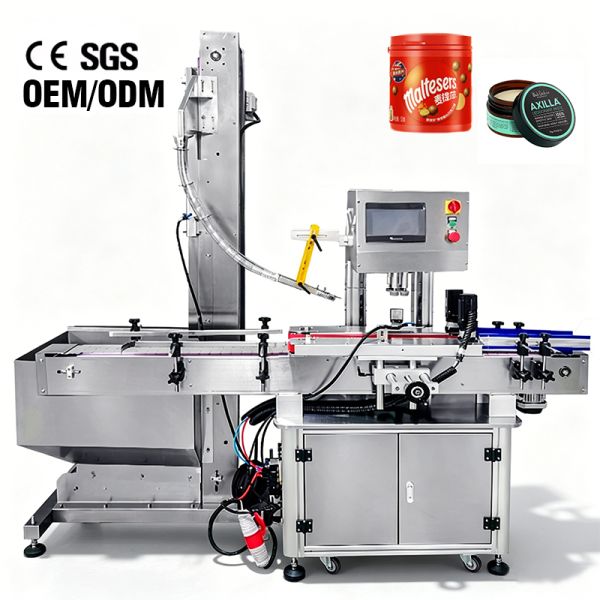
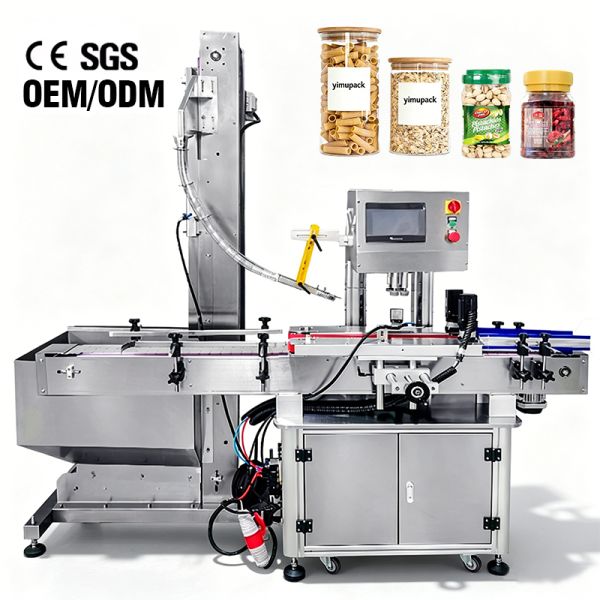
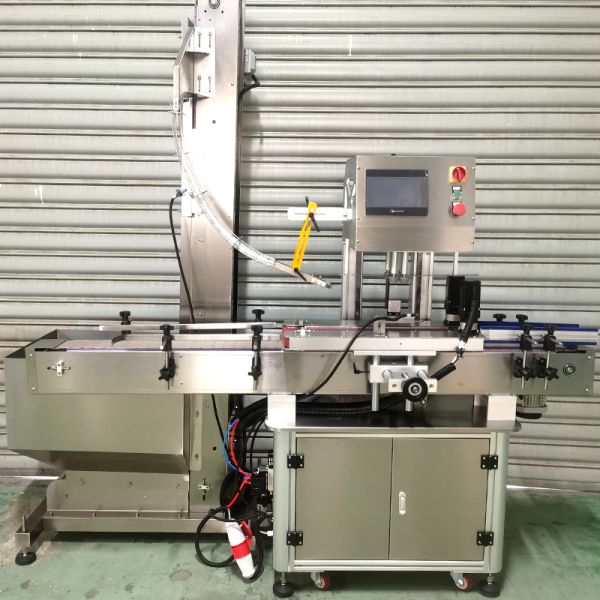
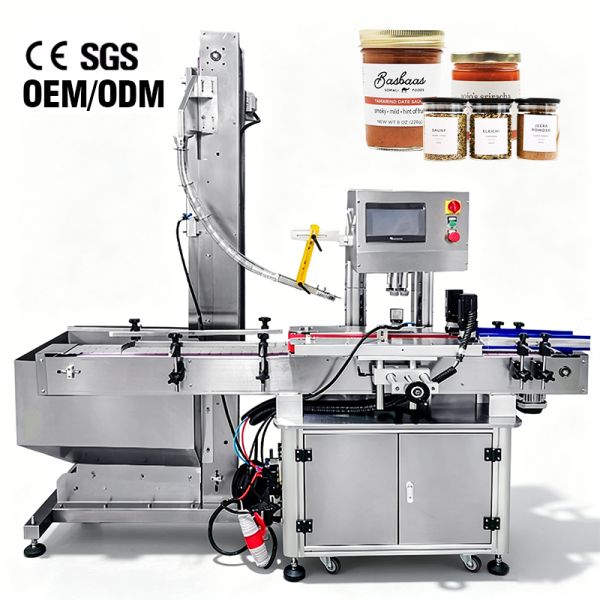
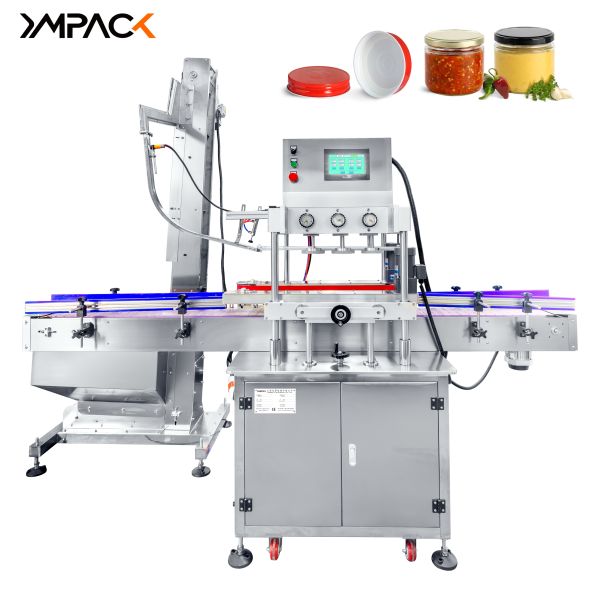
CM140 Automatic 4 Wheel Capping Machine Glass Jar Plastic Bucket Pet Bottle Capper Machine With OEM ODM Services
Every capital equipment purchase competes for limited investment dollars. The CM140's value proposition must be expressed not in technical specifications but in financial terms: how much money does the machine save, and how quickly does it return its purchase price?


How it works: Operator places cap on each bottle by hand and tightens using a manual torque wrench or handheld pneumatic tool.
Throughput: 5-10 bottles/minute/operator
Labor (1 shift, 250 days/year): 1 operator at $15/hour loaded = $30,000/year
Annual capacity: ~960,000 bottles/operator
Hidden costs: Inconsistent torque (no feedback), ergonomic injuries and worker compensation claims, quality inspection labor to catch bad caps, high turnover (tedious work), line speed bottleneck.
How it works: Benchtop or stand-mounted single-head capper. Operator places each bottle and activates the capping cycle (foot pedal or hand switch).
Throughput: 15-25 bottles/minute/operator
Labor: 1 operator at $15/hour = $30,000/year
Annual capacity: ~2,400,000 bottles/operator
Improvements over manual: More consistent torque, reduced fatigue, higher throughput.
Limitations: Still requires a dedicated operator, torque is not digitally controlled, not suitable for continuous inline operation.
How it works: Continuous inline capping. Bottles flow on dual-belt conveyor through the four-wheel array. Caps feed automatically from the elevator. No dedicated operator required.
Throughput: 10-45 bottles/minute (1,000-2,500 bottles/hour)
Labor: No dedicated capping operator. One line supervisor monitors the entire filling-capping-labeling line.
Advantages: >99.99% capping success, continuous-motion (no stop-and-go), trigger sprayer and pump capability, 1,000+ recipe memory, minimal maintenance.
Production: 10,000 bottles/day (single shift, 250 days/year = 2,500,000 bottles/year). Product mix: shampoo bottles with flip-top caps, lotion bottles with pump dispensers, body wash with disc-top caps. Average product value: $4/bottle.
| Cost Category | Annual Cost |
|---|---|
| Capping operators (3 operators at $15/hr loaded) | $90,000 |
| Quality inspection (0.5 FTE) | $15,000 |
| Product loss from leaking/defective caps (1.5% defect × $4/product) | $150,000 |
| Rework labor and packaging | $12,000 |
| Total Annual Cost | $267,000 |
| Cost Category | Annual Cost |
|---|---|
| Line supervisor (capping portion, 0.2 FTE at $20/hr) | $8,000 |
| Machine amortization ($18,000 over 10 years) | $1,800 |
| Maintenance and spare parts (annual) | $1,500 |
| Product loss from defective caps (0.01% defect × $4/product) | $1,000 |
| Electricity (1,500W × 2,000 hrs × $0.12/kWh) | $360 |
| Total Annual Cost | $12,660 |
Annual savings vs. manual: $254,340. Payback period: Under 1 month.
Production: 25,000 bottles/day across two shifts (6,250,000 bottles/year). Product mix: trigger sprayer bottles (60%), pump dispenser bottles (25%), standard screw cap bottles (15%). Average product value: $2.50/bottle.
| Cost Category | Annual Cost |
|---|---|
| Capping operators (6 operators × $15/hr loaded) | $180,000 |
| Quality inspection (1 FTE) | $30,000 |
| Product loss from leaking/defective caps (2% defect × $2.50) | $312,500 |
| Trigger sprayer manual insertion labor (additional 2 operators) | $60,000 |
| Rework and returns processing | $28,000 |
| Total Annual Cost | $610,500 |
Note: The additional 2 operators for trigger sprayer manual insertion reflect a common reality in manual capping operations — trigger sprayers with dip tubes are particularly labor-intensive to cap by hand.
| Cost Category | Annual Cost |
|---|---|
| Line supervisor (capping portion, 0.3 FTE × $20/hr) | $12,000 |
| Machine amortization ($18,000 over 10 years) | $1,800 |
| Maintenance and spare parts | $2,500 |
| Product loss from defective caps (0.01% × $2.50) | $1,563 |
| Electricity | $720 |
| Total Annual Cost | $18,583 |
Annual savings vs. manual: $591,917. Payback period: Under 2 weeks.
The dramatic savings in this scenario reflect two CM140 advantages specific to cleaning product manufacturing: (1) the CM140 handles trigger sprayers automatically — eliminating 2 full-time positions dedicated to manual trigger sprayer insertion; and (2) the >99.99% success rate eliminates the high defect rate common with manual trigger sprayer capping.
| Manual (6 operators, 2 shifts) | CM140 Automatic | |
|---|---|---|
| Initial equipment cost | $5,000 (torque wrenches, tools) | $18,000 |
| 10-year labor | $2,400,000 | $120,000 (supervisor allocation) |
| 10-year product loss (2% vs 0.01% defect) | $3,125,000 | $15,630 |
| 10-year maintenance | $15,000 | $25,000 |
| 10-year total | $5,545,000 | $178,630 |
| 10-year savings with CM140 | — | $5,366,370 |