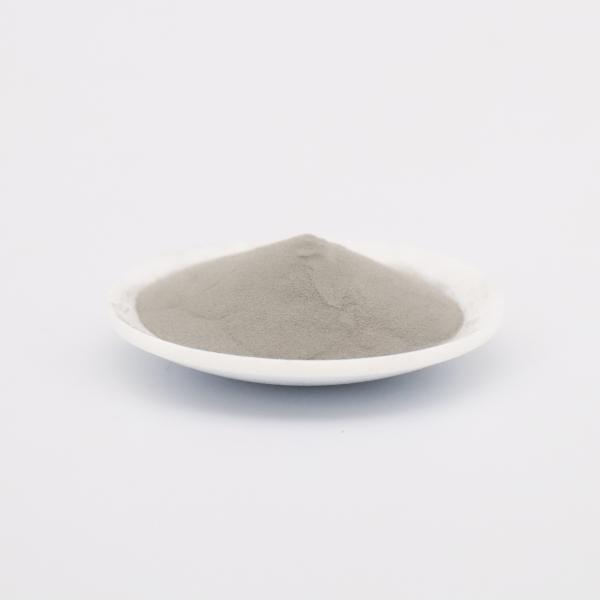
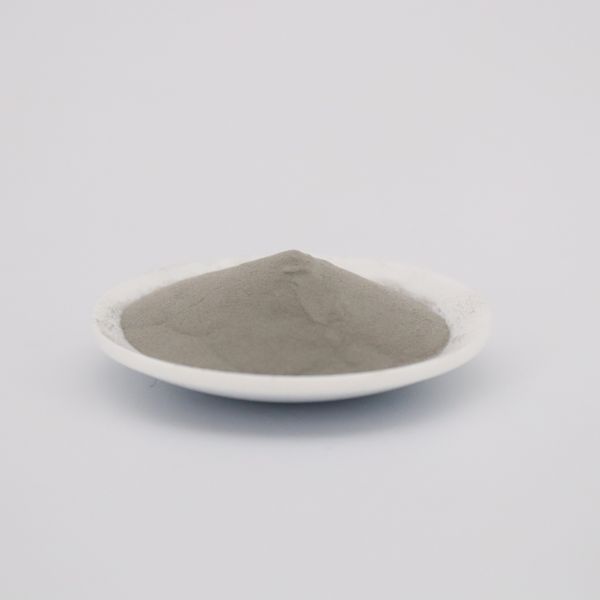
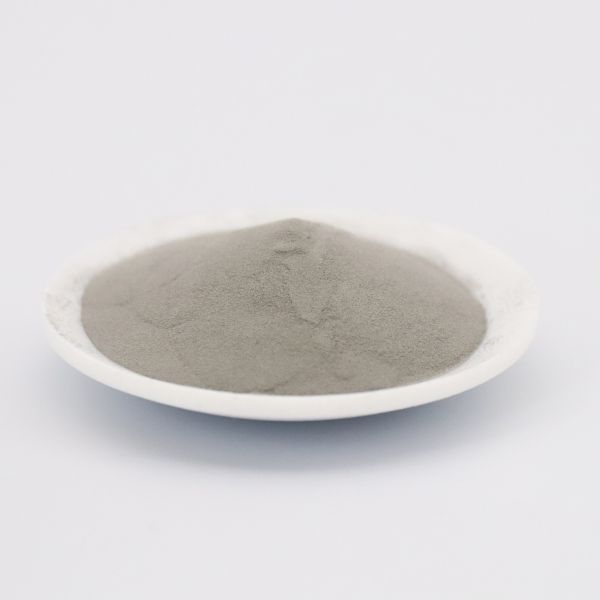
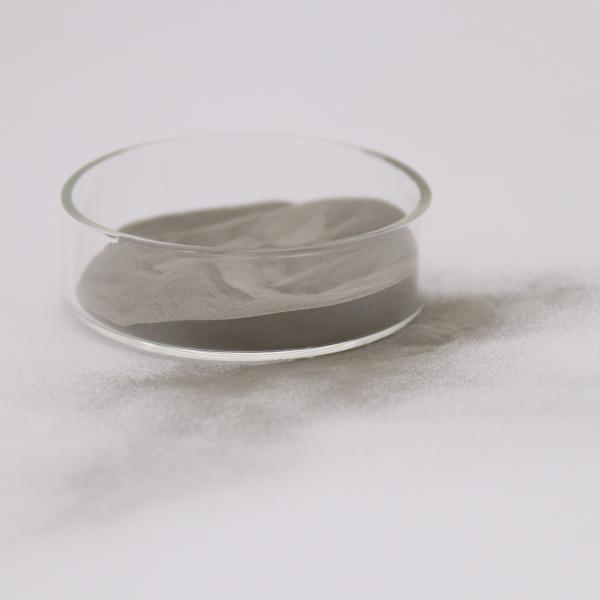
Detailed Description: Spherical Stainless Steel Alloy Powder for AM & Thermal Spray
This is a high-quality metal powder that serves as a versatile feedstock for multiple advanced manufacturing techniques.
1. Powder Characteristics
Morphology: Spherical.
This is the most critical feature.
Production Method: Almost exclusively Gas Atomization.
Molten stainless steel is dispersed by a high-pressure inert gas (Argon, Nitrogen) to form fine, spherical droplets that solidify into powder.
Key Properties:
- Excellent Flowability: Spherical particles roll over each other easily, which is essential for both automated powder spreading in 3D printers and consistent feeding in thermal spray guns.
- High Packing Density: Spheres pack together more efficiently than irregular shapes, leading to denser coatings in thermal spray and higher part density in 3D printing.
- Low Oxygen Content: The inert gas during atomization minimizes oxidation, which is vital for achieving good mechanical properties and corrosion resistance in the final part or coating.
Particle Size Distribution (PSD):
- For 3D Printing (L-PBF): Fine powder, typically 15-45 µm.
- For Thermal Spray & 3D Printing (DED): Coarser powder, typically 45-106 µm or 53-150 µm. This size is ideal for being carried by the gas stream in thermal spray and DED systems.
2. How It Is Used in Each Process
A. In 3D Printing (Additive Manufacturing)
- Laser Powder Bed Fusion (L-PBF): A thin layer of this fine spherical powder is spread across a build platform. A laser then selectively melts the powder according to the part's cross-section, building a solid, dense object layer by layer.
- Directed Energy Deposition (DED): The coarser spherical powder is blown through a nozzle into a focused laser beam, creating a melt pool on a substrate. This builds up material, either to create a new part or to add material to an existing component (e.g., for repair or feature addition).
B. In Thermal Spraying
- Process: The spherical powder is fed into a high-temperature, high-velocity stream (in Plasma Spray or HVOF). The particles are heated to a molten or semi-molten state and accelerated onto a prepared substrate surface.
- Result: Upon impact, the particles flatten, splatter, and rapidly solidify, forming a tightly bonded coating. The spherical morphology ensures consistent feeding and melting, leading to a uniform, low-porosity coating.
3. Common Stainless Steel Grades Used
The same spherical powder grades are used in both fields:
- 316L: The most common, due to its excellent corrosion resistance.
- 304/L: For general purpose corrosion protection.
- 17-4PH: For applications requiring high strength and hardness after heat treatment.
- 420: For wear-resistant surfaces and tools.
4. Advantages of Using Spherical Powder for These Applications
| Application | Advantages of Spherical Powder |
| 3D Printing (L-PBF) | Enables smooth, consistent recoating of layers; high part density (>99%); excellent mechanical properties; good surface finish. |
| 3D Printing (DED) | Consistent flow from the feeder nozzle; stable melt pool; high deposition efficiency. |
| Thermal Spraying | High deposition efficiency; uniform, dense coatings with low oxide content; consistent feed rate without clogging. |
Summary: The Correct Interpretation
The description "3D printed thermal sprayed spherical stainless steel alloy powder" is best understood as:
A single type of high-quality, gas-atomized, spherical stainless steel powder that is produced to a specification making it suitable as a feedstock for two different advanced manufacturing processes:
- 3D Printing (specifically L-PBF or DED) to create solid, complex parts.
- Thermal Spraying (specifically Plasma Spray or HVOF) to apply protective, wear-resistant, or corrosion-resistant coatings onto existing components.