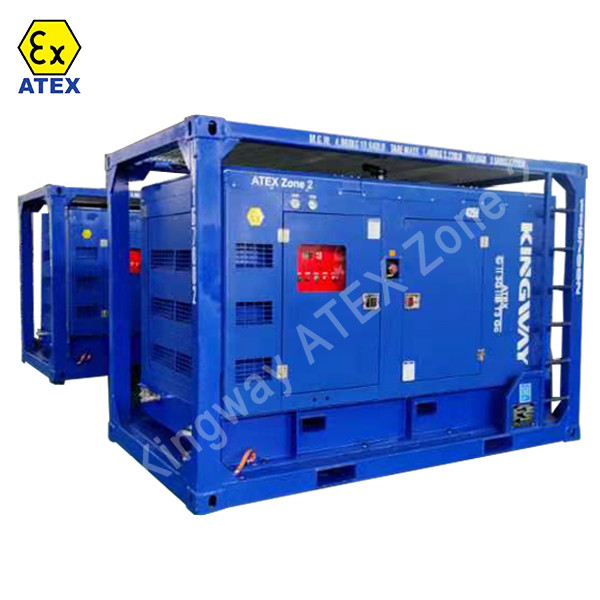
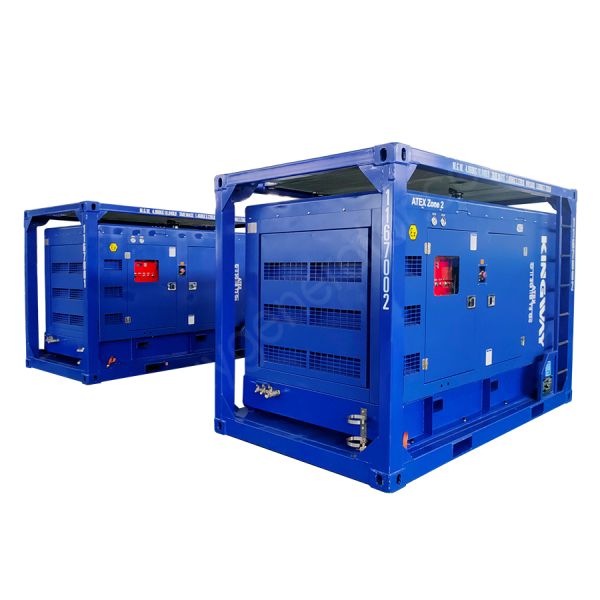
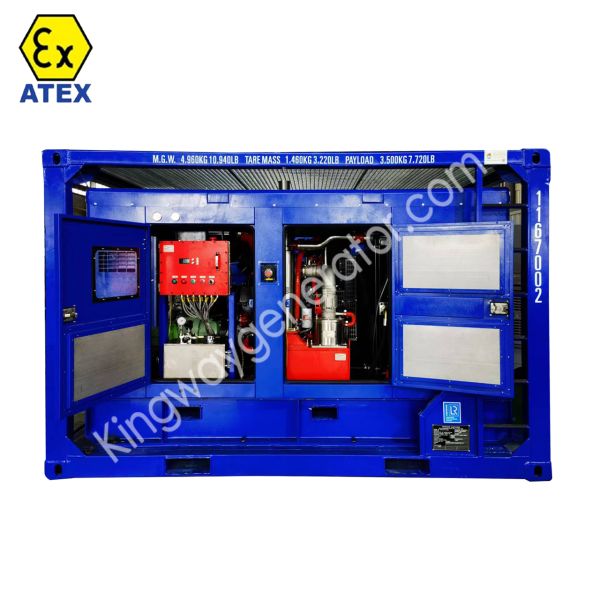
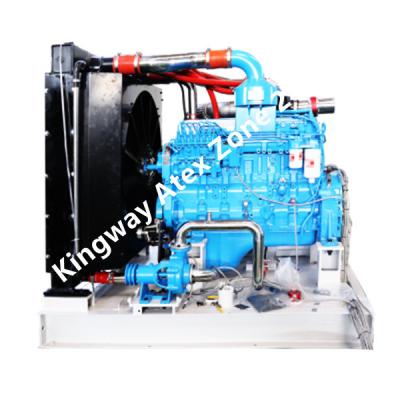
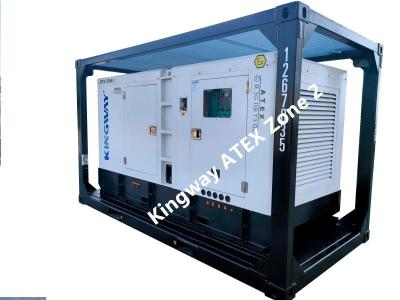
Zone 2 hazardous areas refer to sites where flammable gas, vapour or mist barely forms explosive mixtures under normal operation, with explosive atmospheres only emerging briefly due to accidental leakage or equipment faults, widely seen in onshore oil & gas stations, refineries, chemical plants and offshore auxiliary platforms. Our ATEX & IECEx certified Zone 2 air compressors are fully engineered per Category 3G / Gc explosion-proof standards, adopting non-sparking electrical components, exhaust flame arrestors, sealed pneumatic control systems and low surface-temperature design to eliminate ignition risks. Available in diesel-driven containerized skid-mounted units, the series delivers stable, continuous compressed air while complying with DNV offshore lifting specifications, high ambient temperature adaptability and strict industrial safety codes. Balancing reliable air output, low fuel consumption and full explosion protection, these compressors serve as safe and compliant air supply solutions for all Zone 2 classified hazardous environments worldwide.
Frequently Asked Questions (FAQ)
1. What defines a Zone 2 hazardous area?
Zone 2 is a low-risk hazardous location. Under normal operating conditions, explosive mixtures of flammable gas, vapour or mist will not form. Explosive atmospheres only occur briefly due to accidental pipeline leakage, equipment breakdown or insufficient ventilation. Typical application scenarios include natural gas valve stations, refineries, petrochemical plants, onshore oilfields and offshore auxiliary platforms.
2. What explosion-proof certification markings do your Zone 2 air compressors carry?
Standard full certifications: ATEX (EU standard) and IECEx (global international standard). The standard marking is Ex II 3G Ex nA IIB T4 Gc.
For marine/offshore projects, optional DNV, BV or CCS marine explosion-proof approvals are available upon request.
3. Can Zone 2 compressors be installed in Zone 1 hazardous areas?
No. Zone 2 units belong to Equipment Category 3G with EPL Gc, only qualified for low-risk Zone 2 environments. Zone 1 requires Category 2G higher-level explosion-proof equipment, which our Zone 2 compressor cannot meet.
4. What key explosion-proof components are fitted as standard?
- Ex nA non-sparking explosion-proof motor & fully sealed explosion-proof control cabinet
- Flame arresters mounted on air intake and exhaust pipelines to prevent flame flashback
- Explosion-proof cable glands, sealed temperature/pressure sensors and isolated wiring system
- Low surface-temperature structure compliant with T3/T4 temperature class limits
- Static elimination design to avoid static electricity ignition hazards
5. How to select suitable Gas Group and Temperature Class?
Gas Group Rule
Compressor gas group rating shall be equal to or higher than the flammable medium on site:
- IIA: Methane, natural gas, propane, butane (IIA / IIB / IIC units are all acceptable)
- IIB: Ethylene, coal gas, most solvent vapours (IIB or IIC unit mandatory; IIA is forbidden)
- IIC: Hydrogen, acetylene (only IIC certified compressor can be used)
Temperature Class
- T3: Max surface temperature ≤200°C, for conventional natural gas & propane sites
- T4: Max surface temperature ≤135°C, required for ethylene, hydrogen and most petrochemical vapours
6. What drive types are available for Zone 2 air compressors?
- Electric screw type: Driven by explosion-proof motor, for fixed workshops with stable power supply
- Diesel-driven mobile type: Matched with Zone 2 explosion-proof diesel engine, ideal for remote well sites and offshore platforms without mains electricity