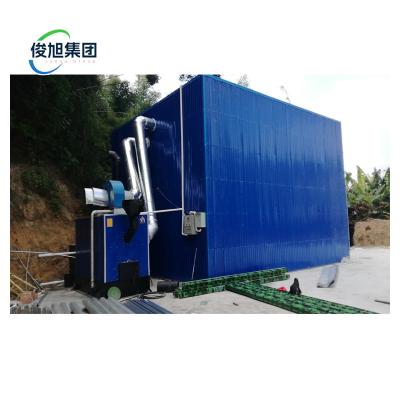
Safe and standardized operation and scientific maintenance of wood drying kilns are the core prerequisites for ensuring production safety, extending equipment service life, and improving drying quality. Adhering to the principle of "safety first", this article focuses on sorting out the usage taboos and core maintenance tips of wood drying kilns, which are concise, practical and targeted, helping operators standardize operations, avoid risks, and ensure long-term stable operation of the equipment.
Usage taboos must be strictly observed to prevent safety hazards and equipment damage caused by illegal operations. It is strictly prohibited to pile flammable and explosive materials in the drying kiln, and it is strictly prohibited to arbitrarily increase the drying temperature, so as to avoid wood carbonization and fire, and prevent equipment components from being damaged due to high-temperature overload; during the operation of the equipment, the kiln door shall not be opened at will, so as to prevent high-temperature gas from overflowing and scalding operators, and also avoid sudden changes in temperature and humidity in the kiln leading to wood deformation and cracking. It is strictly prohibited for unlicensed personnel to operate the equipment. Operators must be familiar with the process and emergency handling methods, and it is strictly prohibited to arbitrarily modify drying parameters or shut down the equipment illegally, so as to avoid equipment failure or substandard drying quality. In addition, it is strictly prohibited to block the ventilation pipes and fan filters to avoid local overheating caused by poor ventilation, and it is strictly prohibited to scratch the inner wall of the equipment with sharp objects, which will affect the sealing performance.
Scientific maintenance skills are the key to extending the service life of the equipment, and full-process maintenance must be implemented. After daily use, timely clean up the wood chips and debris in the kiln, wipe the inner wall and components of the equipment to keep the equipment clean; regularly check the core components such as heating pipes, fans and sensors, and timely fasten or replace them if they are loose, damaged or aging. Inspect the heating system and ventilation system monthly, conduct comprehensive maintenance quarterly, and carry out in-depth maintenance annually, focusing on checking the electrical lines and seals to prevent electric leakage and air leakage. When the equipment is idle, place it in a dry and ventilated environment to avoid moisture and rust; regularly add lubricating oil to the moving parts to reduce wear and ensure smooth operation of the equipment.
Strictly abiding by usage taboos and implementing scientific maintenance skills can not only ensure the personal safety of operators, avoid economic losses caused by equipment failures, but also effectively extend the service life of wood drying kilns, ensure the efficient and stable development of drying work, and take into account both safety and practicality.