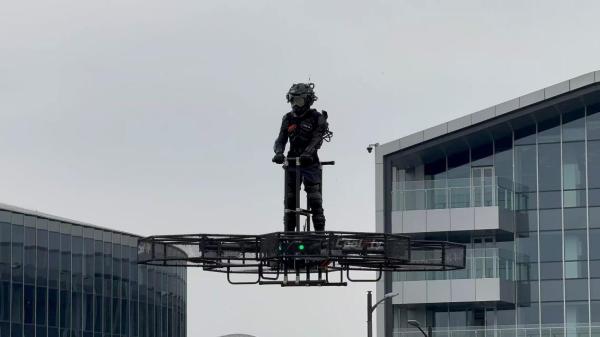
Breakthrough Standing eVTOL: License-Free Low-Altitude Air Mobility Solution
Urban-1 Standing eVTOL Full Specifications
Core Performance Parameters
Basic Weight & Load
- Empty weight: ~110 kg (ultra-light ultralight standard)
- Max payload: 110 kg (suitable for single adult with lightweight gear)
- Occupant: 1 person (standing-only layout, no seat)
Flight Performance
- Limited top speed: 70 km/h (unlocked max speed 100 km/h)
- Continuous flight time: 15-20 mins (upgraded second-gen reaches 30 mins)
- Operating altitude: Safe low-altitude range 0-30 m, recommended daily height ≤10 m
- Takeoff & landing: Full vertical takeoff/landing, no runway required
Power & Structure
- Propulsion: 8 enclosed propfan motors, quad-axis full redundant power layout
- Power type: Pure lithium electric, zero emission
- Airframe: All lightweight carbon fiber composite
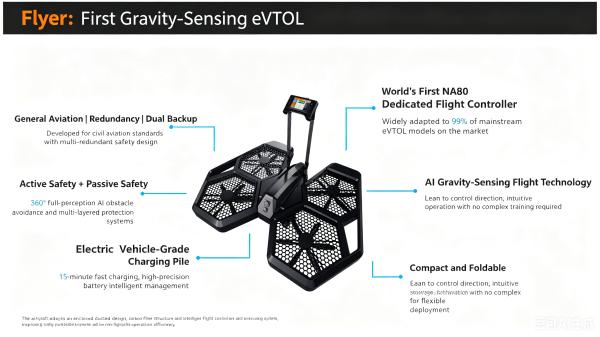
- Control system: Self-developed NA80 triple-redundant flight controller + gravity weight-shift sensing control
- Charging: Second-gen supports fast charging, 15 mins for 80% battery capacity
Core Advantages & Unique Strengths
Standing Layout Ultra-Light Weight Advantage
- No seat, cabin and heavy supporting frame, total empty weight only 110 kg, meets global ultralight aircraft standards (FAA Part 103)
- In many regions, users can fly without pilot license, medical certificate or airworthiness certificate, extremely low entry threshold
- Small footprint, compact platform structure; easy storage in garages, small rooftops or vehicle trunks
- Lighter overall load pressure, higher thrust-to-weight ratio, more flexible hovering and turning
Intuitive Gravity-Sensing Standing Control
- Operate like an electric balance scooter: Lean forward/backward/side to shift body gravity
- Aircraft automatically adjusts motor thrust to realize acceleration, deceleration, turning and hovering
- Only a simple handrail for auxiliary safety grip, no complex joystick/pedal operation
- Low learning cost, beginners master basic control within minutes
Full Safety Protection Design
- Fully enclosed honeycomb grille propfan: Rotors completely wrapped, zero risk of blade cutting
- Triple redundant flight control + redundant battery & motors
- Single motor/battery failure still maintains stable vertical landing
- Equipped with ballistic emergency parachute, whole-machine buffer airbag, pilot anti-collision flight suit
- 360° AI perception system (lidar + visual camera): Real-time obstacle detection and auto emergency landing
Scenario & Commercial Strengths
- Low-altitude exclusive scenarios: Scenic spot flight experience, urban short-distance patrol, emergency search & rescue
- Pure electric zero pollution, low noise comparable to daily conversation
- Low manufacturing & operation cost
- Mass production target price far lower than multi-seat seated eVTOLs
Disadvantages & Limitations
Severe Endurance & Speed Restrictions
- Short battery life: Only 15-20 mins for standard version, even upgraded model merely 30 mins
- Cannot support long-distance cross-city commuting, limited to ultra-short low-altitude trips
- Officially limited cruising speed 70 km/h, far slower than 200 km/h+ composite wing passenger eVTOLs
Standing Cabin Comfort & Physical Limits
- Full standing posture for the whole flight period; long-time flight easily causes leg fatigue
- Limited load capacity (max 110 kg); overweight adults or carrying heavy equipment cannot operate normally
- No closed cockpit, fully exposed to wind, rain, low temperature
- Cannot fly in bad weather such as heavy rain, strong wind, fog
Application Range & Regulatory Constraints
- Single-person only, cannot carry passengers or multiple sets of task equipment
- Strict low-altitude restriction: Officially recommended flight height below 10 m
- Cannot fly over high-rise buildings, wide rivers or large traffic roads
- Battery energy density bottleneck limits further endurance improvements
Other Practical Drawbacks
- Short battery cycle life, frequent charging required for continuous commercial operation
- Standing posture requires professional protective gear, adding extra operation cost
- Current mass production capacity is tight, delivery cycle is long
- Supporting low-altitude management infrastructure is incomplete
Typical Application Scenarios
- Scenic spot aerial sightseeing experience
- Forest, mountain, power line low-altitude patrol & inspection
- Short-distance emergency rescue, emergency material delivery
- City park, coastal area low-altitude security patrol
- Personal entertainment flight for flight camp