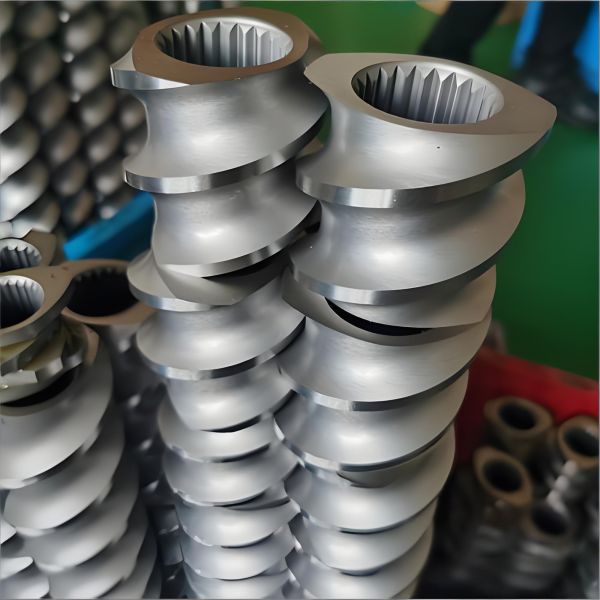
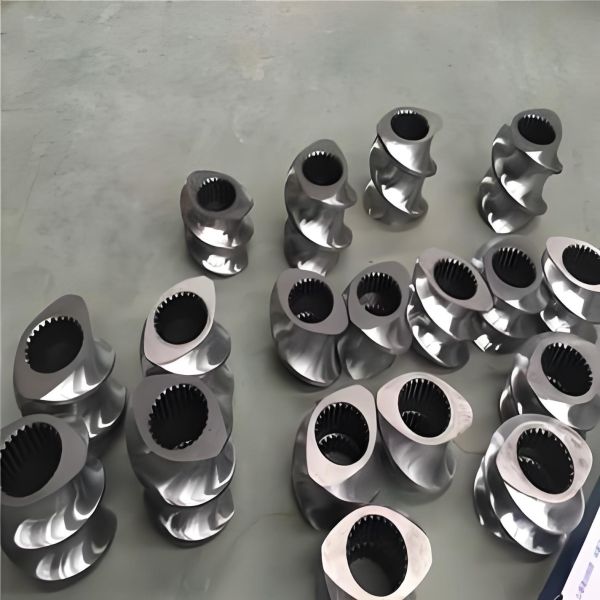
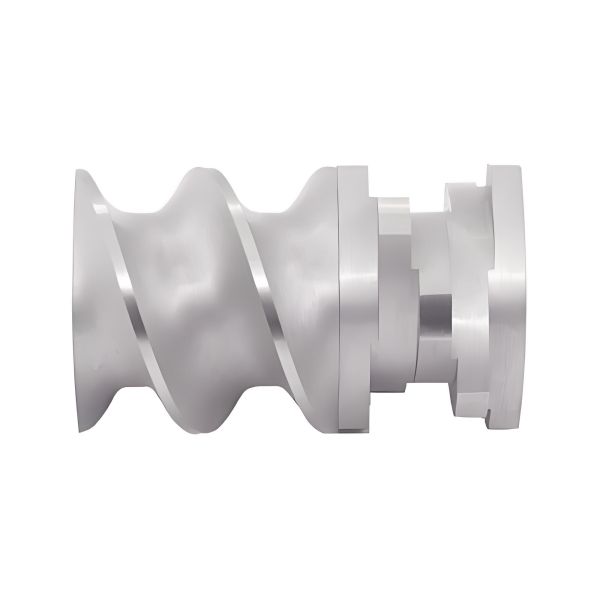
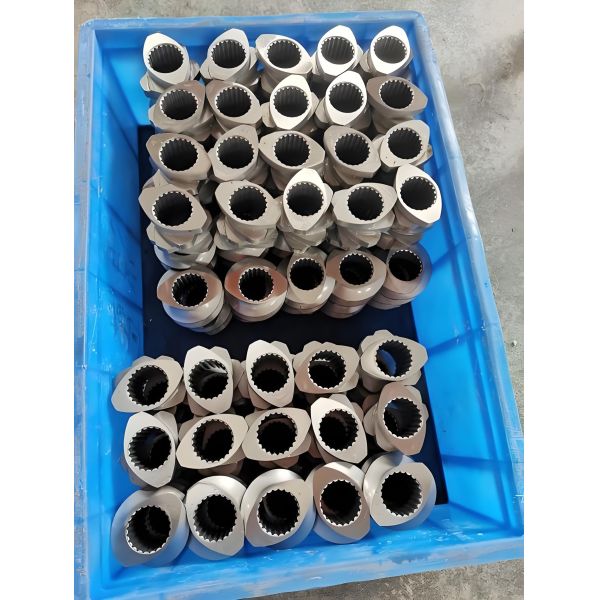
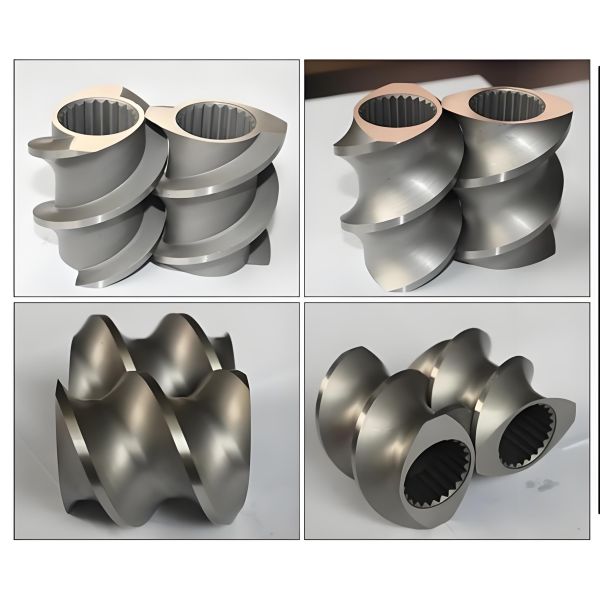
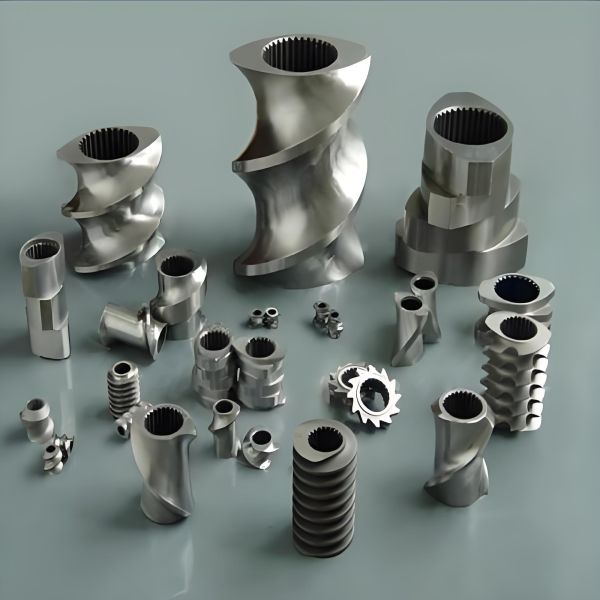
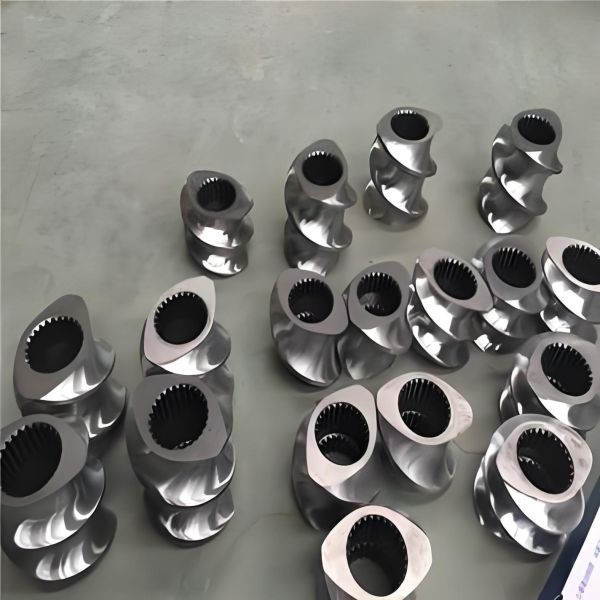
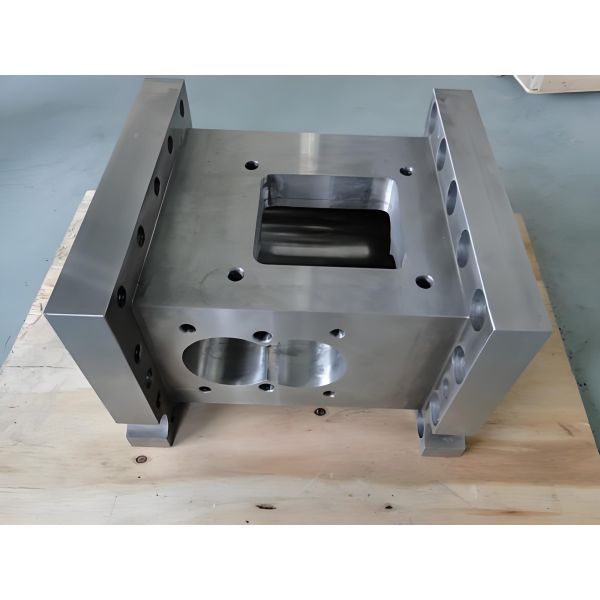
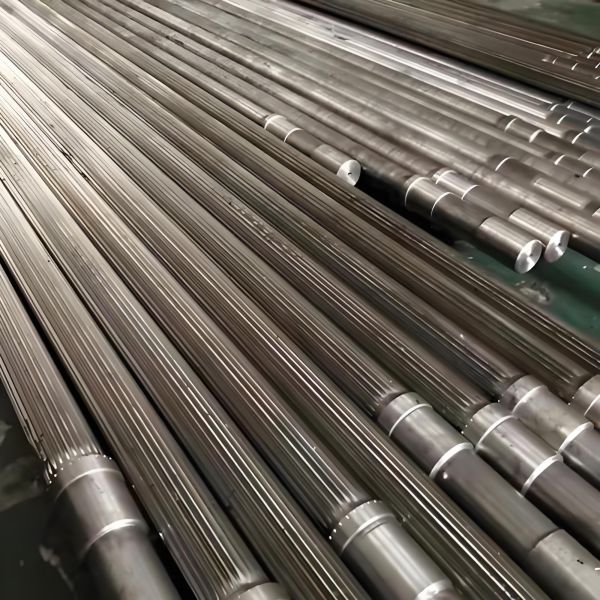
These bimetallic screw segments are core functional components for co-rotating parallel twin-screw extruders, specially engineered for plastic modification and high-fill compounding scenarios. Adopting a high-strength alloy steel base with a dense bimetallic overlay layer, they deliver exceptional wear resistance and corrosion resistance, making them ideal for processing abrasive materials such as calcium carbonate, talc, glass fiber, and other fillers commonly used in PP, PE, and ABS modification.
The optimized geometry of the screw segments ensures efficient material conveying, uniform mixing, and stable plasticizing, even under long-term high-load operation. This directly translates to improved product quality, reduced downtime, and extended service life for your extrusion line.
| Parameter | Detail |
|---|---|
| Product Type | Bimetallic Screw Segments |
| Base Material | 38CrMoAlA / SACM645 Alloy Steel |
| Surface Treatment | Bimetallic Overlay Welding |
| Alloy Hardness | HRC 50–65 |
| Alloy Layer Depth | 0.8–2.0 mm |
| Nitrided Hardness (Optional) | HV 850–1000 |
| Nitrided Depth (Optional) | 0.45–0.7 mm |
| Applicable Equipment | Co-Rotating Parallel Twin-Screw Extruders (Φ35–Φ150mm) |
| Applicable Materials | PP/PE/ABS Modification, Filler Masterbatch, Color Masterbatch, High-Fill Compounds |
| Customization | Customizable to match extruder model, screw diameter, and element geometry |

Q: Why choose bimetallic screw segments for plastic modification?
A: Bimetallic segments offer 2–3 times the wear resistance of standard nitrided segments, significantly extending service life when processing abrasive fillers like calcium carbonate and glass fiber, which are common in plastic modification.
Q: Can these segments be used with my existing co-rotating extruder?
A: Yes. We provide full customization based on your extruder model, screw diameter, and specific element geometry (conveying blocks, kneading blocks, mixing blocks) to ensure perfect compatibility.
Q: What is the typical service life of these bimetallic segments?
A: Under normal operating conditions with high-fill materials, the service life can reach 10,000–15,000 working hours, which is a substantial improvement over standard components.

By combining precision machining with advanced bimetallic technology, these screw segments solve the key pain points of rapid wear, inconsistent mixing, and frequent replacement in plastic modification processes. They are the preferred choice for manufacturers looking to enhance productivity and reduce operational costs in high-demand compounding environments.