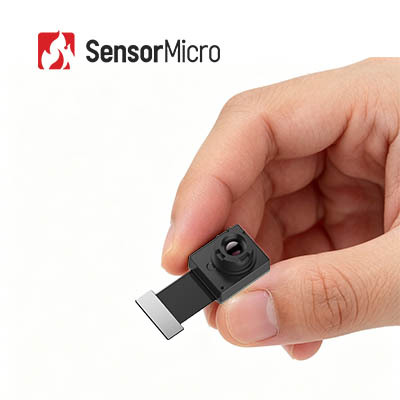
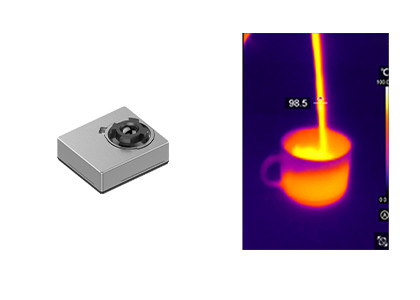
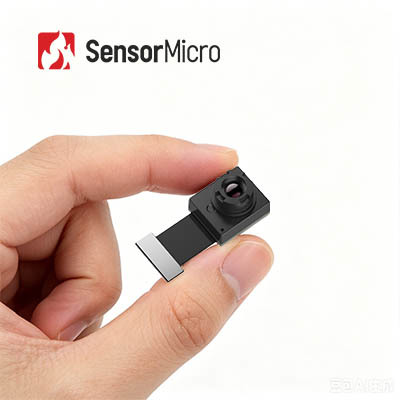
Redefine what's possible in compact thermal imaging. The iTL612 PLUS packs a 640×512 detector into a 17.3mm footprint weighing just 13.7g. With ≤25 mK sensitivity, next-gen image processing, and multi-interface support (MIPI, USB, LVDS, and more), it delivers unmatched clarity in the lightest package—all at just 0.65W. Integration has never been this effortless.
| Model | iTL612PLUS |
|---|---|
| IR Detectors Indicators | |
| Sensitive Material | VOx |
| Resolution | 640×512 |
| Pixel Size | 12μm |
| Spectral Response | 8μm ~ 14μm |
| Typical NETD | ≤25mK |
| Image Processing | |
| Digital Frame Rate | 25/30Hz/50Hz |
| Start-up Time | ≤6s |
| Digital Video | RAW/YUV/Matrix-TEMP |
| Image Algorithm | NUC/3DNR/DNS/DRC/EE |
| Image Display | 10 (Black Hot/White Hot/Pseudo Color) |
| Electrical | |
| Standard External Interface | 30Pin_HRS interface: DF40C-30DP-0.4V(51) |
| MIPI External Interface | 34Pin_Panasonic Connector Interface: AXE634124 |
| Communication Interface | TTL-232/USB2.0 |
| Digital Video Interface | DVP8/LVDS/MIPI/USB2.0/BT.656 |
| Supply Voltage | 4.2-5.5V |
| Typical Power Consumption | 0.65W |
| Mechanical | |
| Size (including lens) | 17.3×17.3×24.2 (9.1mm lens) 17.3×17.3×30.2 (13mm lens) 17.3×17.3×38 (24mm lens) 17.3×17.3×54 (45mm lens) |
| Weight (including lens) | 13.7±0.5g (9.1mm lens) 17.9±0.5g (13mm lens) 27.3±0.5g (24mm lens) 51±0.5g (45mm lens) |
| Environmental Adaptability | |
| Operating Temperature | -40℃~+70℃ |
| Storage Temperature | -45℃~+85℃ |
| Humidity | 5%~95%, non-condensing |
| Vibration | 5.35g, Random Vibration, 3-axis |
| Impact | Half Sine Wave, 30g/11ms, Impact Direction X Axis, 3 times |
| Certification | ROHS2.0/REACH |
| Optical Lens | Fixed Focus Athermal: 9.1/13/24/45mm |
The iTL612 PLUS thermal camera module can be used for Forest Firefighting, Power Maintenance, Photovoltaic Inspection, Security Monitoring, Wearable Devices, Portable Devices, and more.
In nature, all objects whose temperature is higher than absolute zero (-273℃) can radiate infrared rays. By using the infrared camera detector to measure the infrared radiation temperature difference between the target itself and the background, you can get different infrared images, which are also called thermal images.
Infrared radiation that emitted by target enters the sensing range of the thermal detector, then the infrared detector converts the radiation signal of different intensity into the corresponding electrical signal, and then through amplification and video processing, forms the infrared image that can be observed by the naked eyes.
The cooled infrared focal plane detector operates at a low temperature which is provided by a detector dewar cooler (ddc). It has high sensitivity and can distinguish more subtle temperature difference than uncooled infrared detector. It can detect, identify and recognize objects at a very long range which is more than ten kilometers away. The structure of cooled detector is very complex which results in a relatively high cost than uncooled detector.