Ultimate Guide to Choosing Heavy-Duty Casters for Port Cargo & Freight Handling
In the demanding environment of port terminals and freight yards, equipment mobility is critical for operational efficiency. Selecting the right heavy-duty casters is not just about moving loads—it’s about ensuring safety, durability, and long-term cost savings. This guide will help you navigate the key considerations when choosing industrial casters built to withstand the harsh conditions of port cargo handling.

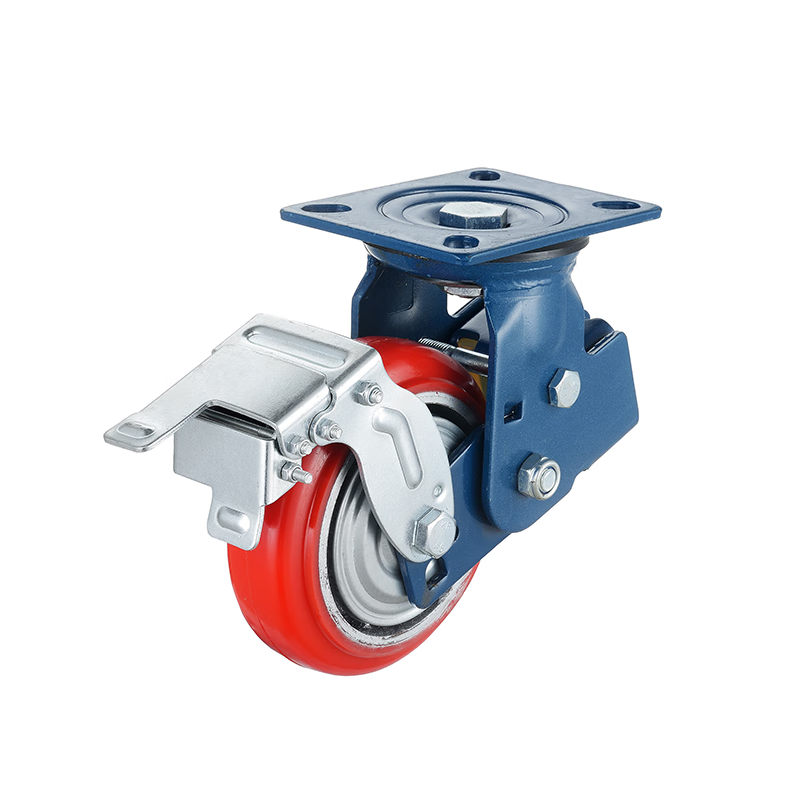
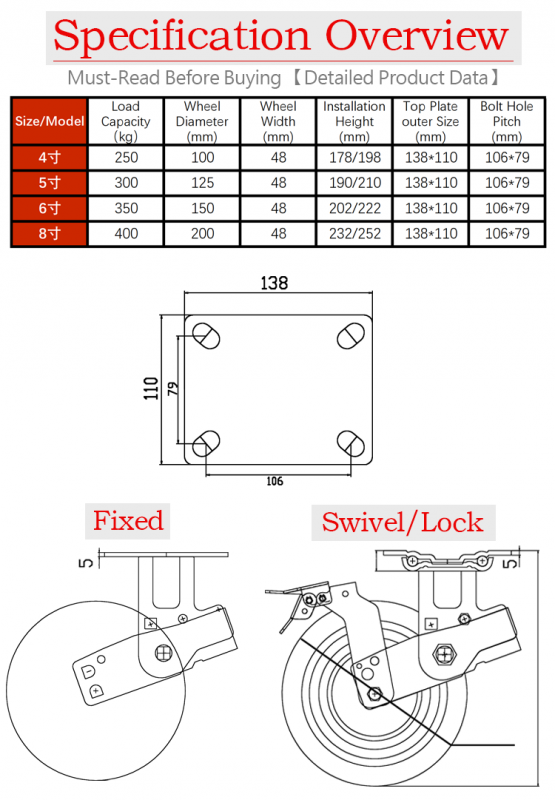
Product Specifications
| Braking/Activation/Orientation |
Braking / Swivel / Fixed |
| Size |
5 inches |
| Wheel Material |
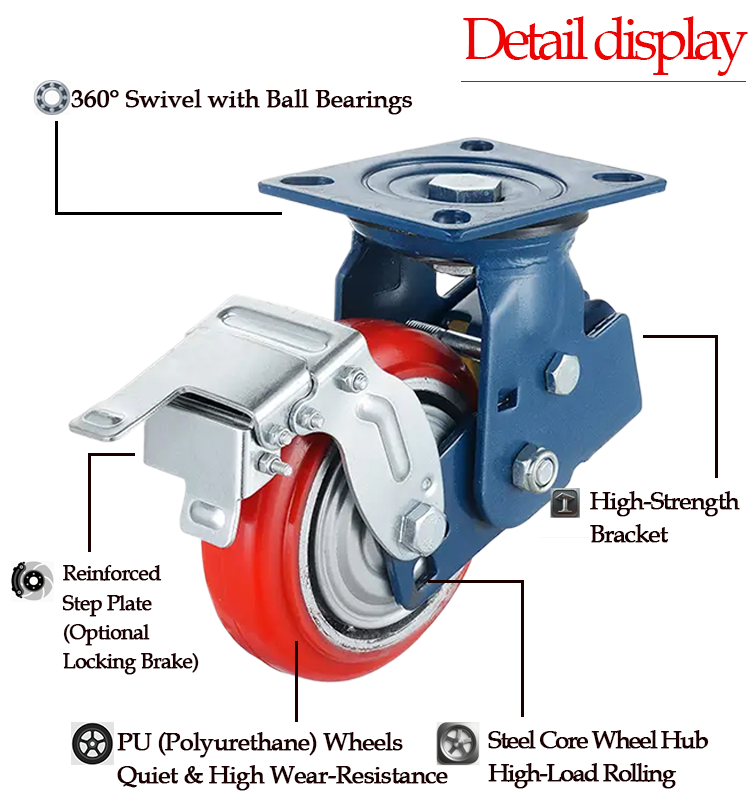
PU (polyurethane) |
| Base Plate Support Material |
Q235 |
| Bearing |
6202 Bearing |
| Installation Height |
190/210 |
| Base Plate Size |
138*110 |
| Hole Distance |
105*80 |
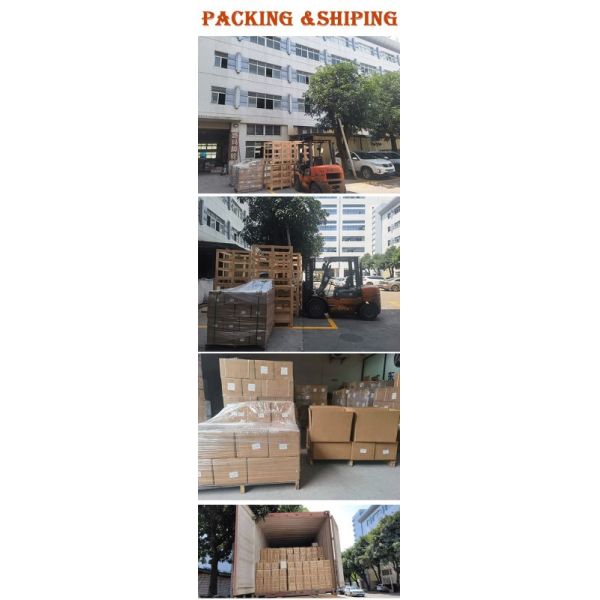
| Box Size |
49*28.5*23.5cm |
Matching Specifications
- Set 1: 2 brakes + 2 fixed
- Set 2: 2 swivel + 2 fixed

1. Why Spring-Dampened Casters are Essential for Port Operations
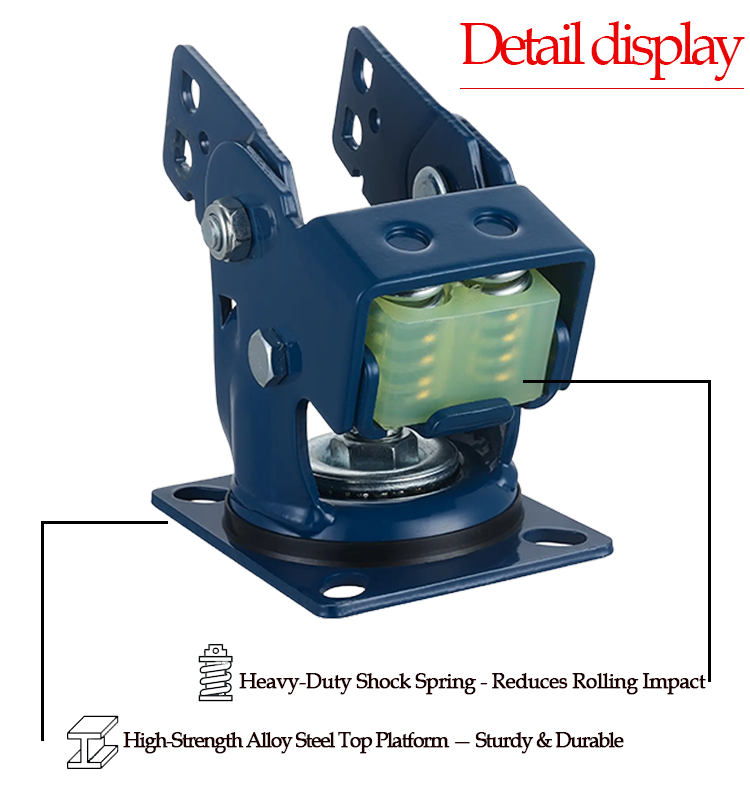
Port environments are characterized by uneven surfaces, constant impacts, and the need for precise movement of high-value goods. Spring-loaded or dampened casters provide critical benefits:
- Shock Absorption: They absorb vibrations and impacts when moving over dock gaps, rails, or rough pavement, protecting both the cargo and the equipment itself.
- Enhanced Stability: The spring mechanism helps distribute the load evenly, reducing the risk of tipping and making it easier to control heavy loads.
- Equipment Protection: By minimizing shock transmission, they extend the lifespan of the equipment structure and the casters’ wheels.
Bottom Line: For port freight applications, a spring-dampened caster is not just an option—it’s a recommended standard for operational excellence.

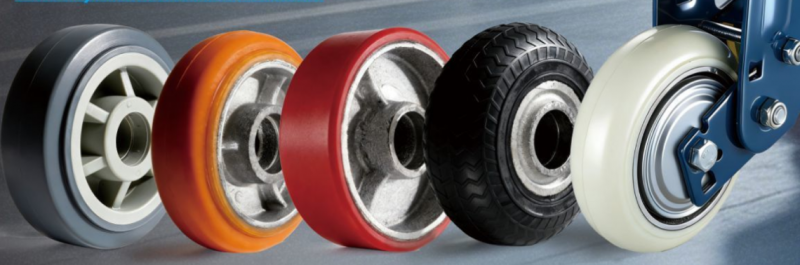
2. Top Material Choices for Port & Cargo Handling Casters
The choice of wheel material directly impacts performance, durability, and total cost of ownership. Here are the top materials for heavy-duty port casters:
A. Cast Iron / Cast Steel Wheels
- Best For: Ultra-heavy-duty applications, moving shipping containers, large machinery, and static loads.
- Key Features: Unmatched load-bearing capacity (often several tons per wheel), extreme structural integrity, and high resistance to deformation.
- Considerations: Heavier weight, can be noisy, and may mark delicate floor surfaces.
B. Heavy-Duty Nylon (Polyamide/MC Nylon) Wheels
- Best For: General cargo, warehouse logistics, and environments with debris or chemical exposure (e.g., oils, salts).
- Key Features: Excellent wear resistance, high hardness, non-marking, and resistant to corrosion and chemicals.
- Considerations: Less shock-absorbent than polyurethane or rubber.
C. Polyurethane (PU) on Iron Core Wheels
- Best For: A balance between heavy load capacity, floor protection, and noise reduction.
- Key Features: High load capacity, excellent wear resistance, quiet operation, and good traction. They offer a smooth roll and protect expensive flooring.
- Considerations: Can be damaged by extremely sharp objects or prolonged exposure to high heat.

3. How to Select the Right Caster: A 3-Step Checklist
Follow this simple checklist to make the perfect choice for your port equipment:
-
Calculate the Load Capacity:
- Determine the total weight of the loaded equipment.
- Divide by the number of casters (use 3 for a 4-caster setup to account for uneven floors).
- Choose a caster with a load rating higher than this calculated value.
-
Assess the Floor & Environment:
- Rough Concrete/Asphalt: Prioritize durability (Nylon, Cast Iron).
- Smooth/Sensitive Floors: Prioritize floor protection (Polyurethane).
- Corrosive Environments (e.g., sea air): Choose materials with high corrosion resistance (Nylon, Stainless Steel components).
-
Verify the Total Configuration:
- Ensure the spring mechanism is rated for your load.
- Check for features like swivel locks and directional locks for added control.
- Always source from manufacturers who provide load-test certifications.


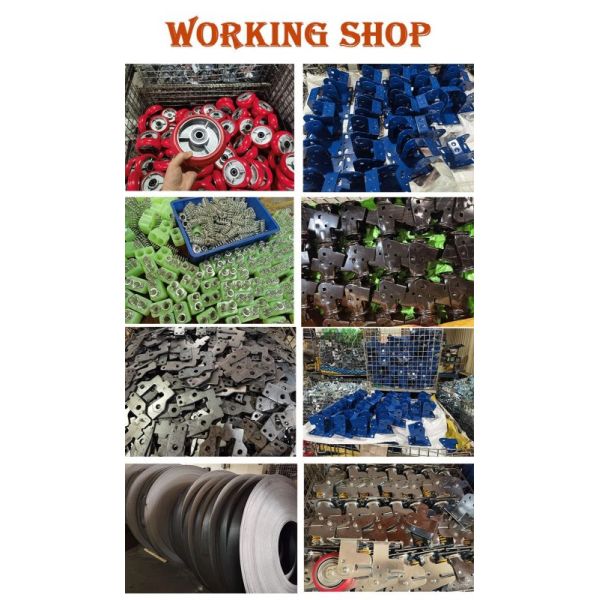
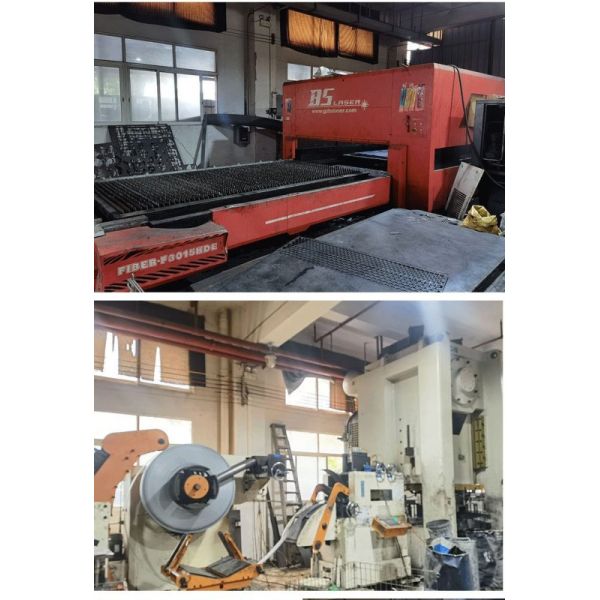
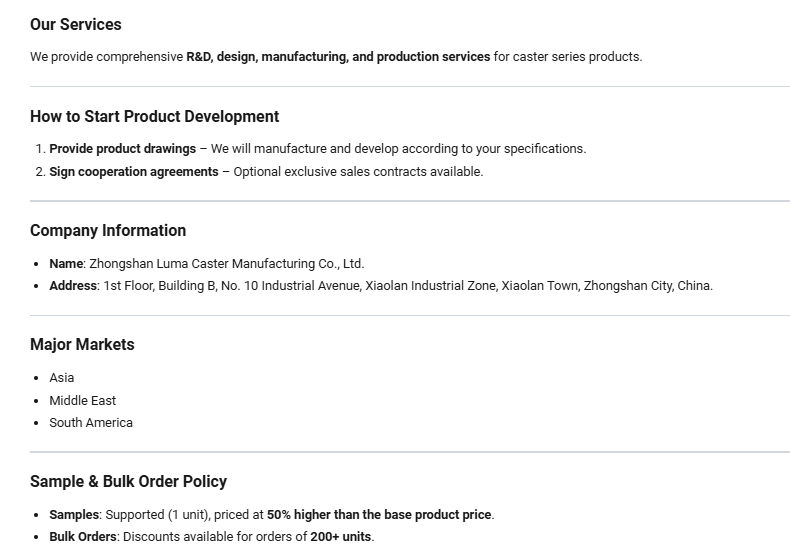
Company Services & Process Overview