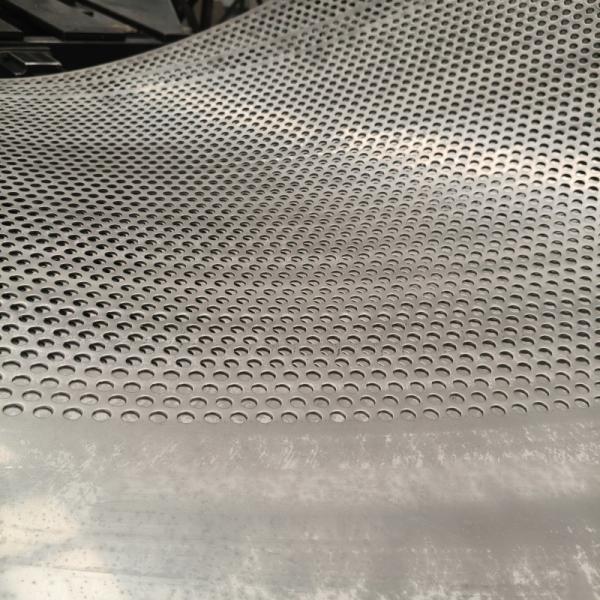
Perforated Metal Plate with Fine Performance and Custom Specs for Construction, Aerospace and Environmental Protection
Perforated metal sheet, also known as punched metal plate, is a universal metal processing material formed by stamping various hole shapes on metal plates through professional mechanical equipment. It integrates ventilation, filtration, sound insulation, protection and decorative functions, and has outstanding structural stability and environmental adaptability. With customizable styles and stable performance, perforated metal sheets are widely used in construction, industrial manufacturing, environmental protection, aerospace and other fields. This article systematically introduces the core characteristics of perforated metal sheets from the aspects of material types, surface colors, product specifications, key technical parameters and main applications, with detailed data analysis via tables.
1. Common Materials of Perforated Metal Sheets
Different base materials determine the service life, mechanical performance, corrosion resistance and application scenarios of perforated sheets. Each material has unique advantages and applicable environments. The mainstream materials and performance characteristics are summarized in the table below:
|
Material Type
|
Core Advantages
|
Deficiencies
|
Applicable Scenarios
|
|
304 Stainless Steel
|
Excellent rust and corrosion resistance, high toughness, wear-resistant, food-grade safe, easy to clean
|
High cost, slightly lower hardness than carbon steel
|
Food processing equipment, medical facilities, indoor and outdoor architectural decoration, daily ventilation equipment
|
|
316 Stainless Steel
|
Chloride corrosion resistant, salt spray resistant, ultra-high durability, suitable for harsh environments
|
Highest cost among conventional materials
|
Marine engineering, chemical industry, coastal building facilities, high-corrosion industrial workshops
|
|
Galvanized Steel
|
Low cost, good hardness, strong impact resistance, basic rust prevention
|
Poor corrosion resistance in humid and chemical environments, easy to oxidize after zinc layer falls off
|
Ordinary industrial protection, machinery guard plates, warehouse isolation nets, civil ventilation facilities
|
|
Aluminum Alloy
|
Light weight, good ductility, easy processing and molding, beautiful surface, good heat dissipation
|
Low structural strength, poor pressure resistance
|
Building sunshade panels, ceiling decoration, sound-absorbing panels, automobile ventilation parts
|
|
Carbon Steel
|
Ultra-high hardness, strong bearing capacity, low price, good structural stability
|
Easy to rust without surface treatment, poor corrosion resistance
|
Industrial filter screens, heavy-duty equipment protection, mine screening plates, platform pedals
|
2. Surface Colors & Finishing Treatments
The original metal color of perforated sheets is single, so surface finishing is adopted to enrich colors, while improving wear resistance, rust resistance and decorative effect. The mainstream color types and processing technologies are as follows:
- Original Metal Color: No secondary processing, retaining the natural metallic luster of stainless steel, carbon steel and aluminum. It is simple and durable, suitable for industrial equipment with no decorative requirements, and has the strongest wear resistance and stability.
- Powder Coating Colors: The most widely used decorative treatment. It can realize all RAL standard colors, including black, white, gray, blue, green, red, etc. The coating layer is firm, scratch-resistant and anti-aging, suitable for indoor and outdoor architectural decoration.
- Anodized Colors: Mainly used for aluminum alloy perforated plates, including champagne gold, bronze, black, silver and other colors. The anodized layer is integrated with the metal base, with no fading, strong oxidation resistance, and high-grade decorative effect.
- Galvanized Silver Gray: The inherent color of galvanized steel sheets, with a matte silver-gray appearance, low cost and practical, mainly used for ordinary industrial protective plates.
- Polished Mirror Color: For high-grade stainless steel plates, after mirror polishing, the surface is smooth and reflective, used for high-end decoration and precision equipment accessories.
3. Product Specifications
Perforated metal sheets have standardized conventional specifications and fully customizable sizes to meet diverse engineering and industrial needs. The specifications mainly cover plate thickness, overall size, hole shape and hole arrangement:
3.1 Conventional Plate Size & Thickness
The mainstream overall dimensions of finished perforated sheets are 1000mm×2000mm, 1250mm×2500mm, 1500mm×3000mm, and ultra-long and ultra-wide plates can be customized according to demand. The thickness range covers 0.2mm–20mm: thin plates (0.2mm–1.5mm) for decoration and filtration, medium plates (1.5mm–6mm) for ventilation and protection, thick plates (6mm–20mm) for heavy-duty screening and structural support.
3.2 Common Hole Types
- Round hole: The most universal type, uniform force, good ventilation and filtration effect
- Square hole: High structural strength, neat appearance, suitable for protective isolation
- Slotted hole: Large ventilation and drainage volume, ideal for dust removal and drainage equipment
- Hexagonal hole: Honeycomb structure, super stable, beautiful and three-dimensional, for high-end decoration
- Special-shaped hole: Customized patterns such as triangular, plum blossom and creative graphics for personalized decoration
4. Key Technical Parameters
Technical parameters are the core basis for selecting perforated metal sheets, which directly determine the ventilation capacity, filtration accuracy, structural strength and service effect of the product. The key parameters and standard ranges are analyzed in the table below:
|
Key Parameter
|
Parameter Description
|
Conventional Range
|
Functional Impact
|
|
Hole Diameter
|
The aperture size of a single hole
|
0.5mm – 50mm
|
Small holes (≤3mm) for precision filtration and dust prevention; large holes (≥10mm) for rapid ventilation and heat dissipation
|
|
Hole Pitch
|
Center distance between two adjacent holes
|
2mm – 80mm
|
The smaller the pitch, the denser the holes, the better the ventilation, but the lower the structural strength
|
|
Open Area Rate
|
Percentage of hole area in the total plate area
|
10% – 80%
|
The higher the open area rate, the stronger the air permeability and drainage, but the weaker the load-bearing capacity
|
|
Plate Thickness
|
Thickness of the base metal plate
|
0.2mm – 20mm
|
Thicker plates have higher hardness and impact resistance, suitable for heavy-duty working conditions
|
|
Dimensional Tolerance
|
Error range of hole size and plate size
|
±0.1mm – ±0.3mm
|
Small tolerance ensures high precision, suitable for precision filtration and matching equipment
|
5. Main Applications of Perforated Metal Sheets
Relying on adjustable ventilation, stable protection, diverse decoration and strong durability, perforated metal sheets are widely used in multiple industries, covering functional and decorative scenarios:
5.1 Architectural & Decorative Industry
Perforated plates are used for building exterior wall cladding, sunshade panels, ceiling sound-absorbing panels, corridor guardrails and stair treads. The adjustable open area rate can realize light transmission, ventilation and privacy protection, and diverse hole patterns and colors meet the aesthetic needs of modern architectural design.
5.2 Industrial Manufacturing & Mechanical Protection
They serve as equipment protective covers, machine tool isolation nets, conveyor belt filter plates, and workshop ventilation partitions. The metal material has strong impact resistance, which can protect mechanical equipment while ensuring normal heat dissipation and ventilation of the equipment.
5.3 Environmental Protection & Filtration Industry
High-precision perforated sheets are used for air filtration, water treatment filter screens, dust removal equipment and grain screening. Different aperture sizes and open area rates can match different filtration accuracy requirements, with wear resistance and easy cleaning, replacing traditional fragile filter materials.
5.4 Civil & Commercial Scenarios
Widely used in speaker grilles, lamp heat dissipation panels, supermarket shelves, decorative furniture and exhibition display racks. The lightweight and beautiful features make it an ideal material for commercial space decoration and civil electronic accessories.
5.5 Special Industrial Scenarios
316 stainless steel and titanium alloy perforated plates are applied in marine engineering, chemical anti-corrosion equipment and medical sterile equipment; high-strength carbon steel perforated plates are used for mine screening and heavy-duty platform pedals.
6. Comprehensive Advantages
Compared with traditional plastic mesh and ordinary flat metal plates, perforated metal sheets have irreplaceable advantages: high structural strength, strong corrosion resistance, customizable performance and appearance, good ventilation and sound absorption effect, recyclable materials, long service life, and low comprehensive maintenance cost. It is a multi-functional green building and industrial material.
Conclusion
Perforated metal sheets realize the organic combination of functionality and decoration through flexible matching of materials, colors, specifications and parameters. With the continuous upgrading of processing technology, customized perforated metal products are more widely used in modern construction, industrial production and precision manufacturing. Selecting appropriate materials and technical parameters according to actual application scenarios can maximize the service performance and economic value of perforated metal sheets.