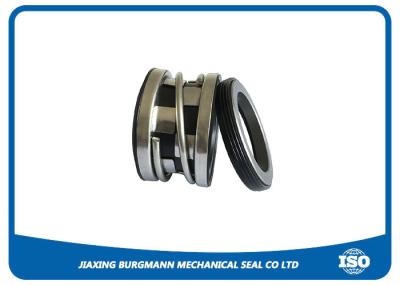
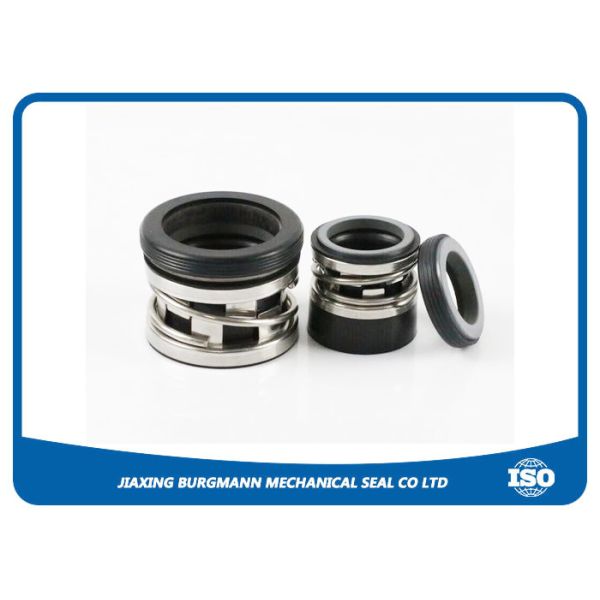
Technical FAQ: 560A Series Mechanical Seals for Sewage Pumps
Q1: Why is the 560A bellows seal superior to conventional multi-spring seals for sewage pumps?
A: Sewage often contains fibers, solids, or viscous materials. In conventional multi-spring seals, the springs are prone to clogging or stiction due to debris winding or scale buildup, leading to seal failure. The 560A series uses a single large spring together with a rubber bellows. The large spring is self-cleaning, and the bellows design prevents loss of compensatory flexibility from debris accumulation, dramatically reducing clogging risk.
Q2: How do I select the correct elastomer for the 560A seal based on the service medium?
A: Elastomer choice directly determines seal life:
NBR (Nitrile): Suitable for general industrial wastewater, oils, and water supply (temperature up to 100 °C).
EPDM: Recommended for hot water, weak acids, or weak alkalis - but not compatible with mineral oils.
Viton / FKM: For aggressive chemical media, high temperatures (up to 180 °C), or complex organic solvents.
Q3: How does the 560A seal protect the shaft against wear?
A: One key advantage of the 560A is that the rubber bellows does not slide relative to the shaft. The driving torque is transmitted directly through the rubber onto the shaft - unlike seals that rely on an O-ring sliding axially on the shaft for wear compensation. This design effectively protects the pump shaft or shaft sleeve from wear, saving costly shaft repair or replacement.
Q4: Can the 560A series tolerate dry running?
A: The vast majority of mechanical seals, including the 560A, are not designed for dry running. The instantaneous frictional heat will damage the seal faces (cracking or carbonization). If your sewage pump is at risk of running dry, we recommend specifying SiC vs. SiC faces together with an external flush system or a dry-run protection device.
Q5: How can I verify proper installation of a 560A seal?
A: Pay attention to three key points:
Working Length: Ensure the seal compression matches the specification sheet. Over-compression reduces efficiency; under-compression causes leakage.
Shaft Surface Roughness: Shaft roughness should be ≤ Ra 0.8 μm to guarantee static sealing of the rubber bellows.
Concentricity: Check that shaft radial runout is within 0.05 mm. The 560A's self-aligning feature compensates for minor misalignment, but excessive runout will shorten service life.
Q6: Which international brand models can the 560A series interchange with?
A: The 560A series is dimensionally highly interchangeable and typically serves as a drop-in replacement for similar products from:
EagleBurgmann: EA560 series
John Crane: Type 6 / Type 21 series (partial compatibility)
Flowserve: Equivalent bellows series in corresponding sizes
Standard components in Grundfos and Flygt submersible sewage pumps.