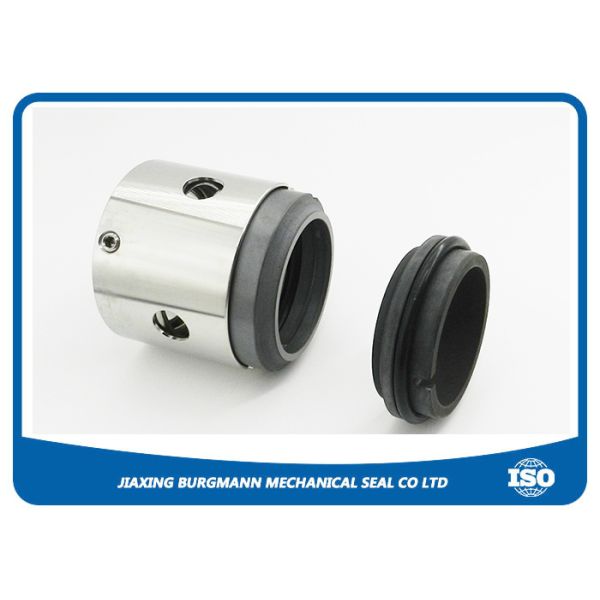
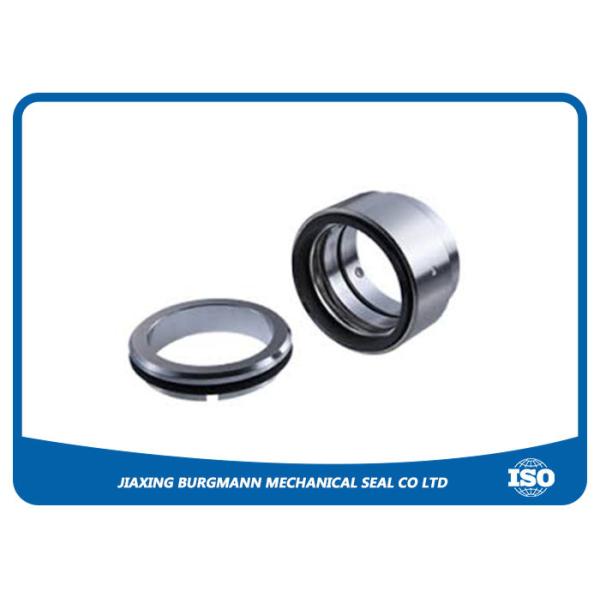
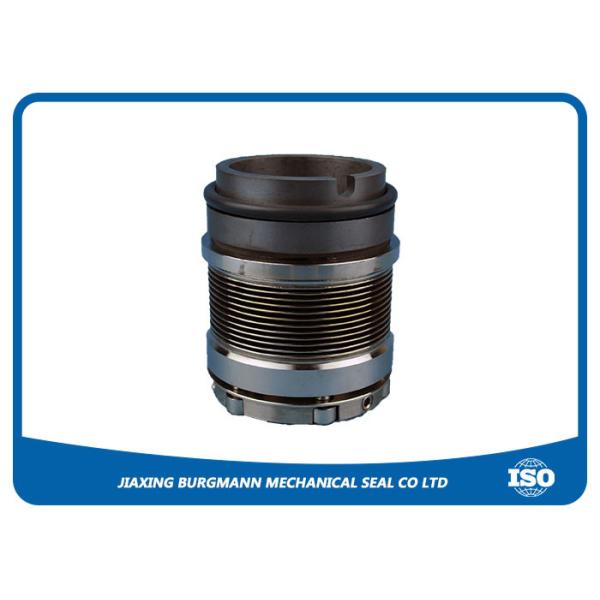
The H76 series mechanical seal is a balanced, multi‑spring sealing system specifically designed for high‑pressure, high‑speed, and highly corrosive media. As a core sealing solution for industrial pumps, the H76 series is widely used in centrifugals, mixers, and compressors across the refining, chemical, and fertilizer industries. Its multi‑spring configuration ensures uniform distribution of face loading, delivering exceptional sealing integrity even under complex operating conditions with significant axial runout.
Key Design Features
- Multi‑Spring Design: Multiple independent small springs arranged circumferentially provide a more even load distribution compared to single‑spring designs, effectively counteracting centrifugal effects at high rotational speeds.
- Balanced Structure: The balanced design allows the seal to operate at elevated pressures (up to 4.0 MPa) while reducing frictional heat generation at the seal faces, significantly extending service life.
- Flexible Face Materials: Multiple configurations are available based on media characteristics:
- Carbon vs. Silicon Carbide: Suitable for general clean media.
- SiC vs. SiC / TC vs. TC: For severe services containing solids or abrasive media.
- Versatile Secondary Seals: Options include Viton (FKM), PTFE, or Chemraz® (FFKM) high‑performance perfluoroelastomers, ensuring chemical stability in aggressive solvents and high‑temperature environments.
Technical FAQ: H76 Series Mechanical Seals
Q1: Why is the H76 series classified as a "balanced" seal, and what does this mean for high‑pressure service?
A: The H76 features a balanced hydraulic design. The principle is to reduce the net hydraulic force acting on the seal faces so that they are subject only to a portion of the fluid pressure. Significance: This greatly reduces frictional heat generation and wear at the seal faces. Even at pressures up to 4.0 MPa (580 psi), the fluid film between the faces remains stable and does not rupture due to excessive pressure, thereby extending service life under high‑pressure conditions.
Q2: What advantages does the H76's multi‑spring design offer over a large‑single‑spring design?
A: Multi‑spring design provides superior load balancing.
- Pressure distribution: Multiple small springs evenly arranged around the circumference ensure that the closing force between the rotary and stationary faces is uniform across 360°, avoiding angular misalignment wear.
- High‑speed stability: At high rotational speeds (≤ 20 m/s), small springs are far less affected by centrifugal force than a single large spring, offering faster dynamic response and real‑time compensation for minor shaft runout.
Q3: Does the H76 series support API 682 flush plans? What are common configurations?
A: Yes, the H76 series is fully API‑compliant and is typically used with flush plans to optimize the operating environment:
- Plan 11 (discharge recirculation): For clean media, uses pump discharge pressure to flush the seal faces and remove heat.
- Plan 32 (external flush): For media containing solids or corrosive components, introduces clean external fluid to protect the seal.
- Plan 52/53 (barrier fluid systems): For hazardous media, a double seal arrangement (tandem or double) ensures that no dangerous fluid escapes.
Q4: How should secondary seals be configured for the H76 seal when handling highly corrosive chemical media?
A: Secondary seals are critical for chemical compatibility. Based on professional standards, we recommend:
- General service / light hydrocarbons: Viton (FKM).
- Strong acids / strong alkalis: PTFE or encapsulated O‑rings.
- Extreme chemical environments / high temperatures: Chemraz® or Kalrez® (FFKM), offering superior chemical attack resistance.
Q5: What are the most critical installation precautions for the H76 seal?
A:
- Installation compression: The working length must be set exactly as specified on the technical drawing. Under‑compression causes leakage; over‑compression leads to excessive wear and premature failure.
- Face cleanliness: Seal faces (carbide or carbon) are extremely precise. Do not touch them with bare hands before installation. Clean with anhydrous alcohol and apply a light lubricating film.
- Shaft precision: Ensure shaft radial runout is less than 0.05 mm and the shaft surface is free of burrs to avoid damaging the O‑ring during assembly.
Q6: Which international brand models can the H76 series replace?
A: The H76 represents a standardized industrial design and serves as a direct drop‑in alternative for:
- EagleBurgmann: H76 series (fully interchangeable).
- John Crane: Compatible with certain balanced multi‑spring series (e.g., variants of Type 8).
- Flowserve: Corresponding standard‑dimension multi‑spring balanced seals.