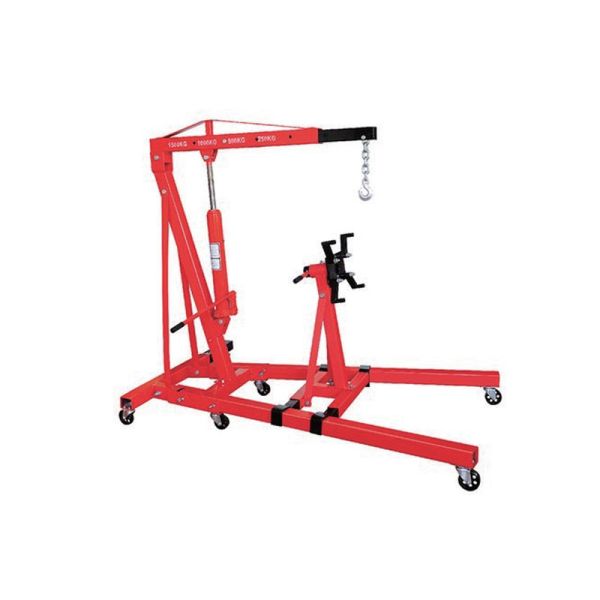
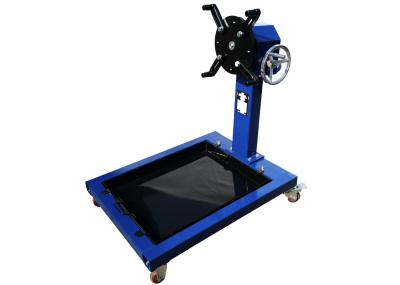
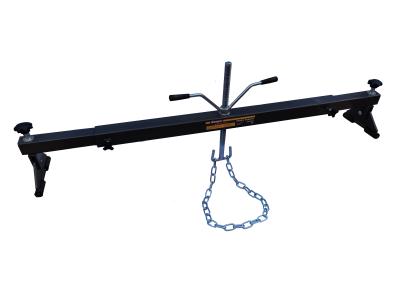
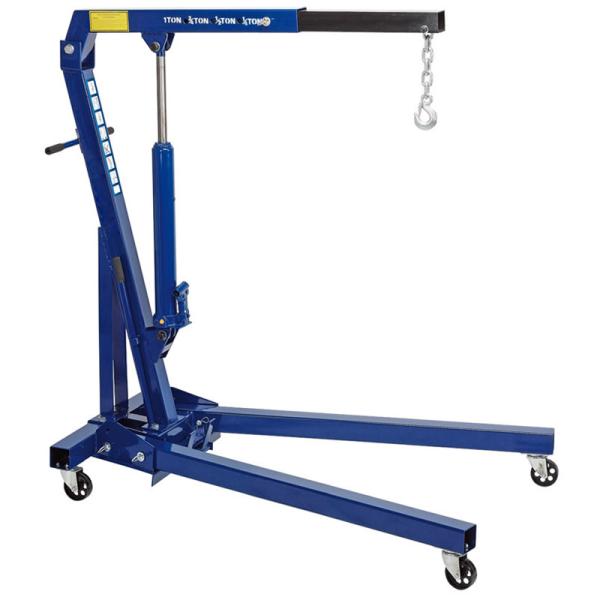
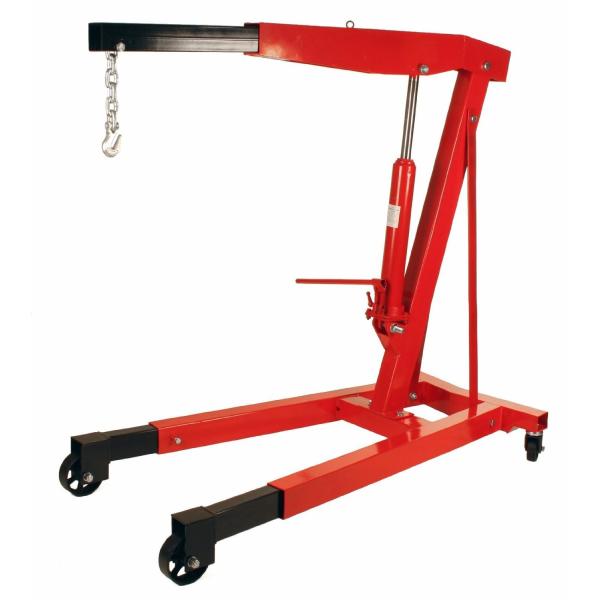
The YD01-014 2T folding shop crane with engine stand is an integrated lifting device specially designed for workshop scenarios (such as automobile maintenance and construction machinery maintenance). Its core advantages lie in "2T heavy-load capacity + CE compliance certification + space-saving folding design + integrated engine stand". It can complete the dual tasks of "heavy goods lifting + engine disassembly and assembly" without additional equipment, perfectly solving the pain points of "single-function equipment, large space occupation, and insufficient compliance" in workshop operations.
- Multi-Functional Integration, Wide Scenario Adaptation:Integrates a 2T shop crane and a 1500LB engine stand. The crane can lift heavy workshop components (e.g., 1.5T gearboxes, 2T motors), while the engine stand is dedicated to the disassembly, assembly, and fixing of automobile and agricultural machinery engines (approx. 600KG). One device meets multiple operation needs in the workshop, reducing equipment procurement costs.
- Multi-Gear Load Capacity, Safe and Reliable:Supports 250KG/506KG/1006KG/1560KG/2000KG multi-gear adjustment (matching the image markings). The 250-506KG gear is for light parts (e.g., water pumps, small motors), the 1006-1560KG gear for medium components (e.g., gearboxes, generators), and the 2000KG gear for heavy loads. The gears are clear and the load-bearing is stable, avoiding overload risks.
- Folding Design, Space-Saving:Adopts a folding structure, which can be folded for storage when not in use. The volume is reduced by 60% compared to the unfolded state, making it especially suitable for small and medium-sized workshops. It can be stored in the corner of the workshop without occupying the core operation area, solving the problem of "too many equipment and limited space" in the workshop.
- CE Compliance, Cross-Border Friendly:With CE certification mark, it complies with EU and most countries' safety standards, applicable to foreign trade exports (e.g., European automobile repair shops, cross-border machinery workshops) or domestic scenarios with high compliance requirements (e.g., after-sales workshops of large automobile companies), eliminating compliance risks in trade and use.
- Automobile Repair Workshop Scenario:Used for the disassembly and assembly of automobile engines (approx. 650KG) and the lifting of gearboxes (approx. 1.2T). The engine stand can fix the engine, making it easy for maintenance personnel to remove bolts and replace parts; the 2350mm boom working range of the crane can lift the engine from the automobile chassis to the maintenance platform, and the 2T load capacity can easily handle the engines and gearboxes of heavy sedans and light trucks, improving maintenance efficiency.
- Construction Machinery Maintenance Scenario:In the construction equipment maintenance workshop, it lifts the hydraulic pumps of small excavators (approx. 1.8T) and the gearboxes of loaders (approx. 1.5T). Multi-gear load capacity can accurately match the weight of different components; the 0-2350mm boom range allows alignment with component positions without moving the equipment; the folding design does not occupy equipment parking space when idle in the maintenance workshop.
- Agricultural Machinery Maintenance Workshop Scenario:Disassembles the engines of tractors (approx. 600KG) and the transmission components of harvesters (approx. 1.2T). The engine stand adapts to the size of agricultural machinery engines and can stably fix the engine for in-depth maintenance; the 2T load capacity of the crane meets the lifting needs of heavy agricultural machinery components, and CE certification is also applicable to large-scale agricultural machinery repair shops with compliance requirements.
- Factory Workshop Cargo Transportation Scenario:In mechanical factory workshops, it transports heavy production motors (approx. 2T) and large parts boxes (approx. 1.5T). The 2350mm maximum boom working range can cover multiple workstations in the workshop, reducing the frequency of forklift transportation; the component-based packaging design also facilitates the transfer of the equipment between different workshops, improving the internal logistics efficiency of the factory.
-
What to Do If the Equipment Gets Stuck During Folding/Unfolding and Cannot Operate Smoothly?
- Clean and Lubricate: First, use a brush to remove dust and rust from the folding joints, then wipe the connecting shafts with a rag dipped in diesel. Then apply Grade 3 lithium-based grease to the contact area between the connecting shafts and bearings, and fold/unfold the equipment repeatedly 5-10 times to ensure even lubrication and relieve jamming.
- Check Connecting Parts: If jamming is accompanied by "abnormal noise", check whether the bolts at the folding joints are loose, and tighten the bolts with a torque of 30-35N·m using a wrench. If the bolts are worn, replace them with high-strength bolts of the same specification (Grade 8.8 is recommended) to avoid jamming caused by loose connecting parts.
- Inspect for Deformation: Visually check whether the folding frame is bent (compare the symmetry of the frames on both sides). Slight deformation can be corrected by applying external force slowly for fine adjustment; for severe deformation, contact the manufacturer to replace the frame. Forced folding/unfolding is prohibited to prevent component breakage.
-
During Lifting, the Engine Stand Fails to Fix Stably and the Engine Shakes. How to Handle It?
- Adjust Stand Spacing: Loosen the fixing bolts of the engine stand, adjust the spacing of the stand support arms according to the engine size to ensure the stand fits closely with the engine base, then tighten the bolts with a torque of 25-30N·m to avoid gaps between the stand and the engine.
- Check Anti-Slip Pads: Check whether the anti-slip pads on the support surface of the stand are aged or detached. If so, replace them with anti-slip pads of the same material (rubber material with a thickness of 5mm is recommended) to enhance the friction between the stand and the engine and prevent shaking.
- Calibrate Stand Level: Use a level to check whether the engine stand is horizontal. If it is inclined, fine-tune the height of the adjusting feet at the bottom of the stand to ensure the stand bears force horizontally and avoid the engine shaking due to the offset of the center of gravity caused by inclination.
-
After Switching Load Gears, the Equipment's Load Capacity Does Not Match the Gear. What to Do?
- Confirm Gear Switch Is Fully Engaged: Stop lifting operations, check whether the gear adjustment lever is fully locked into the corresponding gear slot (250KG/506KG/1006KG/1560KG/2000KG). If not fully engaged, push the lever again until a "click" locking sound is heard to ensure successful gear switching.
- Check Gear Sensor (for Electric Models): For electric gear adjustment, disconnect the equipment power, loosen the gear sensor fixing screws, align the sensor with the gear scale using a calibration tool (provided by the manufacturer), re-fix it, and power on for testing to ensure the gear displayed on the screen matches the actual load capacity.
- Avoid Skipping Gears: Never switch gears directly across intermediate levels (e.g., from 250KG to 2000KG). Switch sequentially in the order of "250KG→506KG→1006KG→1560KG→2000KG" to allow the equipment's load-bearing structure to transition smoothly and prevent gear failure.
-
After Transportation, the Boom Is Bent and the Equipment Cannot Be Used Normally. What to Do?
- Check Transportation Fixing: Check whether the boom fixing straps in the equipment packaging are broken. If broken, it indicates that the boom shifted and collided during transportation, causing bending. Record the damage and contact the logistics company for compensation.
- Evaluate Bending Degree: Use a straightedge to measure the maximum deviation of the bent part of the boom. If the deviation is ≤3mm, contact the manufacturer to obtain a professional calibration plan (e.g., reverse calibration by slowly lifting a standard weight); if the deviation is >3mm, do not calibrate by yourself, and send the boom back to the manufacturer for replacement to avoid load accidents caused by using the bent boom.
- After-Sales Warranty: Rely on the after-sales policy related to CE certification, provide the equipment model and damage photos to the manufacturer, and apply for warranty service to ensure the replaced boom meets the load standards and safety requirements.