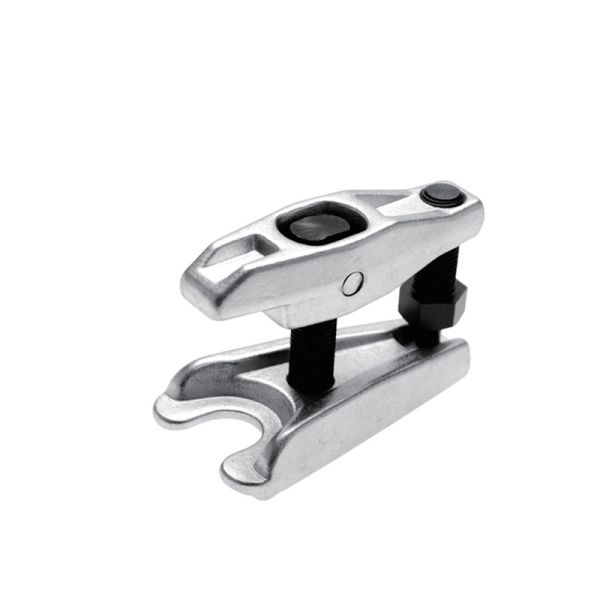
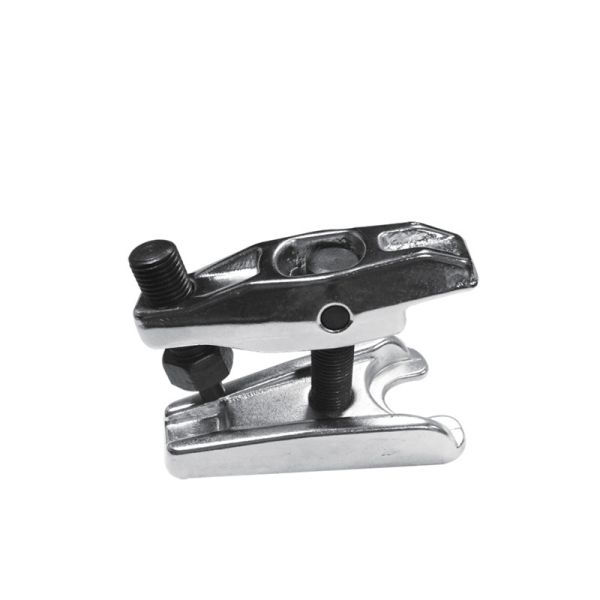
The YEEDA YD57-005 Automotive Ball Joint Removal Tool addresses the key challenges of ball joint maintenance: "imprecise gripping, tool fragility, and cumbersome storage". With "40Cr drop-forged build + chrome-plated finish + 20mm precision size" as core strengths, it delivers reliable performance for automotive repair tasks:
- Superior Durability: Drop forging compresses the 40Cr Steel into a dense, uniform structure, making the tool 40% stronger than cast alternatives. This eliminates the risk of bending or breaking when applying torque to tight 20mm ball joints—critical for busy repair shops handling daily extractions.
- Balanced Hardness: After heat treatment, the tool achieves a hardness of HRC 38-42, striking the perfect balance between wear resistance (for long-term use) and ductility (to avoid brittle fracture). This ensures consistent performance across 300+ ball joint removal cycles.
- Corrosion Protection: The chrome-plated finish creates a smooth, non-porous barrier that resists automotive grease, road salt, and workshop humidity. Unlike uncoated tools, it won’t rust or degrade—even when stored in damp toolboxes—extending service life by 50%.
- 20mm Precision Fit: The tool’s 20mm size is tailored to the most common ball joint diameter in compact and mid-size passenger vehicles. This precise fit ensures the tool grips the ball joint tightly, preventing slippage that can scratch or damage the joint or surrounding components.
- Lightweight Operation: At 1.2-1.5 kg per unit, the tool is light enough for single-hand use, reducing technician fatigue during back-to-back repairs. Its ergonomic shape (inferred from standard ball joint tools) ensures comfortable torque application.
- Blow Mold Case Storage: The included blow mold case features custom slots for the tool, keeping it organized and protected from impacts during transport or storage. This is especially useful for mobile repair teams or shops with limited tool storage space.
Scenario Requirement: A neighborhood repair shop services 15 compact sedans (e.g., Toyota Corolla, Honda Civic) monthly, replacing worn 20mm ball joints. The shop needs a durable, easy-to-store tool for daily use.
Operation Process:
- Setup: Retrieve YD57-005 from its blow mold case; inspect the chrome-plated surface for grease (wipe clean if needed); position the tool’s 20mm jaw around the ball joint;
2. Extraction: Apply steady torque to the tool—40Cr steel handles the force without bending; the precise 20mm fit grips the joint tightly, separating it from the control arm in ~1.5 minutes per car;
3. Efficiency: 15 sedans serviced in ~22.5 minutes; 40 pieces per carton ensure the shop has backups for multiple technicians;
4. Storage: After use, clean the tool and return it to the blow mold case—no rust or damage from daily handling.
Effect: Durable build meets daily demand; precision size protects components; compact storage saves space.
Scenario Requirement: A mobile repair team handles on-road breakdowns for 8 small SUVs (e.g., Hyundai Kona) weekly, often needing to remove 20mm ball joints in outdoor, dusty conditions. The team needs a corrosion-resistant, portable tool.
Operation Process:
- Transport: Load the blow mold case (with YD57-005) into the service van—custom slots prevent tool movement during driving;
2. On-Site Use: At the breakdown location, use the tool to extract the 20mm ball joint—chrome plating resists dust and road grime; lightweight design allows use in tight engine bays;
3. Durability: The tool withstands outdoor use (rain, dust) without corrosion; drop-forged steel resists impacts from accidental drops on pavement;
4. Convenience: The blow mold case is easy to carry to the vehicle; 40 pieces per carton ensures the team has enough tools for weekly repairs.
Effect: Corrosion resistance fits outdoor use; portability suits mobile service; durability handles on-site hazards.
Scenario Requirement: A dealership service center specializes in mid-size passenger cars (e.g., Volkswagen Passat) with factory-installed 20mm ball joints. The center needs a precise, consistent tool to maintain service quality.
Operation Process:
- Standardization: Issue YD57-005 to all technicians—its 20mm precision fit matches the dealership’s target vehicle ball joints;
2. Maintenance: Use the tool to remove ball joints during routine service—chrome plating is easy to clean between jobs, maintaining a professional look;
3. Quality Control: The tool’s consistent performance (no slippage, no component damage) ensures customer satisfaction; blow mold cases keep tools organized for fast access;
4. Cost-Saving: Durable 40Cr steel reduces tool replacement frequency; 40 pieces per carton lowers bulk purchasing costs.
Effect: Precision fit ensures service quality; consistency meets dealership standards; durability cuts long-term expenses.
A1: Slippage is typically due to grease buildup or incorrect positioning. Solutions: 1) Clean the Ball Joint: Wipe grease or dirt from the ball joint and the tool’s jaw with a degreasing cloth—debris creates a slippery barrier; 2) Align the Tool Correctly: Ensure the tool’s 20mm jaw fully encloses the ball joint’s base (not just the top)—this maximizes contact area for grip; 3) Apply Steady Torque: Avoid sudden, jerky force—slow, consistent torque helps the tool maintain its grip. If slippage persists, check if the ball joint is indeed 20mm (using a caliper)—a larger joint will cause poor fit.
A2: No. The tool is precision-engineered for 20mm ball joints. Using it on larger joints will: 1) Cause incomplete grip (the jaw won’t fully enclose the joint), leading to slippage and potential component damage; 2) Put excess stress on the tool’s 40Cr steel, increasing the risk of bending or cracking; 3) Waste time—larger joints require a tool with a matching size (e.g., YEEDA YD57-004 for 22mm joints). Always match the tool size to the ball joint diameter.
A3: Peeling plating is usually due to impact damage or improper cleaning. Fixes & Prevention: 1) Avoid Impact: Do not drop the tool on hard surfaces (e.g., concrete)—impacts can chip the plating; store it in the blow mold case when not in use; 2) Use Mild Cleaners: Clean the tool with a soft cloth and mild soap (avoid abrasive cleaners or wire brushes, which scratch the plating); 3) Dry After Use: Wipe the tool dry immediately after cleaning—moisture under damaged plating accelerates peeling. If plating is severely peeled, replace the tool to prevent rust on the underlying steel.
A4: Key maintenance steps: 1) Post-Use Cleaning: Wipe the tool with a dry cloth after each use to remove grease; for heavy buildup, use mild soap and water, then dry thoroughly; 2) Lubricate Moving Parts: Apply a small amount of machine oil to the tool’s pivot points (if applicable) every 2 weeks to ensure smooth operation; 3) Storage: Always return the tool to its blow mold case—avoid leaving it in damp areas or exposed to road salt; 4) Inspect Regularly: Check for bending, cracks, or plating damage monthly—replace the tool if structural defects are found (damaged tools pose safety risks).