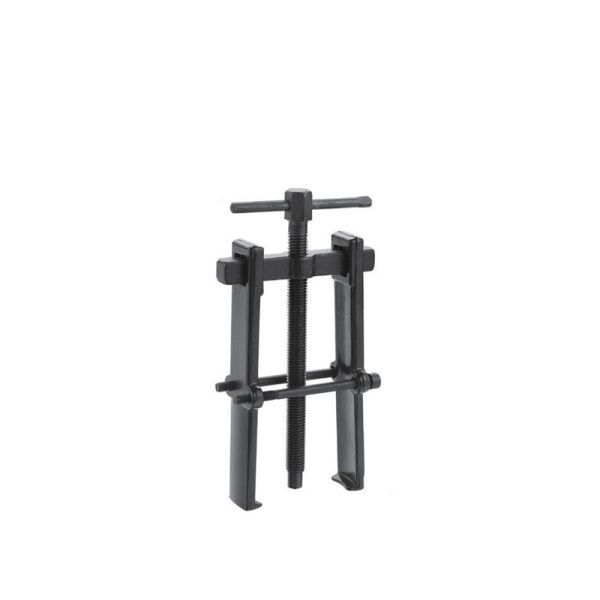
The table below outlines the key specifications of the Armature Bearing Puller, covering model number, applicable size range, quantity per carton, gross weight per carton, and package dimensions, to support procurement and storage decisions.
This Armature Bearing Puller is engineered with premium materials and professional processes to deliver reliable performance for small bearing disassembly tasks:
- High-Strength CR-V Steel Material: The puller is constructed from CR-V (Chrome-Vanadium) steel, a material renowned for excellent toughness, wear resistance, and impact load capacity. This ensures the tool can withstand the pressure of pulling bearings without bending or breaking, even during frequent use.
- Electro-Black Oxide Surface Finish: The surface undergoes an electro-black oxide treatment, which forms a dense, corrosion-resistant layer. This finish effectively protects the puller from rust caused by moisture or oil, extends its service life, and gives it a sleek, professional appearance.
- Precision Forging Molding: Adopting advanced forging technology, the puller’s key components (such as the clamping arms and force-transmission parts) are forged in one piece. This process enhances the material’s structural density, eliminating internal defects and ensuring consistent strength across the tool.
- Quenching-Hardening-Tempering Heat Treatment: All functional parts go through a three-step heat treatment process—quenching for hardness, hardening for structural stability, and tempering for flexibility. This balances the puller’s hardness and toughness, preventing it from becoming brittle while maintaining the ability to grip and pull bearings firmly.
With its specialized design for small bearings, the Armature Bearing Puller is widely used in industries and scenarios that require precise disassembly of armature bearings:
- Electrical Motor Repair: Essential for repairing small to medium-sized electrical motors (e.g., AC/DC motors, servo motors). It can safely remove armature bearings from motor shafts without damaging the armature core or the shaft, which is crucial for maintaining motor performance after repair.
- Power Tool Maintenance: Ideal for servicing power tools like drills, grinders, and sanders. These tools often use small armature bearings that wear out over time; the puller allows technicians to disassemble and replace the bearings efficiently, restoring tool functionality.
- Appliance Repair Industry: Used in repairing household appliances such as washing machine motors, refrigerator compressors, and fan motors. It helps remove faulty armature bearings from these appliances’ internal motors, enabling quick replacement and reducing repair time.
- Automotive Electrical System Servicing: Suitable for maintaining automotive electrical components like starter motors and alternators. These parts rely on small armature bearings for smooth operation; the puller ensures damage-free disassembly during maintenance or part replacement.
A1: No, this puller is specifically designed for small bearings with a size range of 15-70mm (depending on the model). For bearings larger than 70mm, we recommend using a heavy-duty bearing puller that matches the larger size, as using this tool for oversized bearings may cause tool damage or incomplete disassembly.
A2: First, select the correct model that matches the bearing’s size (ensure the bearing falls within the puller’s size range). Then, adjust the puller’s clamping jaws to fit tightly around the bearing’s inner or outer race. Before applying force, double-check that the jaws are properly seated—this prevents slipping during the pulling process.
A3: The electro-black oxide finish is a chemical conversion coating that bonds with the steel surface (not a layered coating), so it is highly resistant to peeling. However, avoid using sharp tools to scrape the surface or exposing the puller to strong acidic/alkaline substances for extended periods, as these may damage the finish over time.
A4: In most cases, no additional tools are required. The puller is designed with an integrated force-applying mechanism (e.g., a threaded rod) that allows you to apply pulling force by turning the handle. For particularly tight bearings, you may lightly tap the puller’s top with a rubber mallet to assist in loosening the bearing, but avoid using heavy hammers that could damage the tool.