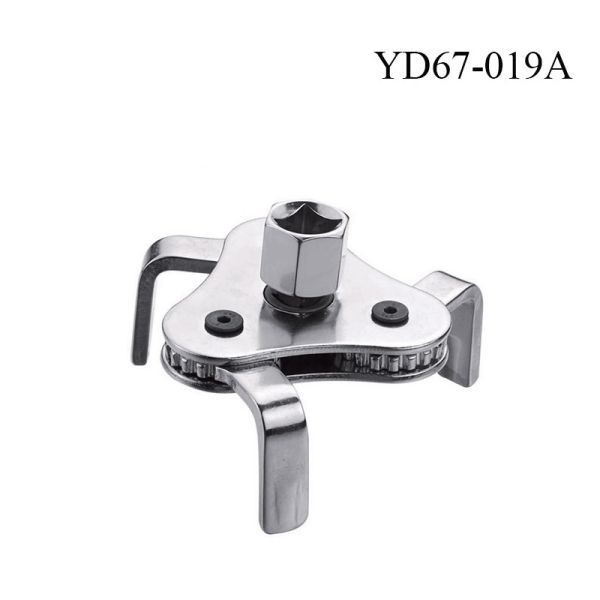
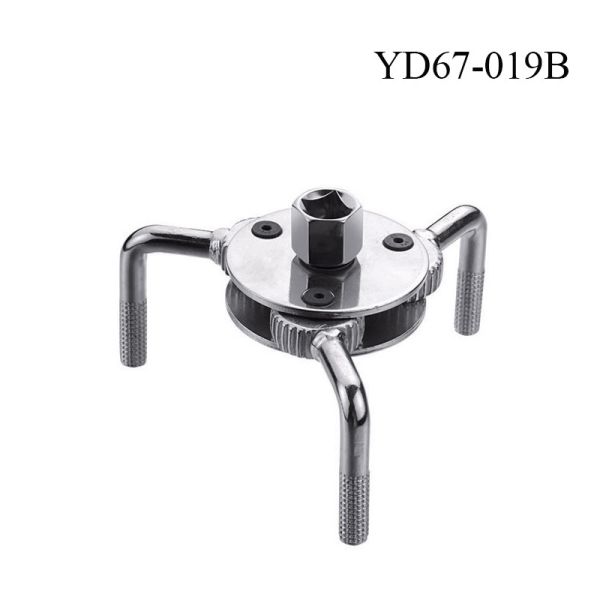
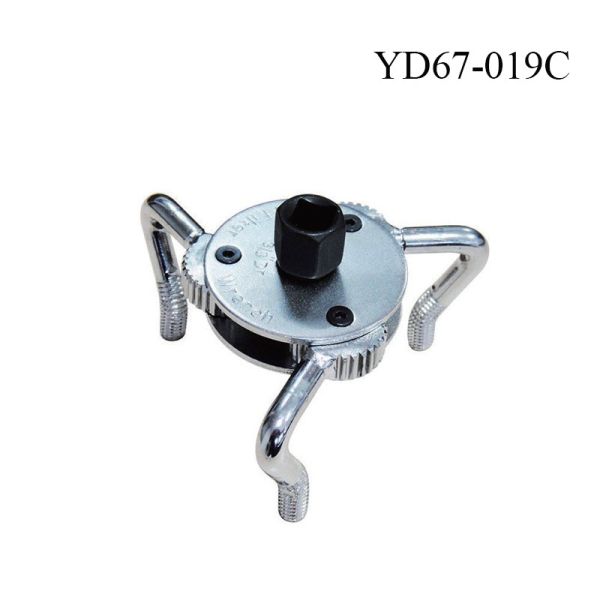
The table below presents the detailed specifications of the 3 Legs Oil Filter Wrench (Models: YD67-019A, YD67-019B, YD67-019C), including material, size, compatibility, and packaging details for clear selection and procurement.
This 3 Legs Oil Filter Wrench is engineered for versatile and reliable oil filter removal, with key features ensuring performance and durability:
- High-Strength Carbon Steel Construction: Crafted from premium carbon steel, the wrench offers excellent toughness and load-bearing capacity. It can withstand high torque during filter removal without bending or breaking, making it suitable for both regular and tightly sealed oil filters.
- Chrome-Plated Surface for Corrosion Resistance: The entire wrench undergoes chrome plating, which forms a smooth, protective layer. This layer effectively resists rust, oil, and moisture damage—extending the tool’s service life and maintaining a clean, professional appearance even in harsh workshop environments.
- Adjustable 3-Leg Design for Wide Compatibility: The three legs are adjustable, allowing the wrench to fit oil filters within a specific diameter range (63-102mm for YD67-019A, 65-110mm for YD67-019B, 45-75mm for YD67-019C). This flexibility eliminates the need for multiple single-size wrenches, covering most common oil filter sizes in passenger cars and light commercial vehicles.
- Multi-Drive Compatibility: Designed to work with 1/2" drive tools, 3/8" drive tools, or 21mm wrenches. This universal drive design lets users leverage existing toolkits, enhancing convenience and reducing the need for additional specialized tools.
With its adjustable design and wide compatibility, the 3 Legs Oil Filter Wrench is widely used in automotive maintenance scenarios:
- Professional Auto Repair Shops: Essential for repair shops servicing diverse vehicle brands (e.g., Toyota, Honda, Ford, Volkswagen). The adjustable legs allow mechanics to handle oil filters of different sizes, streamlining workflow and improving repair efficiency—no need to switch between multiple wrenches.
- Commercial Vehicle Maintenance: Suitable for maintaining light commercial vehicles (vans, pickup trucks) with larger oil filters. Models like YD67-019B (65-110mm range) can easily grip these larger filters, ensuring smooth removal even under high interference fits.
- DIY Home Garage Use: Perfect for car owners performing at-home oil changes. The adjustable design simplifies filter fitting, and multi-drive compatibility works with common home tools (e.g., a 21mm wrench). It eliminates the guesswork of choosing the right wrench size, making DIY maintenance accessible.
- Fleet Maintenance Teams: Ideal for teams managing vehicle fleets (e.g., taxi companies, delivery services). The wrench’s versatility covers the varied oil filter sizes across fleet vehicles, reducing tool inventory and ensuring consistent maintenance quality.
A1: Loosen the locking screws on each leg, slide the legs inward (for smaller filters) or outward (for larger filters) until they align with the filter’s outer diameter, then retighten the locking screws firmly. Ensure all three legs are evenly spaced around the filter for balanced grip—this prevents slipping during use.
A2: No, if used correctly. Avoid over-tightening the leg locking screws (this may crush plastic filters). Ensure the legs only contact the filter’s outer casing, not nearby engine parts. For delicate plastic filters, wrap the leg tips in thin electrical tape to prevent scratches—though the chrome-plated legs are already smooth to minimize damage risk.
A3: First, check if the legs are properly adjusted (evenly spaced and tightly locked). If slipping persists, clean the filter surface and leg tips to remove oil or debris (oil reduces friction and causes slipping). For extremely tight filters, use a longer drive tool (e.g., a breaker bar) to apply more torque—ensure the legs remain securely locked during force application.
A4: After each use, wipe the wrench with a clean cloth to remove oil and debris. Apply a light coat of lubricating oil to the leg adjustment screws to prevent rust and ensure smooth sliding. Store the wrench in a dry toolbox to avoid moisture-induced corrosion. Periodically inspect the legs for bending or wear—replace damaged legs (available as spare parts) if needed.