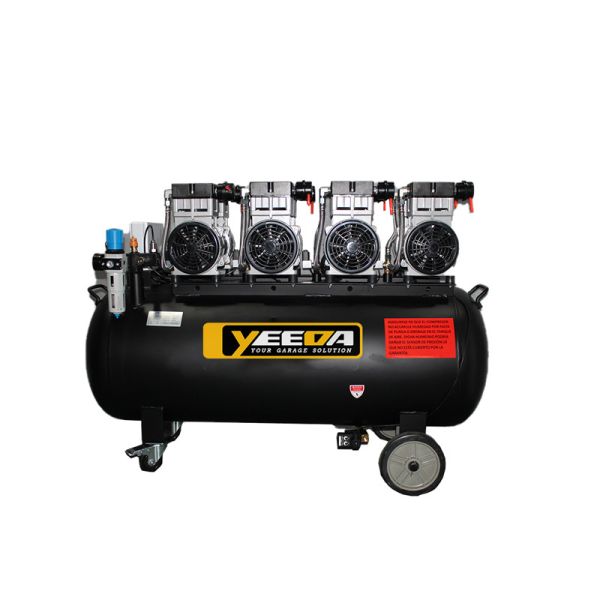
The YEEDA YOUR GARAGE SOLUTION Air Compressor (Model: YD85-012) is a high-performance, heavy-duty pneumatic device designed to meet intensive needs in garages, auto workshops, and light industrial settings. It integrates powerful output, large air storage, and user-friendly controls to deliver reliable performance for prolonged and demanding tasks.
In terms of core performance, it is equipped with a 4.4KW (6HP) 4-pole motor that operates at 1750 R/M. The 4-pole motor not only ensures strong power output but also runs with lower noise and less vibration compared to 2-pole motors, creating a more comfortable working environment. With an impressive free air delivery of 808 L/Min, it can easily power multiple high-demand pneumatic tools at the same time—such as industrial-grade impact wrenches, heavy-duty spray guns, and pneumatic drills—without experiencing pressure drops. The 200L large-capacity tank eliminates the need for frequent motor startups and shutdowns, maintaining stable pressure during long hours of operation. This not only reduces energy consumption but also minimizes wear on the motor, significantly extending the equipment’s service life. It operates on 110V 60HZ single-phase power, making it compatible with standard power supplies in most regions, and can reach a maximum pressure of 8 Bar/115 PSI to handle tough pneumatic jobs.
For safety and ease of use, the air kit set provides comprehensive support. Two pressure gauges allow real-time monitoring of the tank pressure and the output pressure, enabling operators to keep track of the equipment’s working status at a glance. The safety valve automatically releases excess pressure when it exceeds the standard, effectively preventing potential safety hazards caused by over-pressurization. The electric valve and air regulator work together to allow precise adjustment of airflow and output pressure, ensuring that different pneumatic tools receive the appropriate pressure for optimal performance. The centralized control box integrates the switch and adjustment functions, simplifying the operation process and making it easy for users to switch tools or adjust parameters quickly.
In terms of packaging, the wooden package (as shown in the picture) offers excellent protection. Its sturdy structure can withstand impacts, vibrations, and other potential damages during transportation, ensuring that the 127KGS compressor remains intact. With dimensions of 137×51×101cm, the package balances protective performance and transport convenience, making it easier for logistics and handling while safeguarding the product.
- Professional Garage Heavy-Duty Repairs:This air compressor is ideal for repairing large vehicles such as SUVs and trucks. It can power heavy-duty pneumatic wrenches to quickly remove or install stubborn wheel nuts and engine bolts, which would otherwise require significant physical effort with manual tools. Additionally, it can supply stable air pressure to pneumatic jacks, enabling safe and efficient lifting of heavy vehicles for undercarriage maintenance.
- Auto Body Shops for Large-Scale Painting:In auto body repair and refinishing shops, the consistent airflow (808 L/Min) and large tank capacity of this compressor ensure that industrial spray guns receive a steady pressure supply. This is crucial for achieving an even and smooth paint finish on entire car bodies or large parts like bumpers and hoods, avoiding issues such as uneven coating or paint defects caused by pressure fluctuations.
- DIY Enthusiasts’ Advanced Garage Projects:For automotive DIY enthusiasts who undertake complex projects—such as restoring classic cars, building custom garage workbenches, or installing heavy-duty accessories like winches—this compressor is a valuable tool. It can power pneumatic staplers and nail guns for woodworking tasks, as well as pneumatic grinders for polishing metal parts, ensuring precision and efficiency in every step of the project.
- Light Industrial Pneumatic Operations:Beyond garage and auto shop use, this compressor is also suitable for light industrial settings. It can be used to power pneumatic drilling machines for drilling holes in thick metal plates, pneumatic riveters for assembling large metal components, and pneumatic blow guns for cleaning dust and debris from machinery, meeting the continuous and stable air supply needs of light industrial operations.
First, check if the air inlet filter is clogged with dust or debris. A clogged filter restricts airflow into the compressor, reducing the free air delivery. Clean the filter thoroughly or replace it with a new one if necessary. Second, inspect all air hoses and connections for leaks. Even small leaks can lead to significant air loss. Use soapy water to apply to the connections—if bubbles form, it indicates a leak; tighten the connections or replace damaged hoses. If the problem persists, the piston seals may be worn. Worn seals cause air leakage inside the compressor, lowering the output. Replace the piston seals with genuine parts to restore performance.
First, ensure the compressor is placed on a flat and stable surface. Uneven surfaces can cause the equipment to vibrate more, increasing noise. Placing anti-vibration pads under the compressor’s base can effectively absorb vibrations and reduce noise transmission. Second, check if the motor’s cooling fan is dirty or damaged. A dirty fan causes the motor to overheat and run noisily, while a damaged fan produces abnormal noise. Clean the fan or replace it if it is broken. Additionally, keeping the compressor in a well-ventilated area can help dissipate heat and reduce noise caused by overheating.
First, disconnect the power supply immediately to avoid electrical hazards. Open the control box cover and check if the internal wires are loose or disconnected. Tighten loose wires and reconnect any disconnected ones securely. Second, inspect the switches and terminals inside the control box for signs of damage or corrosion. Corroded terminals can cause poor electrical contact, leading to unresponsiveness. Clean the terminals with a dry cloth or replace damaged switches. If the control box still does not work, do not attempt to repair it yourself—contact professional technical support or a qualified technician to diagnose and fix the issue.
Drain the moisture from the tank at least once a week. Moisture accumulates inside the tank during operation, which can cause rust and corrosion. Open the drain valve at the bottom of the tank and let all the moisture and condensation drain out completely. Inspect the tank’s exterior and interior (if accessible) every 6 months for signs of rust, dents, or cracks. If any damage is found, stop using the compressor immediately and have the tank inspected by a professional. Do not continue using a damaged tank, as it may pose a safety risk. Additionally, conduct a pressure test on the tank once a year in accordance with local safety standards to ensure its structural integrity and safe operation.