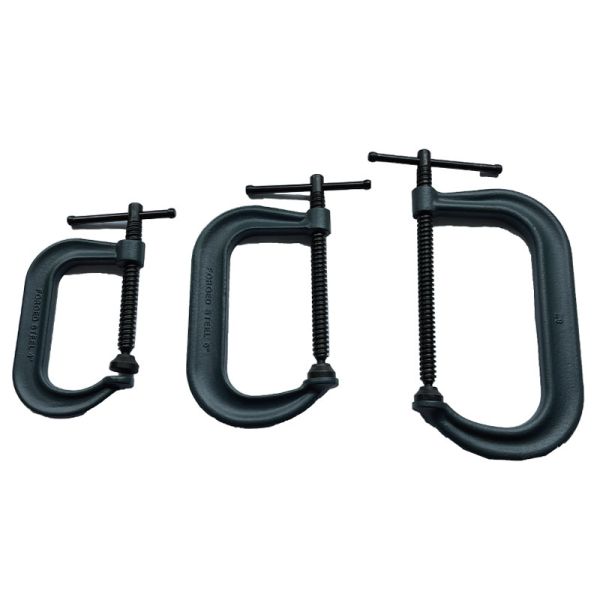
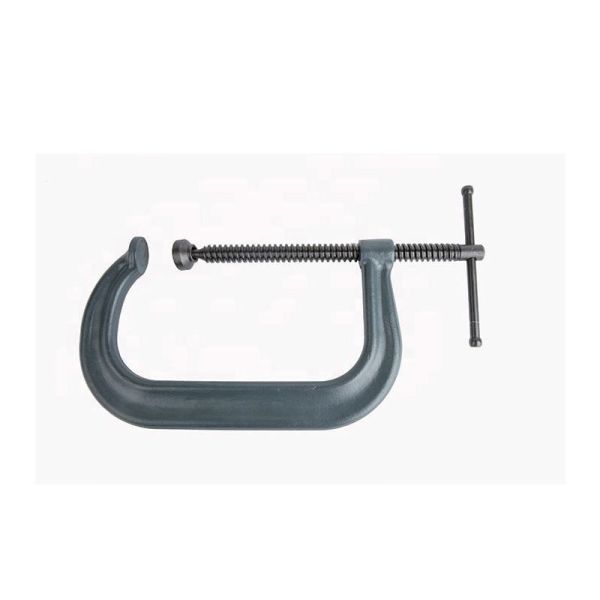
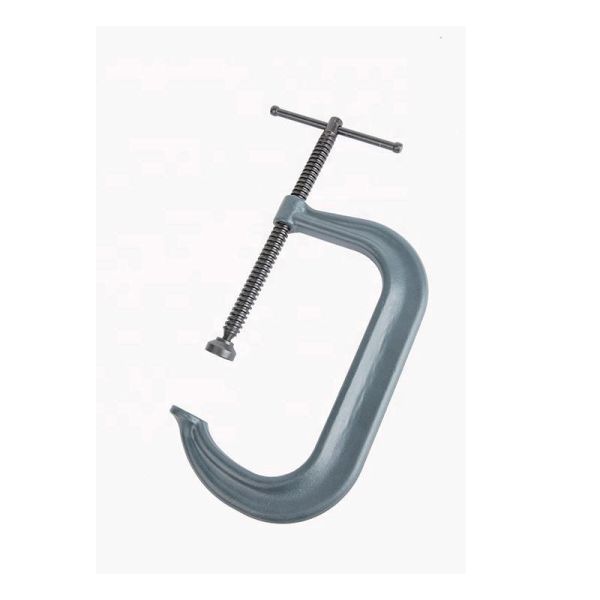
The 400 Series C-Clamps are designed for regular-duty clamping needs, with 7 models covering sizes from 2” to 12” to fit diverse workpiece requirements. Below is the comprehensive specification table:
- Key Design Indicators:
- Max. Opening: The maximum distance between the clamp’s jaws, determining the size of workpieces it can hold.
- Throat Depth: The vertical distance from the jaw to the clamp’s “C” frame, affecting how far a workpiece can extend under the clamp.
- Load Limit: The maximum weight the clamp can securely hold without deformation or failure.
- Drop Forged Carbon Steel Construction: Made from high-quality drop forged carbon steel, a material known for its exceptional strength and durability. This ensures the clamp withstands regular use and resists bending or cracking under load.
- Corrosion-Resistant Copper Coating: The screw and handle feature a copper coating that effectively prevents rust and wear. This extends the product’s service life, even in humid workshops or outdoor temporary workspaces.
- Ergonomic Handle Design: The handle is shaped for comfortable grip, reducing hand fatigue during repeated tightening or loosening. It also provides better torque control for precise clamping force adjustment.
- Stable “C” Frame Structure: The classic “C” shape distributes pressure evenly across the frame, avoiding stress concentration and ensuring long-term structural stability—critical for heavy-load applications.
- All clamps belong to the 400 Series, a line strictly manufactured to meet industrial quality standards. Each unit undergoes load testing to verify it meets the stated load limit before leaving the factory.
- The forging process eliminates internal defects in the carbon steel, enhancing the clamp’s impact resistance and making it less prone to breakage during accidental drops or heavy use.
- The screw features fine threading for smooth operation, reducing friction and ensuring the clamp maintains consistent clamping force over time.
The 400 Series Drop Forged Carbon Steel C-Clamps are versatile tools suitable for various professional and DIY scenarios:
- Woodworking Workshops: Used to secure wooden boards, panels, or furniture components during cutting, drilling, gluing, or sanding. The adjustable opening fits different workpiece thicknesses, ensuring stability during precision tasks.
- Metalworking & Fabrication: Ideal for clamping metal sheets, rods, or welded parts while grinding, polishing, or assembling. The high load limit (up to 6900 Lbs for 12” model) handles heavy metal workpieces safely.
- Auto Repair Shops: Clamps auto body parts, such as fenders or bumpers, during repair or painting. It can also hold components in place while replacing parts like hoses or belts.
- DIY Home Projects: Suitable for home improvement tasks, including installing shelves, building wooden furniture, or fixing household items. The compact 2” and 3” models are easy to store and use in small spaces.
- Construction Sites: Temporarily secures materials like drywall, plywood, or metal framing during installation. The corrosion-resistant coating makes it usable in outdoor or semi-outdoor construction environments.
A1: Consider two key factors:
- Max. Opening: Ensure it’s larger than the thickness/width of your workpiece. For example, a 4” workpiece needs a clamp with at least 4” max opening (e.g., YD79-001-4”).
- Throat Depth: Choose a depth that allows the clamp to reach the area you need to secure. For workpieces that extend far from the edge, select a model with greater throat depth (e.g., 12” model with 6-1/4” throat depth).
A2: The copper-coated screw/handle provides basic corrosion resistance, so it’s suitable for temporary outdoor use (e.g., a day of construction work). However, prolonged exposure to rain, snow, or standing water is not recommended—this can damage the coating over time. After outdoor use, wipe the clamp dry and apply a thin layer of lubricating oil to the screw to prevent rust.
A3: Stiffness usually results from dirt buildup or lack of lubrication. First, wipe the screw with a clean cloth to remove debris. Then, apply a small amount of machine oil or silicone lubricant to the threads. Turn the handle back and forth several times to distribute the lubricant—this should restore smooth operation. Avoid using harsh chemicals, as they may damage the copper coating.
A4: No. The Load Limit is the maximum weight the clamp is designed to hold safely. Exceeding it can cause the clamp to deform, break, or slip, leading to workpiece damage or personal injury. Always choose a clamp with a Load Limit higher than the weight of your workpiece.
A5: It’s not recommended for unprotected delicate materials, as the serrated jaws may scratch or crack them. If needed, wrap the jaws with soft materials (e.g., rubber pads, foam, or cloth) to create a buffer. This protects the delicate surface while still providing sufficient clamping force.