CCD industrial camera housings have one critical job: protect the sensor, optics, and internal electronics from dust, moisture, vibration, and thermal shock while maintaining precise dimensional stability to ensure lens mount and sensor alignment never drift. This requires geometrically accurate, seam-sealed, and structurally rigid housings. A housing that's out of tolerance doesn't just fail dimensional checks—it fails in the field, where replacement costs far exceed the part's original price.
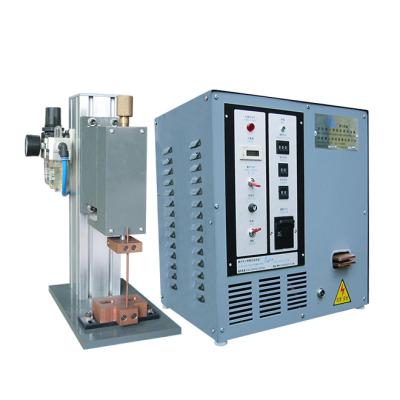
Hwashi's Automatic Bending and Welding Integrated Machine for CCD Camera Housings delivers exactly this precision. Flat sheet metal enters the machine, and a precisely bent, fully welded, ready-to-assemble camera housing frame emerges. The process eliminates manual bending, separate clamping and fixturing for welding, and rework on out-of-tolerance corners. Whether producing housings for machine vision cameras, surveillance systems, scientific imaging modules, or industrial inspection equipment, this machine delivers consistent, dimensionally accurate enclosures shift after shift, year after year.
Traditional camera housing production requires at least two separate operations: bending sheet metal on a press brake or folder, then manually fixturing the bent part for welding. This machine integrates both processes—automatic feeding, precision bending, and resistance welding—into one continuous cycle. The workpiece never leaves the machine between operations, locking in positional accuracy from bend to weld.
CCD camera housings demand sharp, clean corners not just for appearance, but because excess material in bend radii wastes internal volume and can interfere with PCB and sensor mounting. This machine's bending mechanism delivers tight, consistent bend radii across the full workpiece width without cracking, thinning, or surface marring. Whether working with 0.5 mm stainless or 1.5 mm carbon steel, every corner comes out identical.
Thin-wall camera housings are highly distortion-sensitive. Excessive heat input warps flat surfaces, throws off lens-mount faces, or creates housings that won't seal properly. This machine's resistance welding system delivers concentrated, controlled energy—sufficient to produce strong, continuous weld seams without warping or discoloring surrounding panels. The result is housings with flat mounting surfaces, straight edges, and clean weld beads requiring minimal post-processing.
Camera manufacturers typically produce housings in several sizes—compact bodies for board-level cameras, standard enclosures for machine vision, and heavy-duty housings for outdoor surveillance. This machine accommodates various housing dimensions with quick-change bending tooling and programmable welding parameters. Switch between models in under 20 minutes—swap tooling, recall stored programs, and start running. Up to 101 welding programs can be stored, each with tailored current, timing, and sequence settings for specific housing geometries.
CCD camera housings are often visible in final products—particularly in surveillance and scientific imaging where enclosure appearance matters. This machine produces clean, uniform weld seams with minimal spatter, no burn-through, and consistent bead appearance. For housings requiring cosmetic finishes, post-weld grinding and polishing time is dramatically reduced compared to conventional MIG/TIG welding.
Forced water cooling on the welding transformer and electrodes maintains thermal stability during extended production runs. Servo-driven feeding and bending systems ensure repeatable positioning from the first part of the shift to the last. No overheating, no drift, no progressive dimensional deviation.
| Configuration | Standalone Unit | Inline System |
|---|---|---|
| Best For | Batch production, multiple housing models | High-volume, single-model production |
| Loading Mode | Manual or automatic feed | Fully automatic from decoiler |
| Changeover Time | 15–20 min | 20–30 min |
| Footprint | Compact, single-station | Custom line layout |
Engineered bending tools form flat sheet metal into housing frame profiles with consistent bend angles and tight radii. Bend force and speed are programmable to match material type, thickness, and bend geometry. The bending process produces frames immediately ready for welding—no secondary forming or manual adjustment required.
Depending on housing design, the machine applies resistance spot welding or seam welding at joint locations. Welding current, duration, and electrode pressure are precisely controlled via the MFDC inverter power supply, producing strong, consistent welds without excess heat input. Electrode tips are designed to match housing geometry, ensuring full contact and uniform nugget formation.
Medium-frequency DC delivers faster current rise, more concentrated heat, and 30%+ energy savings versus conventional AC. Critical for thin-wall enclosures where excessive heat distorts flat surfaces or warps lens-mount faces. Power factor: 0.85–0.90.
Servo-driven sheet feeding with adjustable speed and length control. Compatible with pre-cut blanks or continuous sheet from a decoiler. Feeding accuracy ensures consistent bend positioning and weld joint overlap for reliable quality on every part.
Industrial PLC with color touch screen HMI. Intuitive parameter setup for bending sequence, welding current, welding time, electrode pressure, and cycle timing. Real-time monitoring of all key process variables. Welding data exportable via USB or network. Password-protected operator levels prevent unauthorized parameter changes.
Closed-loop water cooling for welding transformer, thyristors, and electrodes. Maintains thermal stability during continuous production, extending component life and ensuring consistent weld quality throughout extended runs.