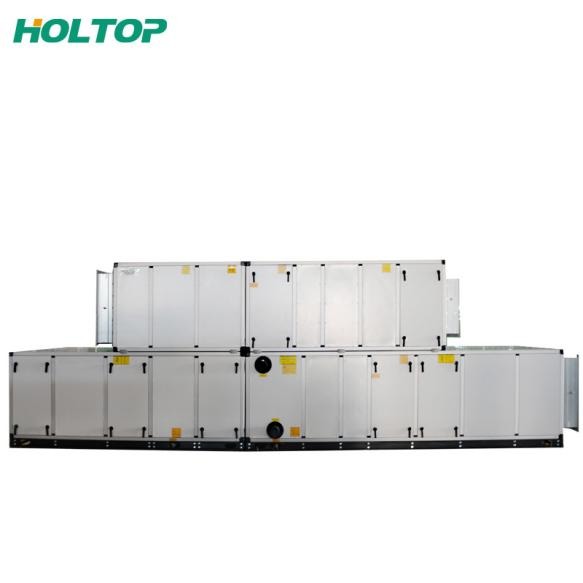
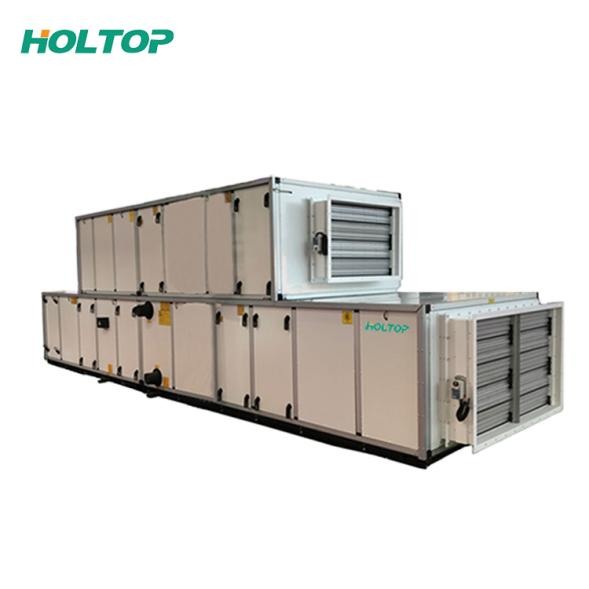
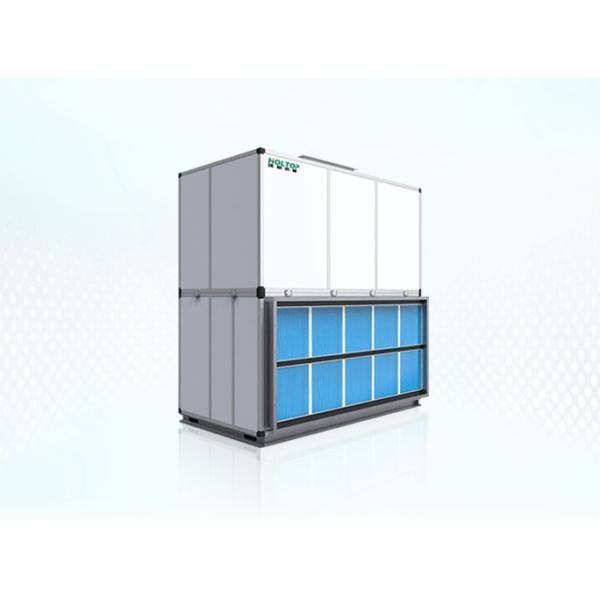
Intelligent Digital Fresh Air Ventilation System for Hospital Environments
Designed specifically for hospital environments, our Intelligent Digital Fresh Air Ventilation System is a revolutionary solution for maintaining optimal indoor air quality. Leveraging advanced sensor technology and real-time digital monitoring, this system continuously analyzes air composition, detecting harmful pollutants, pathogens, and volatile organic compounds (VOCs) that pose risks to patients, medical staff, and visitors.
Holtop provides comprehensive hospital system solutions tailored to each facility's unique requirements. We analyze the actual situation of each hospital to deliver customized solutions that fully consider the needs of medical equipment, current operations, and future development.
Hospital Ventilation Requirements
 |
Air Safety Requirements
Hospitals are public spaces with high concentrations of bacteria and virus carriers. Both patients and staff can carry microorganisms, making continuous air circulation and high purification essential to prevent cross-infection.
|
 |
Air Quality Requirements
Patients are vulnerable with reduced resistance. Indoor air circulation significantly impacts recovery rates. Hospitals require excellent indoor air quality to improve treatment environments and accelerate patient recovery.
|
 |
Energy Consumption Requirements
Hospital construction is energy-intensive, with air-conditioning systems accounting for over 60% of total building energy consumption. Efficient, energy-saving solutions must meet ventilation requirements while significantly reducing energy usage.
|
 |
Intelligent System Requirements
Intelligentization is essential for modern hospital development, including centralized equipment control, real-time energy monitoring, and automated ventilation system operation. This represents a crucial aspect of medical environment quality and green building standards.
|
Hospital Ventilation Principles
Directional Airflow Control
Fresh air enters from outdoor or clean areas, flows through semi-polluted areas, then to polluted areas via pressure differentials until outdoor discharge, effectively preventing backflow.
Adequate Fresh Air Supply
Meets fresh air demands for staff and patients while considering air exchange rates and pressure differentials in polluted areas to ensure sufficient airflow.
Continuous Operation
Maintains 24-hour fresh air supply continuity, focusing on consistent hospital airflow to preserve air quality standards.
Intelligent Monitoring & Control
Automatically adjusts fresh and exhaust air based on air quality sensor data, enabling individual room or master system control for maximum energy and time savings.
Ventilation Requirements by Hospital Area
 |
Office & Conference Areas
Office/duty rooms: Fresh air calculated at 4-5 air changes/hour with positive pressure maintenance. Conference rooms: Fresh air based on 2.5m²/person or 40m³/hour per person with positive pressure maintenance.
|
 |
Patient Ward Areas
Public wards: 50-55m³/bed. Children's wards: 60m³/bed. Infection wards: 40m³/bed. All maintain negative pressure to contain contaminants.
|
 |
Corridor & Utility Areas
Corridors (air supply only): 2 air changes/hour with slight negative pressure. Toilets/dirty utility rooms: 10-15 air changes/hour with negative pressure.
|
Digital Intelligent Fresh Air Ventilation System
System design completeness and functional configuration directly impact overall efficiency, front-end investment, and operating costs. Holtop selects projects based on high standards, performance, configuration, and cost-effectiveness.
We design ventilation systems according to building characteristics and user needs, creating various forms and economic standards. For hospital systems typically divided into clean, semi-polluted, and contaminated areas, we implement stepwise air pressure differentiation to control airflow from clean to polluted areas, preventing high-risk air spread.