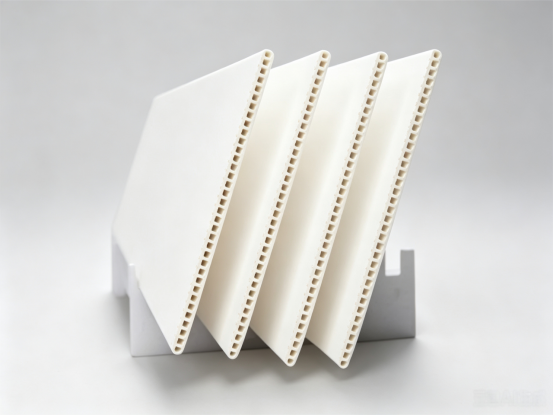
Zirconia Tubular Ceramic Membrane is manufactured using high-purity zirconia (ZrO₂) as the separation layer on a robust ceramic support through precision sintering technology. Its highly uniform nanoporous structure provides exceptional separation accuracy while maintaining excellent permeability and chemical stability.
Designed for demanding filtration processes, zirconia ceramic membranes are particularly suitable for pharmaceutical manufacturing, biotechnology, fine chemicals, electronic chemicals, protein concentration, enzyme purification, and solvent-resistant filtration applications where high product purity and stable long-term performance are essential.
Compared with conventional polymer membranes, zirconia ceramic membranes offer superior resistance to harsh chemicals, high temperatures, and aggressive cleaning procedures while delivering a significantly longer service life.
The Zirconia Tubular Ceramic Membrane operates using an inside-out crossflow filtration process.
Feed liquid flows at high velocity through the membrane channels. Solvents and low-molecular-weight components permeate through the zirconia separation layer, while suspended solids, microorganisms, colloids, proteins, enzymes, and other larger molecules are retained inside the membrane channels.
Continuous crossflow minimizes cake layer formation and significantly reduces membrane fouling, ensuring stable filtration performance over extended operating periods.
| Parameter | Value |
|---|---|
| Separation Layer | Zirconia (ZrO₂) |
| Support Material | Ceramic Support |
| Membrane Structure | Asymmetric Multi-layer |
| Filtration Mode | Inside-Out Crossflow |
| Pore Size | 1 nm – 200 nm (Customizable) |
| Operating Temperature | 0–300°C |
| pH Range | 0–14 |
| Porosity | ≥35% |
| Burst Pressure | ≥6 MPa |
| Membrane Length | 100–1200 mm |
| Outer Diameter | 12–40 mm |
| Channel Configuration | 1–61 Channels |
| Cleaning Method | CIP & High-pressure Backwash |
The zirconia separation layer features an extremely narrow pore size distribution, enabling efficient separation of proteins, enzymes, bacteria, viruses, colloids, nanoparticles, and other fine particles while maintaining high permeate quality.
Zirconia exhibits exceptional resistance to aggressive acids, alkalis, oxidizing agents, and most organic solvents, making it suitable for demanding industrial filtration processes.
The smooth ceramic surface reduces particle adhesion and biofilm formation, extending filtration cycles and reducing cleaning frequency.
Optimized membrane structure combines precise separation with excellent permeability, reducing operating pressure and energy consumption.
Unlike polymer membranes, zirconia ceramic membranes tolerate repeated chemical cleaning, steam sterilization, and high-pressure backwashing without significant performance degradation.
The inorganic ceramic membrane material minimizes contamination risks, making it suitable for high-purity separation processes in pharmaceutical and electronic industries.
Custom dimensions and channel configurations are available upon request.
The membrane can be integrated into customized filtration systems with various housing materials.
Our engineering team provides complete filtration solutions, including: