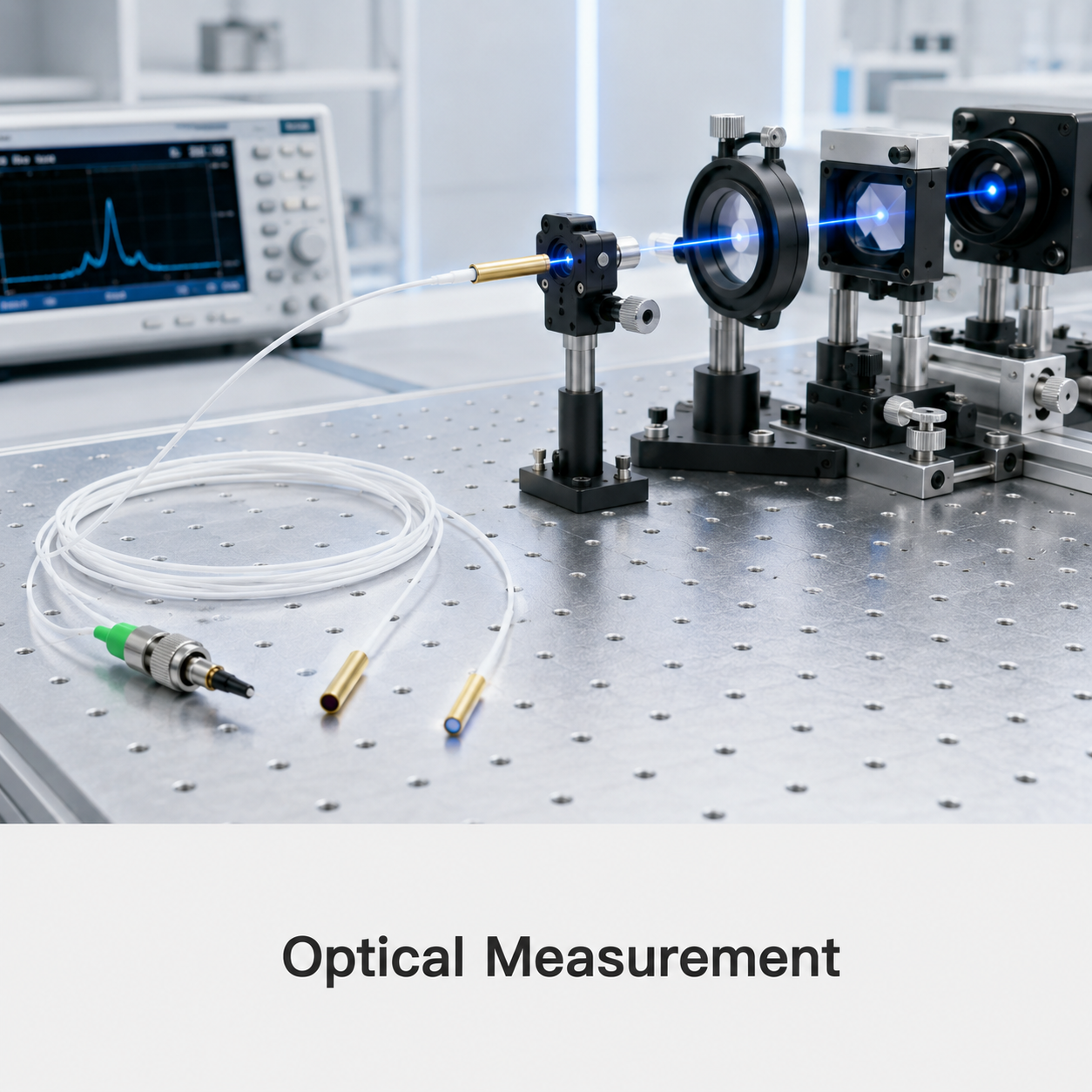
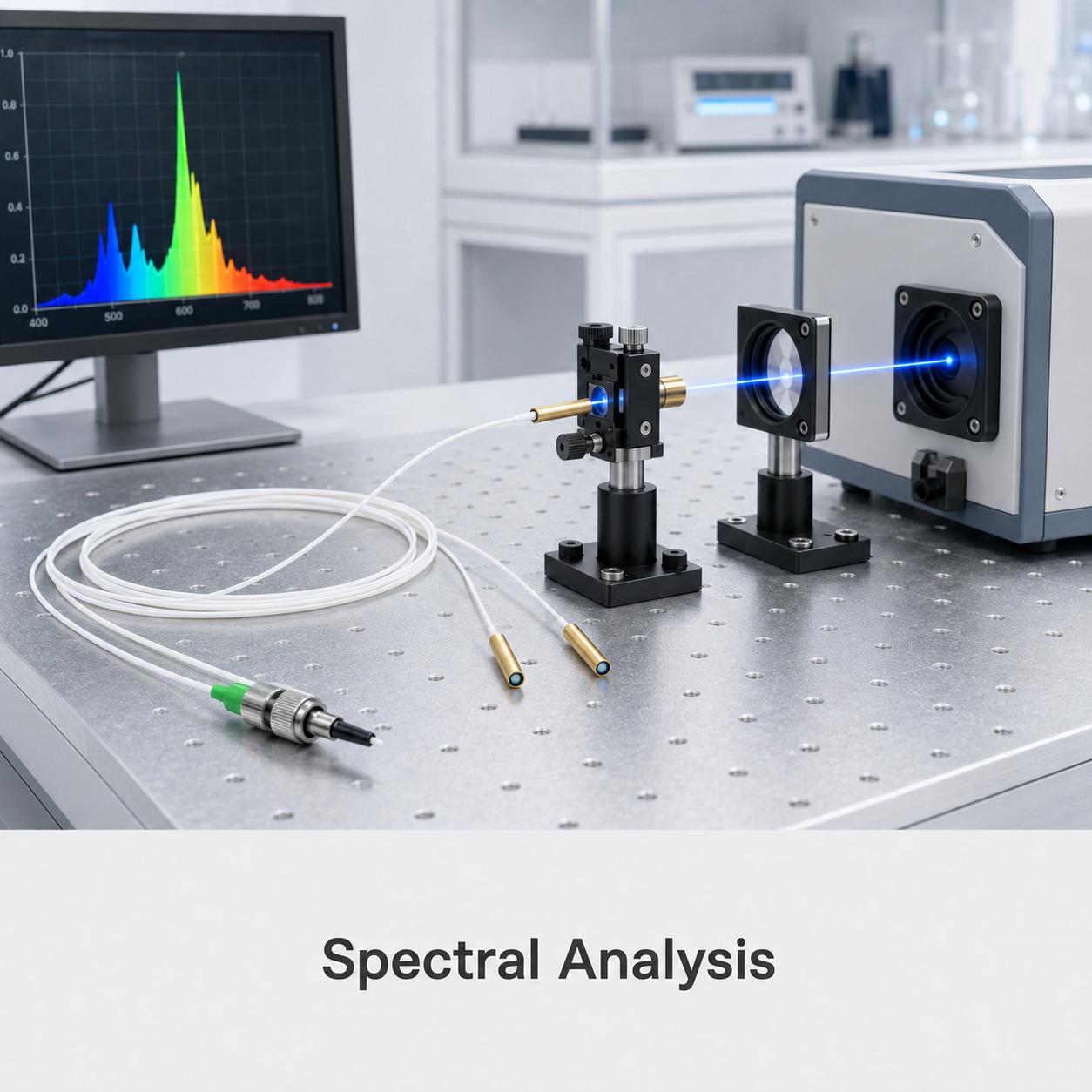
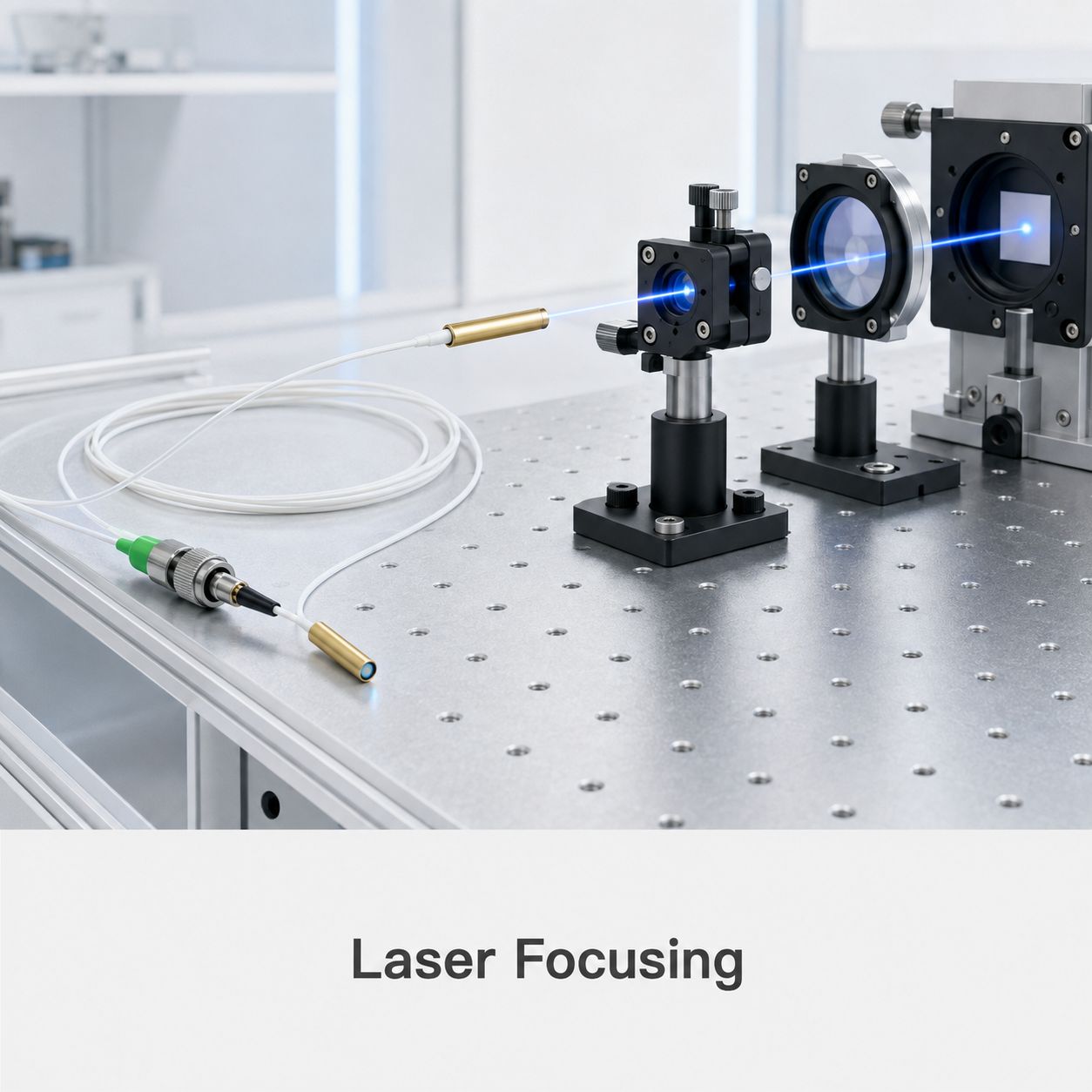
Single Mode Fiber Collimator
Fiber Optic Optical Collimator High Precision Beam Collimation Device for Laser Optical Measurement Spectral Analysis
1. Product Description
The Single Mode Fiber Collimator is a passive optical component designed to convert the divergent light emitted from a single-mode fiber into a collimated free-space beam. In the reverse direction, it can also couple a collimated free-space optical beam into a single-mode fiber.
2. Key Features
-
Fiber-to-Free-Space Beam Conversion
Converts divergent light from a single-mode fiber into a collimated optical beam.
-
Bidirectional Optical Coupling
Can also be used to couple a free-space beam back into a single-mode fiber.
-
Single-Mode Fiber Design
Designed for optical systems requiring single-mode beam propagation and coupling.
-
Controlled Beam Characteristics
Beam diameter, divergence, and working distance can be defined according to the optical design.
-
Compact Optical Integration
Suitable for integration into optical modules, instruments, sensing systems, and photonic assemblies.
-
Passive Optical Component
Requires no external electrical power.
-
Flexible Configuration
Operating wavelength, fiber type, lens design, connector, pigtail length, and package can be configured according to application requirements.
3. Main Applications
-
Fiber optic communication systems
-
Free-space optical coupling
-
WDM optical components
-
Optical isolators and circulators
-
Fiber optic sensing
-
Interferometric systems
-
Laser systems
-
Optical test and measurement
-
Spectroscopy instrumentation
-
Photonic research platforms
-
Custom optical assemblies


4. FAQ
Q1: What is a single mode fiber collimator?
A single mode fiber collimator is an optical component that converts the divergent light from a single-mode fiber into a near-parallel free-space beam.
Q2: Does a fiber collimator focus light to a small point?
Not in its primary collimating function. A collimator is mainly designed to produce a low-divergence beam. Depending on the optical configuration, the same type of lens assembly can also be used in reverse for fiber coupling.
Q3: Can a fiber collimator couple free-space light into a fiber?
Yes. When used in the reverse direction, a properly aligned collimator can couple a free-space optical beam into a single-mode fiber.
Q4: What is the difference between a fiber collimator and a fiber connector?
A fiber connector provides a detachable fiber-to-fiber connection. A fiber collimator provides an optical interface between a fiber and a free-space beam.
Q5: Where are single mode fiber collimators commonly used?
Typical applications include optical communication components, WDM systems, isolators, circulators, sensing systems, interferometers, test equipment, and laboratory photonic systems.
Q6: What determines the beam size of a fiber collimator?
Beam size depends on factors such as fiber mode field diameter, operating wavelength, lens focal length, and the optical design of the collimator.