Specifications
Color :
Flint
Voltage :
380V
After-sales service :
Engineer overseas service available
Application :
Pharmaceutical
Condition :
New
Warranty :
1 year
Shear angle :
RH30°- LH 90°
Weight :
20g
Max temperature :
630 ℃
Industrial use :
Chemical
Capacity :
5ml
Material :
Glass
Brand Name :
JEFFER
Model Number :
Customized
Certification :
ISO9001, ISO14001, ISO41005
Place of Origin :
China
MOQ :
1 set
Price :
Negotiable
Payment Terms :
T/T,L/C
Supply Ability :
1 set per 4 months
Delivery Time :
160 days after received the down payment
Packaging Details :
Wooden case, Tray, Steel fram.......
Description
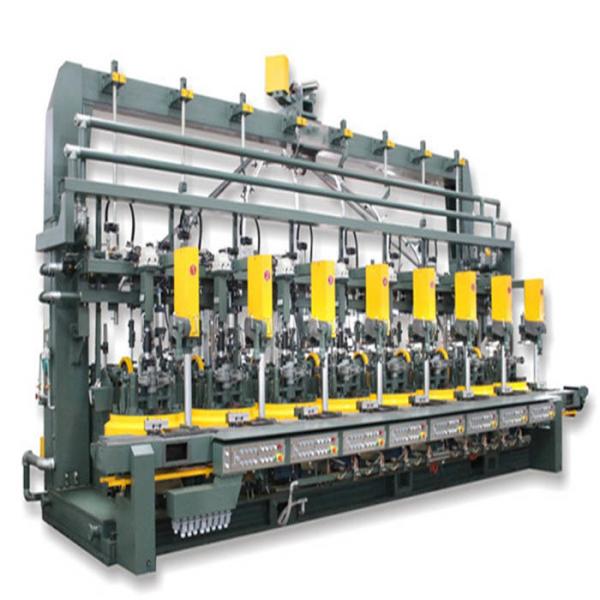
330ml Glass Bottle Production Line
330ml, Flint Bottle, Glass Bottle Production Line, Sparking Wine
Introduction to Glass Production

Glass is a special amorphous inorganic nonmetallic material composed primarily of silicate, forming a non-crystalline solid with an irregular structure.

With excellent chemical stability and artistic appeal, glass containers have become one of the most popular packaging materials. They are extensively applied in food and beverage industries, occupying an important market position that cannot be ignored.

Glass melting is the most critical process in glass production, where batched materials form a uniform, bubble-free liquid under high-temperature heating.

Container Glass Classification
By Body Shape
Item Description
1 Container / Bottle
2 Container with handle
3 Tubular container
4 Volume: 1ml~25000ml
By Bottom Shape
Item Description
1 Roundness (majority)
2 Oval
3 Square
4 Rectangle
5 Flat
By Neck Diameter
Item Description
1 Wide-mouth bottle or jar
2 Inner diameter over 30mm, with small or no shoulder, typically used for semi-fluid, powder, or bulk solid goods
By Color
Color Description
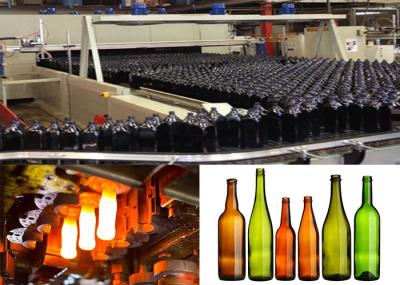
Flint / Clear Most common glass containers, providing optimal product visibility
Green Typically used for drinks and beers
Brown / Amber Used for beers, absorbs ultraviolet rays to protect contents
Opal Used for cosmetics, vanishing cream, unguent, and liquor
Glass Melting Process Stages
Silicate Formation

Batch materials undergo physicochemical solid-phase reactions during heating, releasing gaseous products and forming opaque sinter composed of silicate and SiO₂.

Glass Liquid Formation

Sinter melts, transforming silicate and SiO₂ into flint glass liquid with numerous bubbles. Chemical components and characteristics remain uneven at this stage.

Clearing

Continuous heating reduces viscosity, releasing gaseous impurities and eliminating visible bubbles from the liquid pool.

Homogenization

Glass melting involves complex physical, chemical, and physicochemical phenomena that transform mechanically mixed raw materials into homogeneous molten glass liquid.

The process occurs in melting sections where the upper flame space and lower melting tank work together, with burners feeding preheated air to increase flame efficiency.

Main Glass Forming Equipment
Gob Feeder / Serve Gob Feeder
  • Shear angle: adjustable between RH30° - LH90°
  • Available for S.G, D.G and T.G.
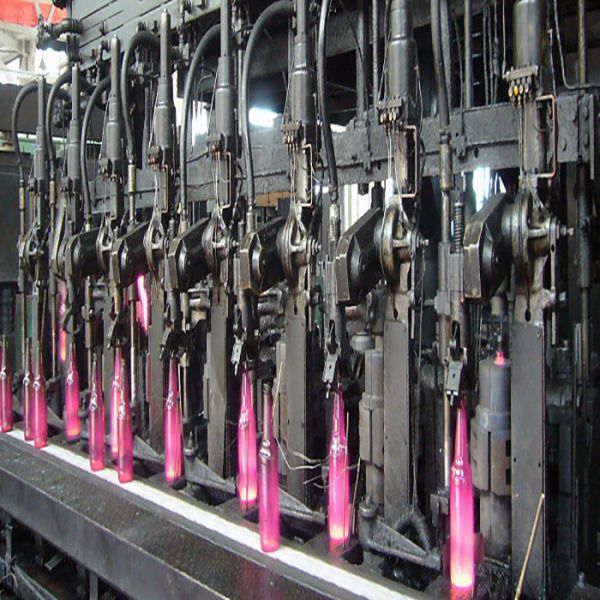
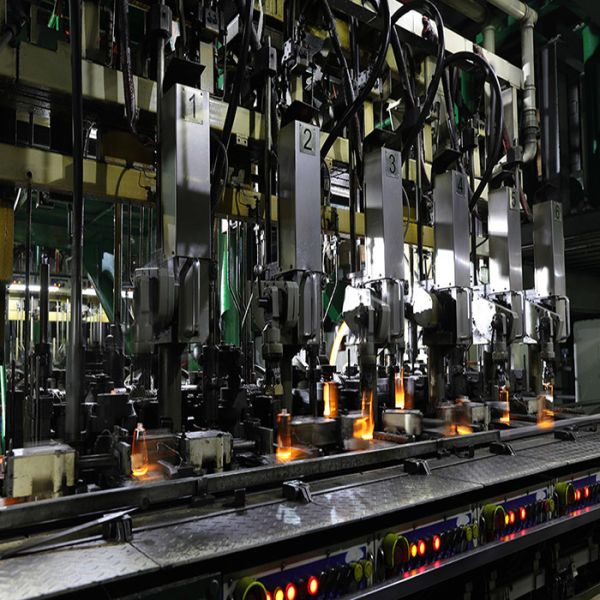
I.S. Machine
  • Standard glass production equipment with various gobs and sections
  • Compatible with all combustion types and annealing lehr specifications
  • High-precision machining ensures stability and reliability
Press Machine
  • Uses continuous cam in different sections
  • Pneumatic mold clamping with 5 bar compressor air
  • Air cylinder-controlled scoop with glass rejection
  • SMC electric valves and regulators
  • Adjustable gob position delivery system for different section modes
Transfer Ware

Designed for quick, stable conveyance of glass products from I.S. machine or press machine to cross conveyor, especially suitable for high-speed production lines.

Cross Conveyor

Installed in front of annealing lehr for cross-conveying glass products, working with stacker to push them into annealing lehr.

Stacker
  • Pushes glass products from cross conveyor into annealing lehr
  • Inverter-adjusted pushing speed
  • Digital counter-controlled pushing quantity
Annealing Lehr
  • Continuous annealing for tableware, bottles, cans, and other glass products
  • Heating type: electricity
  • Control mode: continuous proportionate automatic control
  • Temperature control precision: ±1℃
  • Maximum temperature: 630℃
  • Drive: Belt running with stepless speed regulation, frequency control by inverter
Packing Devices

Various packing devices accommodate different packing types for domestic glass products.

330ml Flint Glass Bottle Production Line for Pharmaceutical Applications
Send your message to this supplier
Send Now

330ml Flint Glass Bottle Production Line for Pharmaceutical Applications

Ask Latest Price
Watch Video
Color :
Flint
Voltage :
380V
After-sales service :
Engineer overseas service available
Application :
Pharmaceutical
Condition :
New
Warranty :
1 year
Contact Supplier
video
330ml Flint Glass Bottle Production Line for Pharmaceutical Applications

JEFFER Engineering and Technology Co.,Ltd

Verified Supplier
7 Years
chongqing, chongqing
Since 2007
Business Type :
Manufacturer, Importer, Exporter, Trading Company, Seller
Total Annual :
10000000-20000000
Employee Number :
200~350
Certification Level :
Verified Supplier
Contact Supplier
Submit Requirement