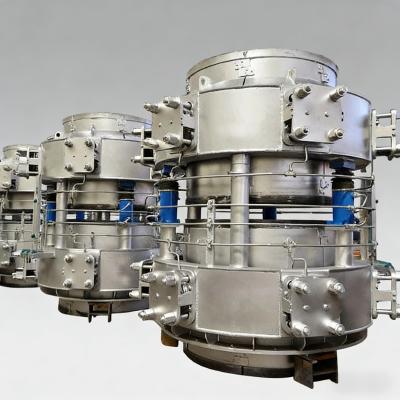
The bottom ring is one of the core components of the electrode combined holder in submerged arc furnaces (SAF). Located at the lowest end of the electrode holder, it undertakes multiple functions including protecting the electrode system, fixing the heat shield, and providing insulation protection. Its performance directly affects the stable operation of SAF and the frequency of shutdown maintenance.
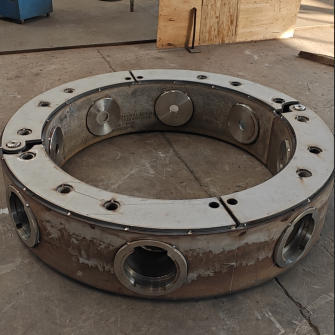
The bottom ring is an important component of the electrode combined holder in SAF, installed below the pressure ring. It has a circular ring structure with internal circulating cooling water channels, used to protect other components of the electrode holder from high-temperature flue gas damage.
| Type | Material | Features |
|---|---|---|
| Copper Bottom Ring | T2 copper / electrolytic copper | High thermal conductivity (~390 W/(m·K)), good cooling effect, but lower strength and prone to deformation |
| Stainless Steel Bottom Ring | 304 / 321 / 06Cr25Ni20 stainless steel | High strength, not easily deformed; manufacturing cost about half that of copper bottom ring; service life more than 3 times that of copper bottom ring |
| Type | Process Features | Advantages & Disadvantages |
|---|---|---|
| Cast Copper Bottom Ring | Direct casting or casting with embedded copper tubes | Disadvantages: casting defects such as loose structure, porosity, slag inclusion, cracks; embedded copper tubes not fully fused with the matrix, resulting in air gap thermal resistance and reduced thermal conductivity |
| Forged Copper Bottom Ring | Formed from forged or rolled copper | Advantages: dense structure, good mechanical properties and thermal conductivity |
| Welded Bottom Ring | Formed by welding stainless steel plates, with internal L-shaped cooling water channels | Advantages: low manufacturing cost, not easily deformed, large channel area, good cooling effect; service life more than 3 times that of traditional copper bottom ring, cost only half that of copper bottom ring |
| Type | Structural Features | Advantages & Disadvantages |
|---|---|---|
| Integral Bottom Ring | Assembled and welded from multiple components into one integral structure | Advantages: high structural strength, good sealing, avoids flame leakage and water leakage Disadvantages: relatively complex maintenance |
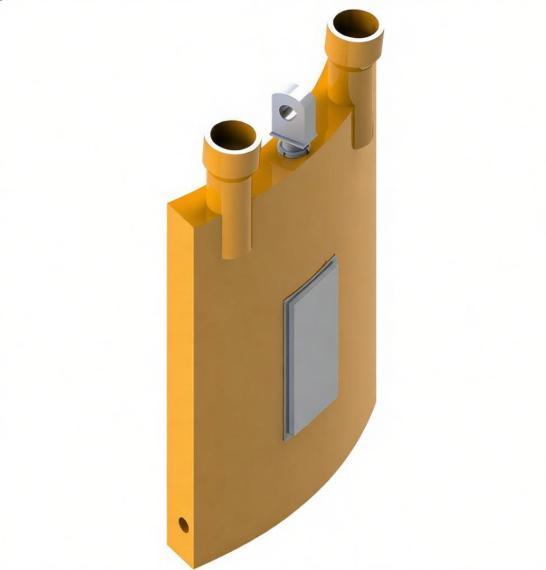
| Combined Bottom Ring | Composed of 4–8 welded bottom ring segments, each can be removed and replaced individually | Advantages: easy maintenance, partial replacement possible, reduces furnace downtime Disadvantages: more complex structure |
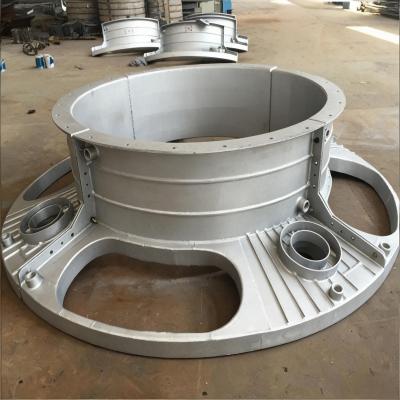
| Split Bottom Ring | Composed of multiple split units | Advantages: easy installation and partial maintenance |
| Parameter | Specification Range |
|---|---|
| SAF Capacity | 12500 - 81000 kVA |
| Bottom Ring Diameter | Φ800 - 2000 mm |
| Number of Combined Units | 4 - 8 |
| Cooling Channel Cross-section | L-shaped |
| Working Pressure | 0.3 - 0.6 MPa |
| Working Temperature | 1000 - 1400℃ |