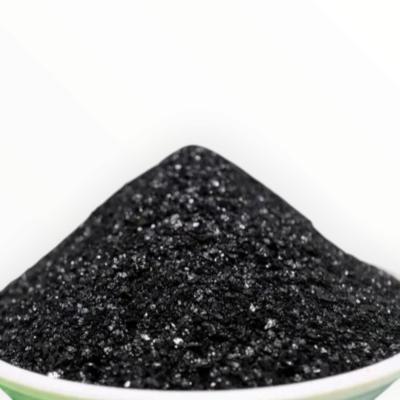
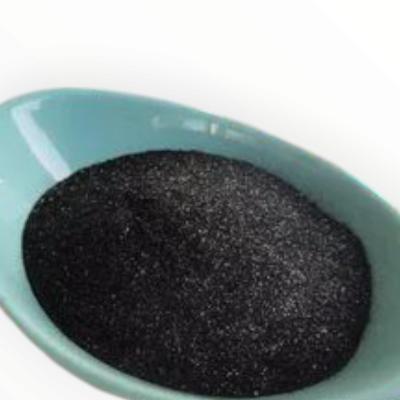
Humic acid constitutes a heterogeneous composite of naturally occurring organic macromolecular substances. Ubiquitous in the natural world, it boasts the highest relative abundance within terrestrial soil environments. In a broad context, the term humic acid denotes a class of organic matter that is generated and accumulated via two key pathways: the microbial-mediated decomposition and transformation of organic residues—predominantly those derived from plants—as well as a sequence of geochemical reactions and processes. This forms the fundamental definition of humic acid.Typically, humic acid serves as the predominant constituent of soil organic matter. Among humic substances, it acts as the core component, existing both in its free form and as metal ion-bound salts. All told, humic acid represents the most biologically active and functionally efficacious fraction of organic matter.
1.Humic acid features robust cation adsorption capabilities, enabling it to bind alkaline cations present in the soil matrix. Simultaneously, potassium humate is inherently alkaline, and it can initiate acid-base neutralization reactions with acidic ions in the soil, which in turn raises the pH level of acidic soils. To put it simply, potassium humate can neutralize excess acidity in acid soils and counteract over-alkalinity in alkaline soils, serving as a dual-directional pH regulator. This attribute also substantially strengthens the soil’s buffering performance against acidic or alkaline fertilizers.
2. Potassium humate possesses cation exchange capacity, which facilitates the translocation of soil nutrients and stimulates the metabolic activities of beneficial soil microorganisms. Additionally, humic acid exerts an adsorption effect on nitrogen and potassium elements; this not only prevents the leaching loss of nutrients but also enhances the slow-release characteristics of fertilizers applied to the soil.
3. Humic acid can accelerate the formation of soil aggregate structures, alleviate soil compaction, boost soil dissolved oxygen content and air permeability, and ultimately render the soil loose and friable. Furthermore, potassium humate is capable of adsorbing water molecules, which helps to enhance the soil’s capacity for retaining both moisture and nutrients.
4. Humic acid can release phosphorus that has been fixed by soil trace elements, thereby improving phosphorus utilization efficiency and fostering robust root growth in crops. It also enhances the respiratory and photosynthetic rates of crops, which in turn elevates their overall stress tolerance—including resistance to drought, low temperatures, and pathogenic infections.
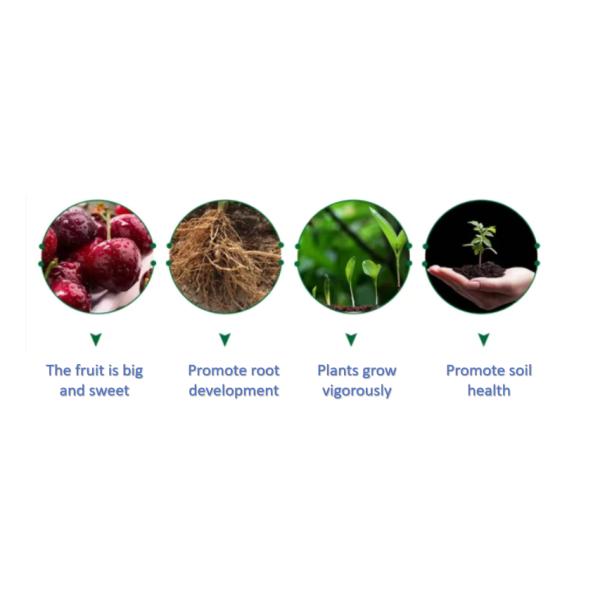
1.For Soil: prevent soil hardening, adjust soil PH, increase organic matter, improve soil crumb structure
2.Activate crop enzyme system, fasten crop metabolism to maintain a healthy and strong condition. Increase crop anti-drought anti-cold and anti-reversion force
3.Stimulate growth naturally, increase yield and fruit quality
4.Improve fertilizer efficiency and decrease the toxicity from fertilizer.
5.Act as chelating agent and carrier to help crop to absorb micro-elements
6.Provide potassium to corps