On one hand, potassium humate interacts with soil particles to create clay–humic acid composite structures, in which the acidic functional groups of humic acid are oriented inward while the hydrophobic components face outward. This structural arrangement reduces excessive water penetration and limits the breakdown of soil aggregates, thereby enhancing aggregate stability.
On the other hand, the hydroxyl and carboxyl groups present in potassium humate molecules can bind or chelate with calcium and other metal ions in the soil. These interactions lead to the formation of organic–metal–clay complexes, which support aggregate development and contribute to improved soil structure and overall soil quality.
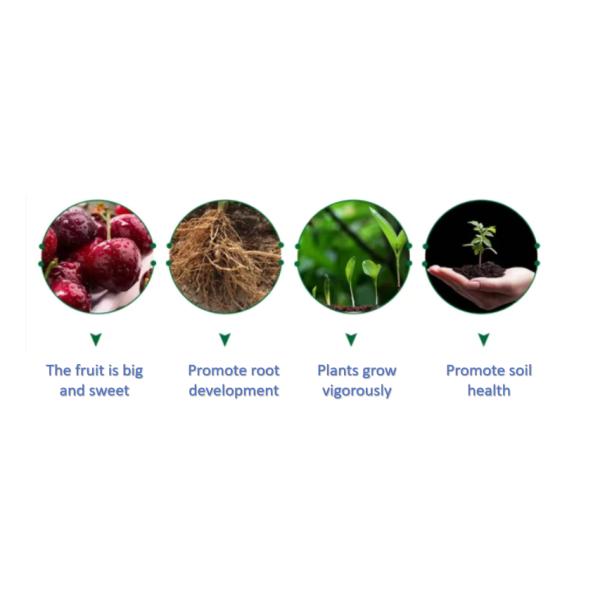
Potassium humate acts as a bio-activator that stimulates oxidase activity and enhances overall metabolic processes in plants. It supports stronger root development, improves the root system’s capacity to take up water and nutrients, and consequently encourages healthier plant growth.
The organic functional groups present in potassium humate are able to bind potassium ions, which helps reduce potassium loss caused by leaching. At the same time, these functional groups limit the fixation of potassium by soil clay particles, allowing potassium to remain more available for plant uptake. Furthermore, once applied to the soil, potassium humate can mobilize fixed potassium reserves, improving potassium availability and enhancing overall nutrient use efficiency.
Potassium humate enhances the nutrient supply available to soil microorganisms, particularly saprophytic bacteria, and boosts their metabolic activity. By strengthening the competitiveness of beneficial microbes in the soil environment, it helps suppress the development of crop pests and soil-borne diseases.
Potassium humate can modulate fertilizer release through combined physical, chemical, and biological mechanisms, enabling both accelerated nutrient availability and sustained release effects. On one hand, it increases the activity of multiple protective enzymes within plant cells, slows down plant senescence, promotes the conversion and accumulation of internal substances, and reduces nutrient fixation or oxidative loss. On the other hand, potassium humate can be absorbed by crops via foliage, vascular tissues, or intercellular pathways, which contributes to higher yields and improved crop quality.