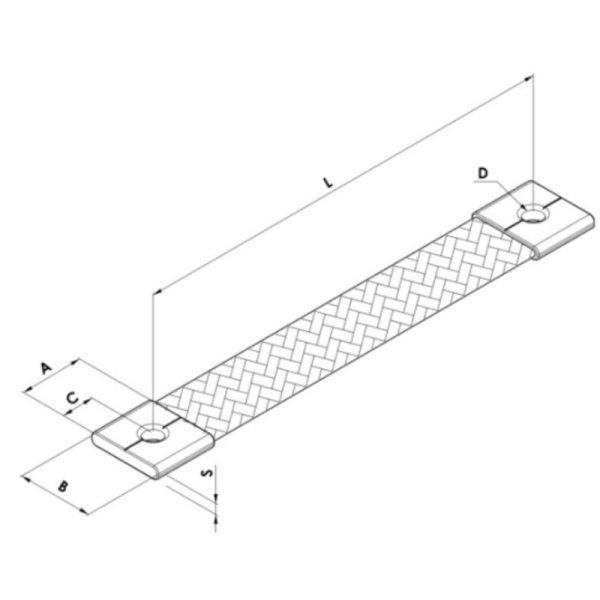
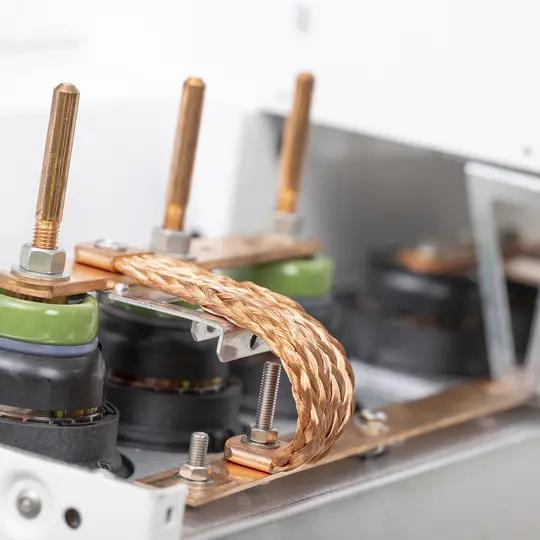
Copper Braid is a flexible electrical connection component made from multiple strands of high-purity copper wires woven into a compact braided structure. It provides excellent electrical conductivity, flexibility and mechanical durability, making it suitable for grounding connections, electrical bonding, current transmission and vibration-resistant applications.
Compared with solid copper conductors, copper braided straps offer better flexibility and can absorb mechanical movement, thermal expansion and vibration caused by equipment operation. According to different application requirements, copper braid can be supplied with bare copper, tin-plated copper or customized terminal configurations.
Copper braid products are widely used in power systems, electrical equipment, switchgear, battery systems, new energy applications and industrial automation equipment.

A standard copper braid mainly consists of:
Multiple fine copper wires are woven together to provide excellent conductivity and flexibility.
The woven structure improves mechanical strength while maintaining bending capability.
Copper braid can be equipped with copper lugs, terminals or customized fixing holes for easy installation.
Options include:
| Product Name | Flexible Copper Braid |
| Material | High Purity Copper / Tinned Copper |
| Conductor Type | Multi-Strand Braided Copper Wire |
| Surface Treatment | Bare Copper / Tin-Plated Copper |
| Cross Section | 1.5mm² - 1000mm² (Customized) |
| Width Range | Customized According to Requirement |
| Thickness | Customized |
| Rated Voltage | According to Application System |
| Operating Temperature | -40℃ to +150℃ |
| Connection Method | Crimping / Bolting / Welding |
| Flexibility | High Flexible Structure |
| Application Standard | IEC Related Electrical Connection Requirements |
| Customization | OEM Available |
Copper braid provides a reliable alternative to rigid copper bars, especially for applications requiring frequent movement or flexible installation.
The high conductivity copper material ensures efficient current flow and reduces energy loss.
The braided construction improves resistance to vibration, mechanical stress and thermal cycling.
Different dimensions and terminal designs can be produced according to customer drawings or application requirements.

Copper braid is widely used for grounding connections in electrical cabinets, switchgear, transformers and power distribution equipment.
Used for battery pack connections, energy storage systems and new energy equipment requiring flexible high-current connections.
Applied in transformers, generators, motors and electrical panels to provide reliable current transmission.
Suitable for machines and control systems where vibration resistance and flexible wiring solutions are required.
Used in grounding and bonding applications for railway equipment, vehicles and transportation electrical systems.
Applied in solar power systems, wind power equipment and energy storage installations for grounding and electrical bonding.
Q1: What is copper braid used for?
Copper braid is mainly used for electrical grounding, flexible current connections, bonding connections and vibration-resistant electrical applications.
Q2: What is the difference between copper braid and copper cable?
Copper cable is mainly designed for power transmission, while copper braid is designed for flexible electrical connections, grounding and bonding where movement or vibration may occur.
Q3: Is copper braid available in tinned copper?
Yes. Tinned copper braid is available and provides improved corrosion resistance, especially for outdoor, marine and humid environments.
Q4: Can copper braid be customized?
Yes. Manufacturers can customize length, width, thickness, cross-section, terminal type and mounting holes according to customer requirements.
Q5: What industries use copper braid?
Copper braid is commonly used in power distribution, electrical equipment, battery systems, industrial automation, renewable energy and transportation applications.
Q6: How do I select the correct copper braid size?
The selection depends on application factors including current capacity, installation space, connection length, flexibility requirements and environmental conditions.