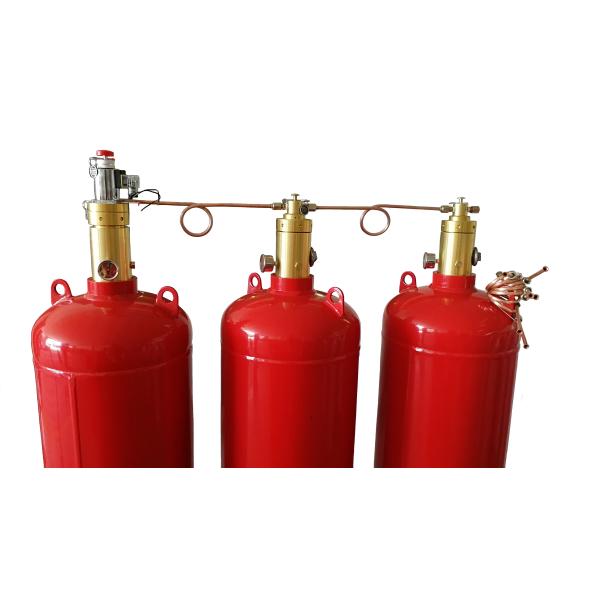
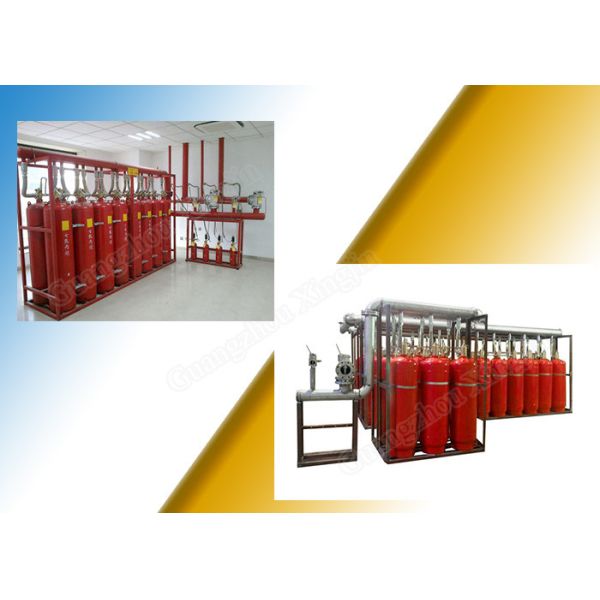
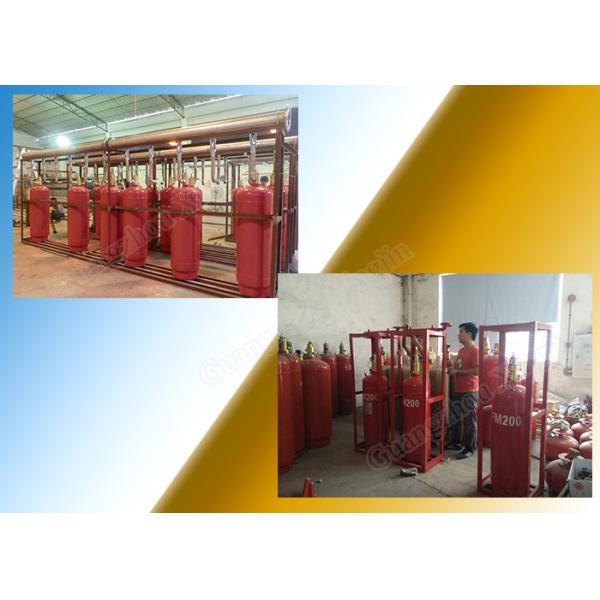
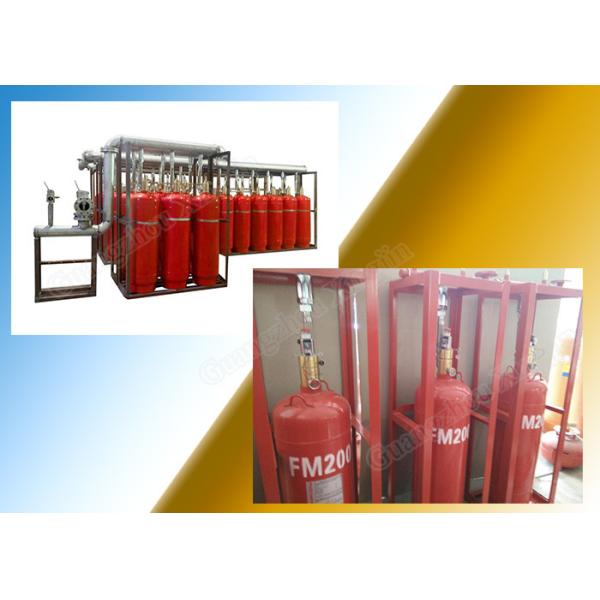
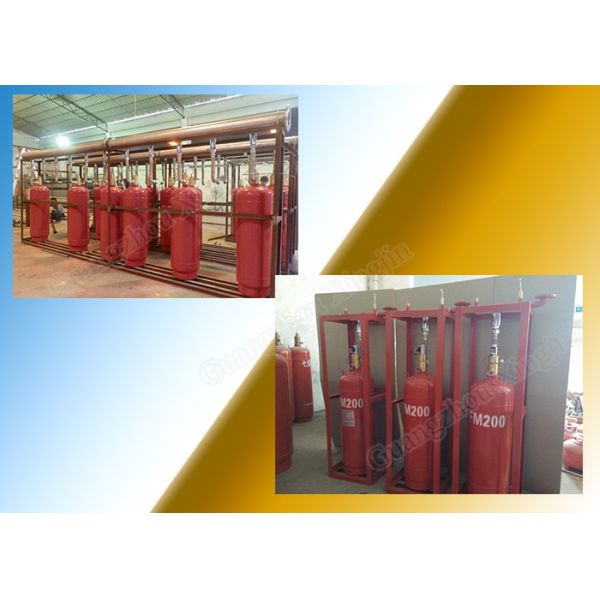
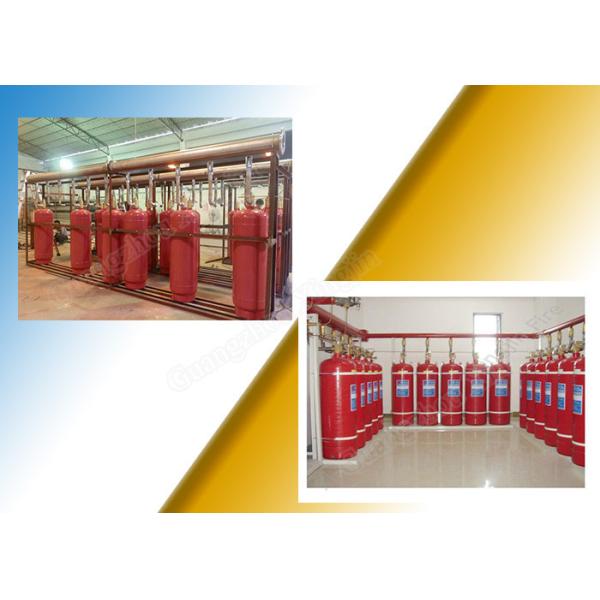
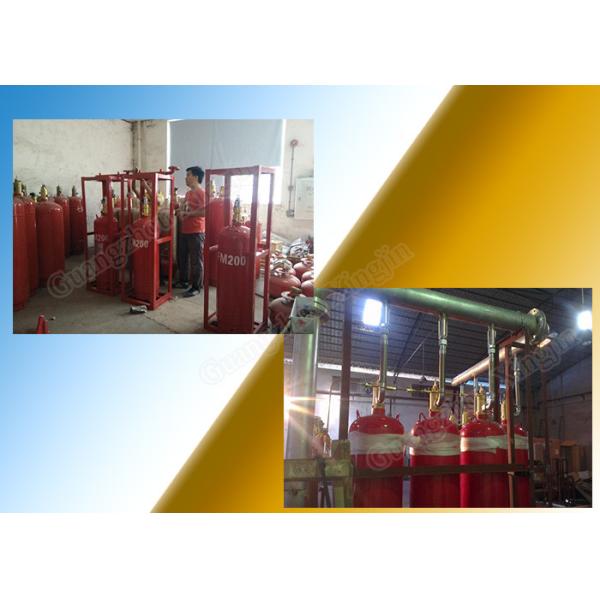
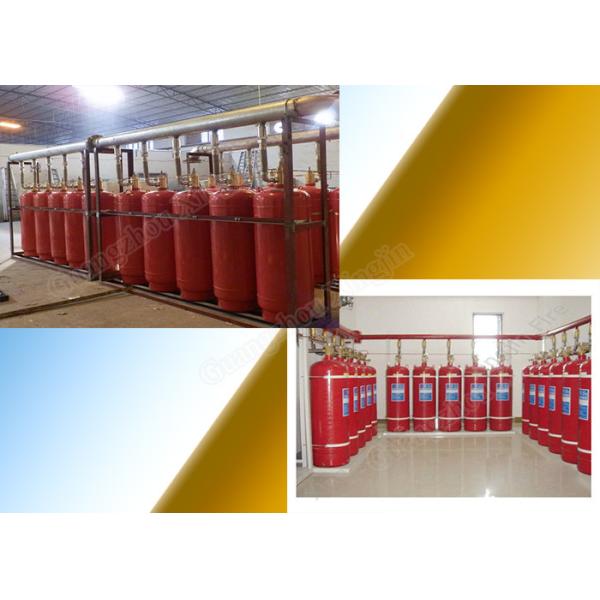
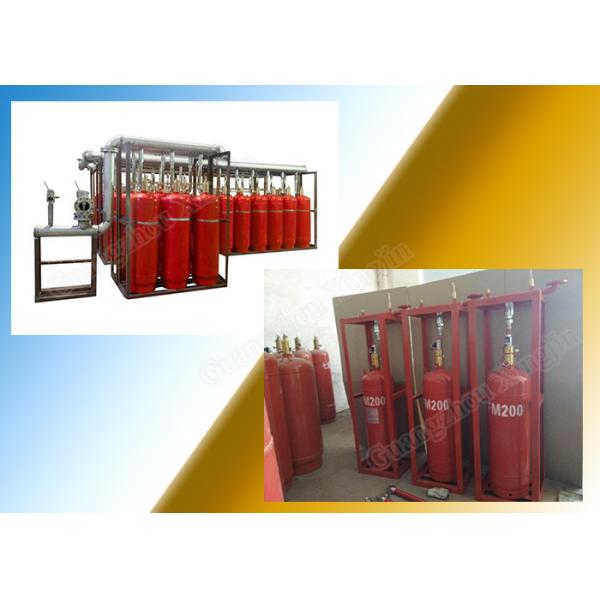
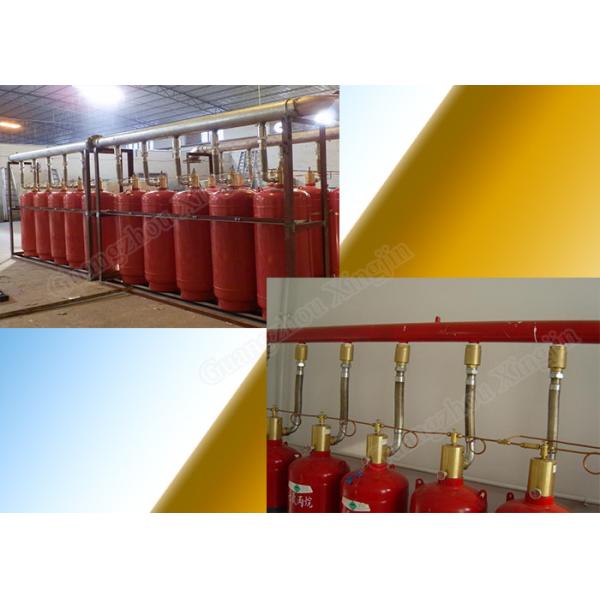
Tasteless FM-200 fire suppression systems (DC24V) are engineered for electronic computer rooms and other sensitive environments where clean, residue-free extinguishing is essential.
Heptafluoropropane (HFC-227ea, FM-200) is a colorless, odorless, non-conductive gas with no secondary residue. It offers clean operation, low toxicity, excellent electrical insulation, and high fire-extinguishing efficiency, and it causes no harm to the ozone layer. Its atmospheric residence time is relatively short, giving it environmental performance clearly superior to halogenated alkanes. It is a clean gas extinguishing agent developed to date and is widely regarded as the ideal replacement for Halon 1301 and 1211.
The heptafluoropropane automatic fire extinguishing system is a modern intelligent device integrating gas fire extinguishing, automatic control, and fire detection. It complies with DBJ15-23-1999 "Heptafluoropropane (HFC-227ea) Clean Gas Fire Extinguishing System Design Specification" and ISO14520-9 "Gas Fire Extinguishing System — Physical Properties and System Design". The system is characterized by advanced design, reliable performance, simple operation, and excellent environmental protection.
| No. | Specification | Technical Parameter |
|---|---|---|
| 1 | Filling pressure | 5.6 MPa |
| 2 | Scale of protective region for one zone | Area: max single-zone 800 m²; Volume: max single-zone 3600 m³ |
| 3 | Spraying time | ≤ 10 s |
| 4 | Filling density | ≤ 1080 kg/m³ |
| 5 | Power | DC24V / 1.6A |
| 6 | Nitrogen pressure of driving device | 6.0 ± 1.0 MPa (20°C) |
| 7 | Condition of reserving room for container | Temperature: -10–50°C; Relative humidity: ≤ 97% |
| 8 | Max working pressure | 8.0 MPa |
| 9 | Min working pressure | 4.6 MPa |
| Suitable Fire Types | Unsuitable Fire Types |
|---|---|
|
|
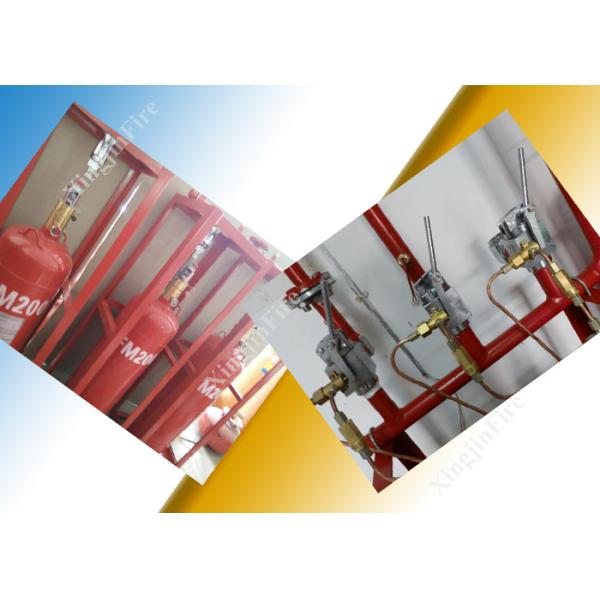
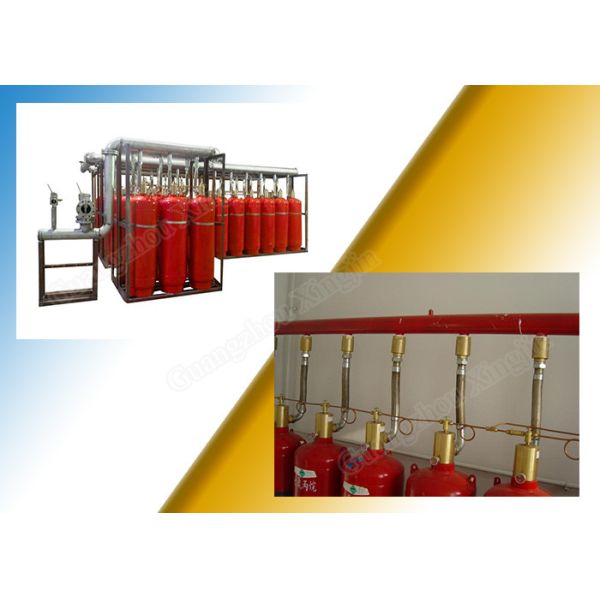
The 90L model HFC-227ea system, operating at 5.6 MPa, is mainly composed of three parts: extinguishing devices, pipe fittings, and electrical accessories.
These include the cylinder that fills and stores FM-200, the frame, and the driving device (nitrogen cylinder) that triggers the storage cylinder to discharge the agent.
These are the conduits that connect the extinguishing device and guide the agent into the protected zone, such as high-pressure galvanized steel pipe, flanges, and elbows.
These are used to detect and monitor the entire protected area and control the whole system. They also warn people to evacuate and prevent fire expansion.
Together, these three integrated parts efficiently detect, supervise, alarm, and automatically extinguish fires.