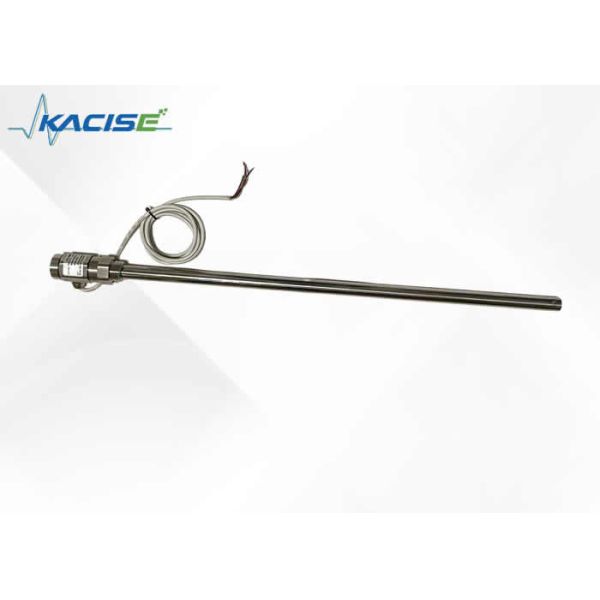
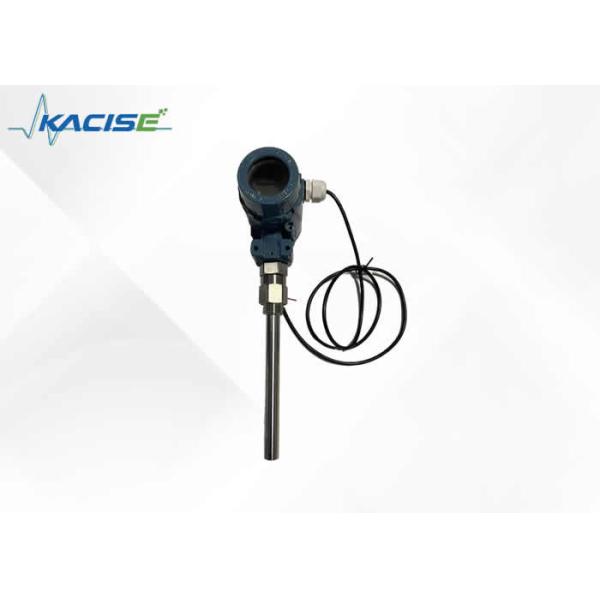
Corrosion-Resistant Capacitive Level Transmitter
General Description
The corrosion-resistant capacitive level transmitter with NPN/PNP output is specifically designed for level monitoring in laboratory reactors. Engineered to withstand corrosive substances commonly found in such environments, this transmitter provides precise sensing capabilities for accurate liquid level measurement. The NPN/PNP output ensures seamless integration with laboratory control systems, maintaining optimal reaction conditions while enhancing safety and experimental efficiency.
Key Features
- Modbus protocol for easy system integration
- Simple structure without movable or elastic components ensures high reliability and minimal maintenance requirements
- Multiple signal output options for flexible system configuration
- Suitable for high temperature and high pressure container level measurement
- Measurement accuracy unaffected by temperature, liquid specific gravity, container shape, or pressure
- Ideal for measuring strong corrosive liquids including acids and alkalis
- Comprehensive overcurrent, overvoltage, and power supply polarity protection
- Wireless remote transmission capability available
- Compatible with any media type
Technical Specifications
| Parameter |
Specification |
| Detection Range |
0.1-3m |
| Capacitance Measurement Range |
10PF-500PF |
| Accuracy Classes |
0.1, 0.2, 0.5, 1 |
| Pressure Range |
-0.1MPa-32MPa |
| Probe Temperature Resistance |
-50°C to 250°C |
| Ambient Temperature |
-40°C to 85°C |
| Storage Temperature |
-55°C to +125°C |
| Output Signals |
4-20mA, 485 communication, etc. |
| Wireless Communication Distance |
< 200 meters |
| Power Supply Voltage |
5-36V DC |
| Materials |
316 stainless steel, 1Gr18Ni19Ti, or PTFE |
| Long-term Stability |
≤0.1%FS/year |
| Temperature Drift |
≤0.01%FS/°C (0-70°C range) |
| Explosion-proof Rating |
ExibIICT6 |
| Protection Level |
IP67 |
Structural Design
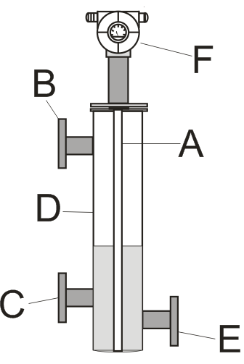
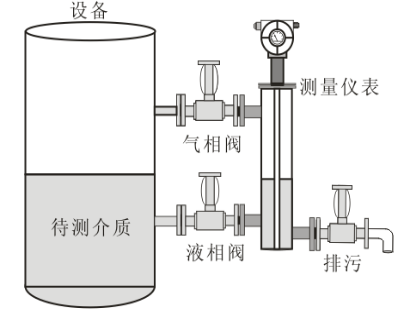
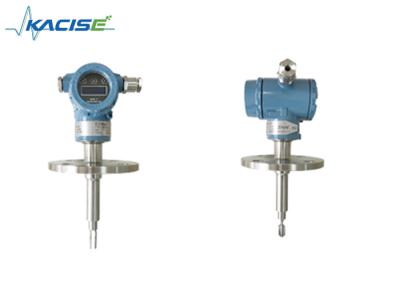
Capacitive liquid level sensors feature varying structures based on application requirements and parameters. The main components are typically divided into two sections: the sensor unit and the transmitter unit.
A: Sensor probe that directly interfaces with container equipment or measurement medium
B & C: Gas phase and liquid phase connection flanges for equipment interface
D: Measuring cylinder that forms capacitance with sensor electrode
E: Drainage flange for periodic removal of accumulated contaminants
F: Transmitter unit converting capacitance to standard 4-20mA current signal
Important Safety Note: A sealed section exists between the transmitter and measuring tube, comprising multiple seals that prevent medium leakage. Do not disassemble this section without manufacturer authorization to avoid potential hazards.
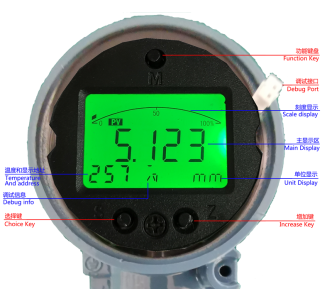
Display Unit
Wiring Configuration
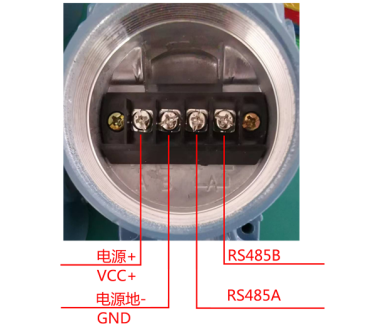
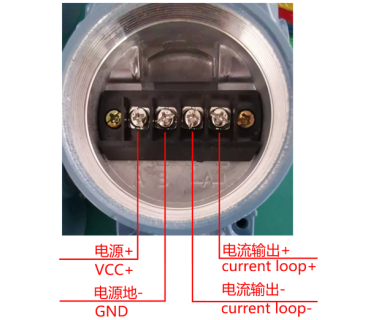
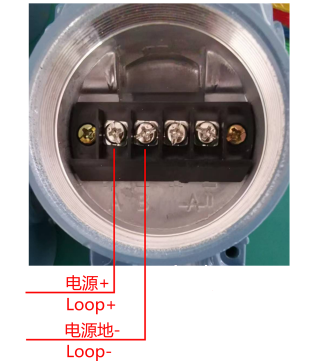
The KSLV606 display model supports two wiring methods: RS485 communication and 4-20mA analog output.
RS485 Wiring
4-20mA Wiring
Isolated 4-20mA Output
Non-isolated 4-20mA 2-wire Output
Initial Operation: During first use, always open the gas phase valve first, followed by the liquid phase valve to prevent measurement errors from liquid level fluctuations.
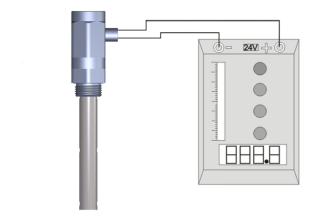
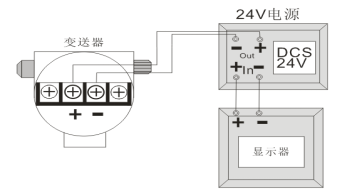
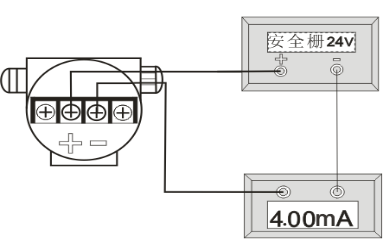
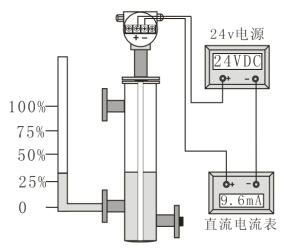
Common transmitter wiring configurations:
(a) Direct connection to digital display meter
(b) Connection to DCS control system with 24V supply
(c) Connection via safety barrier with ammeter
Installation Guidelines
Gas and Liquid Phase Installation
Installation involves connecting the gas-liquid phase connection flanges on the level measurement instrument with corresponding equipment flanges using gaskets and bolts. Pre-configured connecting flanges eliminate the need for reconfiguration.
Pre-installation Check: Clean equipment outlet pipe inner holes to ensure unobstructed flow and verify flange sealing surface integrity. Consider adding valves between instrument and equipment flanges for maintenance accessibility.
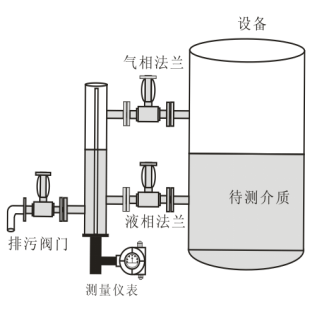
Boiler-Type Capacitive Level Meter Installation
Specifically designed for high-temperature applications in boiler systems, this configuration features a transmitter located below the sensor with specialized heat dissipation sections and a 90-degree curved arm to protect electronics from high temperatures.
Calibration Procedure
Calibration Steps:
- Prepare transparent water pipe with scale markings, precision DC ammeter (3+ digits), rubber stoppers, and test medium (water acceptable)
- Connect transparent pipe to liquid phase port, block drainage outlet, keep gas phase port open, and connect ammeter in series as per wiring diagrams
- Add medium to transparent tube, allowing flow into level measurement instrument
- Measure liquid level at multiple height points (0%, 25%, 50%, 75%, 100%) and compare ammeter readings with expected 4mA, 8mA, 12mA, 16mA, 20mA outputs
Troubleshooting Guide
Digital Display Shows Zero
- DC ammeter shows 0mA: Check 24V power supply, transmitter short circuits, or transmitter quality issues
- DC ammeter shows <4mA: Verify actual liquid level position, check transmitter current adjustment, or assess transmitter quality
- Current exceeds 25mA: Investigate transmitter circuit short circuits or excessive current adjustment
Digital Display Shows Full Scale
- DC ammeter shows 20mA: Check current adjustment settings, transmitter short circuits, or verify actual liquid level
- DC ammeter shows <20mA: Display meter may be faulty
Other Common Issues
- Erratic display: Check actual liquid level fluctuations, poor line contact, or transmitter quality
- No display changes: Verify transmitter functionality, check for blocked gas-liquid phase pipes, or sensor-transmitter connection issues
- Slow response: Clean sensor electrodes from impurities or check for partially blocked gas phase pipes
- Inaccurate readings: Adjust range or zero knobs in transmitter
Important Precautions
- Verify product certificate and instruction manual contents before use
- Confirm site interface compatibility with product connection requirements during installation
- Follow wiring instructions precisely as specified
- Avoid disassembly, impact, dropping, or forceful handling of this precision instrument
- Power off and cease operation if abnormalities are detected during use
- Use original packaging for transportation and storage in cool, dry, ventilated areas
- Protect sensor from damage during installation and operation
- Implement effective lightning protection measures at installation site
- Ensure proper transmitter casing grounding with resistance <4Ω
- Use safety barriers or isolators with 485 communication systems
- Verify safety barrier explosion-proof certification and follow installation requirements
- Ensure power transformers meet GB3836.4-2010 requirements for "0" area applications
Product Selection Guide
| Intelligent Capacitive Fluid Level Gauge Selection Table |
| Product Type |
Description |
| 605 |
No display model |
| 606 |
No display model |
| Output Signal |
Description |
| 4-20mA |
4-20mA signal output with LED display |
| RS485 |
RS485 output |
| Measuring Range Code |
Range |
| L500 |
500mm |
| L800 |
800mm |
| L1000 |
1000mm |
| Lxxx |
Special requirements (specify in bracket) |
| Measuring Media |
Description |
| Water |
For water-based media measurement |
| Other |
Specify other requirements clearly |
KSLV | 605 | 4-20mA | L800 | water | NA