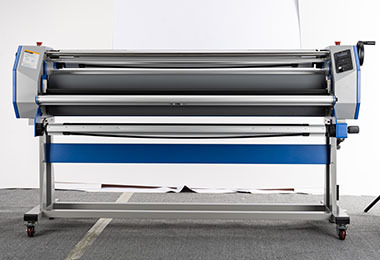
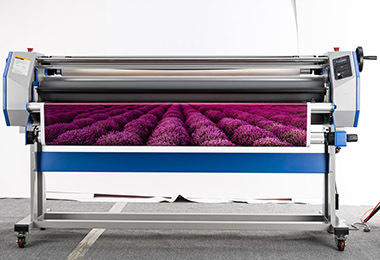
In Southeast Asia—especially in markets like Indonesia, Vietnam, Thailand, and the Philippines—the tropical climate presents unique challenges for the signage and graphics industry. When facing relative humidity above 90% and temperatures exceeding 35°C, entry-level lamination equipment often leads to production nightmares.
Why the Southeast Asian Climate is a "Silent Killer" for Lamination
Equipment that performs well in dry environments often struggles in the humid tropics, leading to three major issues:
-
"Silvering" Effect:
In high humidity, microscopic moisture can trap air between the film and the media. During cold lamination, uneven pressure traps these tiny bubbles, creating white, hazy spots known as "silvering."
-
Adhesive Degradation:
Prolonged heat can soften low-quality adhesives, leading to "glue oozing" that sticks to the rollers and causes downtime.
-
Media Distortion:
Printing media (such as vehicle wraps or PP synthetic paper) expands and contracts with humidity fluctuations. Without precise tension control, the finished product is prone to wrinkling.

The Solution: Why MEFU’s "Heat-Assist" Technology is the Industry Standard
By 2026, standard cold lamination will no longer enough for high-end clients in Southeast Asia. MEFU’s Heat-Assist Cold Lamination technology is specifically engineered to overcome these environmental hurdles.
-
Eliminating Silvering
MEFU machines feature a heated top roller (typically set between 40°C - 50°C / 104°F - 122°F). This slight heat lowers the viscosity of the pressure-sensitive adhesive, allowing it to flow instantly and push out micro-bubbles. The result is a crystal-clear, "mirror-like" finish—essential for high-quality vehicle wraps.
-
Consistency via Pneumatic Pressure Systems
In Southeast Asia, temperature swings between day and night can cause machine parts to expand or contract slightly. Unlike manual hand-crank machines, MEFU’s Pneumatic System provides constant, regulated downward pressure.
The Advantage: Regardless of media thickness or environmental changes, the air cylinders automatically adjust to ensure uniform pressure from the first meter to the hundredth, effectively preventing tracking errors (skewing).
-
High-Quality Silicon Rollers
MEFU uses premium silicon rollers that offer excellent heat resistance and anti-stick properties. In humid conditions, these rollers prevent adhesive buildup and are incredibly easy to clean, ensuring your production line stays efficient.
3 Key Metrics When Selecting a Large-Format Laminator
If you are planning to upgrade your workshop in 2026, ensure your equipment meets these professional standards:
| Feature |
Why it Matters in SE Asia? |
Recommended MEFU Model |
| Heat-Assist Function |
Eliminates humidity-induced silvering and speeds up adhesive flow. |
MF1700-F1 |
| One-Man Operation |
Combats rising labor costs in Thailand, Malaysia, and Vietnam. |
MF1700-M5 |
| Anti-Skewing Precision |
Ensures long-run prints (50m+) stay perfectly centered. |
All Series |
Expert Tips for Equipment Maintenance in the Tropics
To maximize the lifespan of your MEFU laminator in a tropical environment, we recommend:
-
Controlled Environment:
Whenever possible, operate in a room with basic dehumidification or air conditioning.
-
Roller Care:
Always raise the top roller when the machine is not in use. This prevents the rollers from developing "flat spots" due to prolonged pressure in high-heat conditions.