14 CFR Part 25, Section 25.853 Appendix F Part V OSU Heat Release Rate Tester
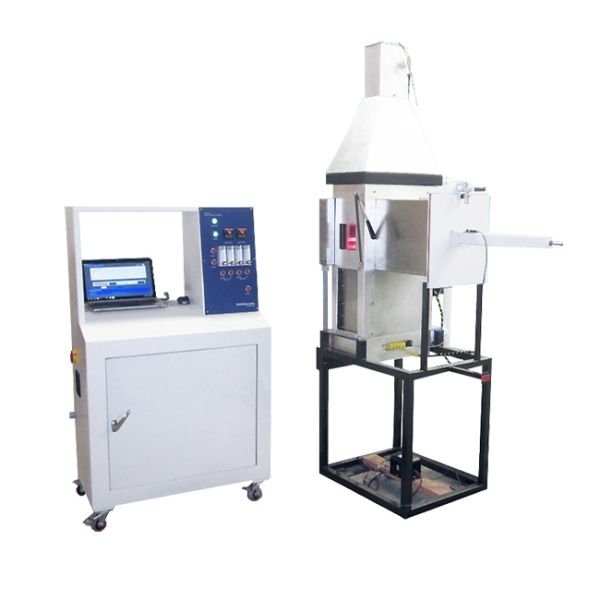
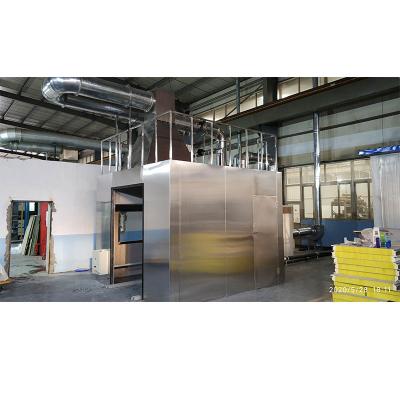
The OSU Rate of Heat Release Apparatus is a core piece of equipment for testing the fire resistance of aircraft interior materials. It strictly complies with the requirements of the U.S. Federal Aviation Administration (FAA) regulations 14 CFR Part 25.853(d) and Appendix F Part IV, and also meets the requirements of Chapter 5 of the FAA Aircraft Materials Fire Test Handbook. Developed by Ohio State University (OSU), this instrument simulates a real fire environment inside the aircraft cabin after a fire by using a radiant heat flux of 35 kW/m². It tests the heat release rate of large-area materials inside the aircraft cabin (such as wall panels, ceiling panels, overhead bin linings, seat fabrics, floor coverings, galley/toilet partitions, etc.). The instrument accurately measures the peak heat release rate (≤65 kW/m²) and the total heat release over 2 minutes (≤65 kW·min/m²), commonly known in the industry as the "65/65" standard. This helps material suppliers and aircraft manufacturers ensure their products pass FAA certification, significantly improving the fire safety level inside the aircraft cabin. The equipment is equipped with a stainless steel insulated test chamber, a silicon carbide rod radiation heating source, a thermopile oxygen consumption measurement system, and precise temperature control and airflow regulation. It is stable in operation and reliable in data, making it an indispensable professional instrument for FST (fire resistance-smoke-toxicity) testing of aerospace materials.

Standard
FAA 14 CFR Part 25, Appendix F, Part IV:Test Method to Determine the Heat Release Rate from Cabin Materials Exposed to Radiant Heat
(This is the core regulatory basis for the OSU heat release rate tester, used for testing the heat release rate of materials inside the aircraft cabin.)
FAA Aircraft Materials Fire Test Handbook – Chapter 5: Heat Release Rate Test for Aircraft Materials
(Chapter 5 of the FAA's official fire test handbook, equivalent to the detailed test procedures in Appendix F Part IV.)
ASTM E906 / ASTM E906-14 (Revised Version): Standard Test Method for Heat and Visible Smoke Release Rates for Materials and Products Using an Oxygen Consumption Calorimeter
(The revised OSU version is commonly used in the aerospace industry for oxygen consumption calorimeter testing.)
Test product range:
Interior ceiling panels (excluding lighting lenses and windows)
Interior wall panels (excluding lighting lenses and windows)
Blockers (excluding transparent panels required for cabin safety)
Garrison structures, including storage trolleys, standard containers, and exposed cavity wall surfaces visible when not fully loaded
Large cabinets
Cabin storage compartments (excluding under-seat storage compartments for small items such as magazines or maps)
Parameter:
1. Stainless steel combustion test chamber with a high-temperature resistant glass observation window;
2. Heat radiation source: 4 Glowbars heating rods, providing 35KW/M2 heat radiation flux;
3. Two independent PID temperature controllers for heating temperature control;
4. Equipped with a fully automatic pneumatic sample propulsion device and a shielded door device;
5. Equipped with an upper burner and a movable lower burner;
6. Rotor flowmeter for adjusting the gas flow rate of the upper and lower burners;
7. Equipped with a movable T-type calibration burner device and flow controller;
8. Mass flow controller automatically applied for thermopile temperature calibration;
9. Water-cooled heat flux meter for measuring the heat radiation flux of the burned surface, equipped with a cooling system;
10. Airflow temperature control device for providing constant temperature and constant flow air to the test chamber;
11. Orifice plate flowmeter for measuring the flow rate and pressure entering the test chamber;
12. Equipped with a data acquisition system and heat release standard test software.