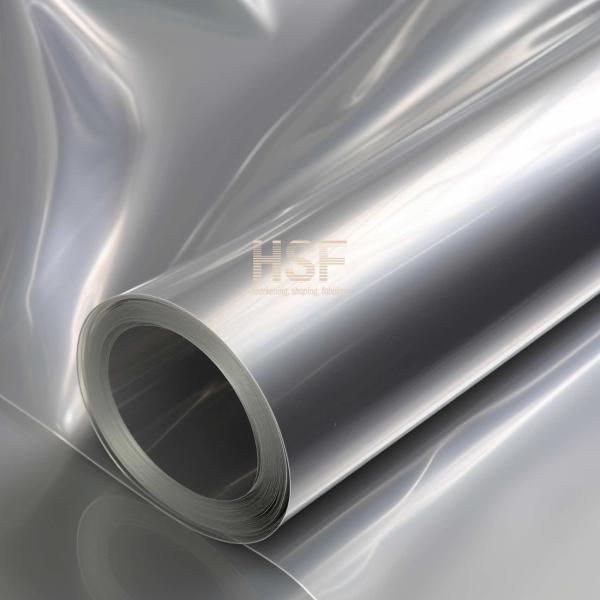
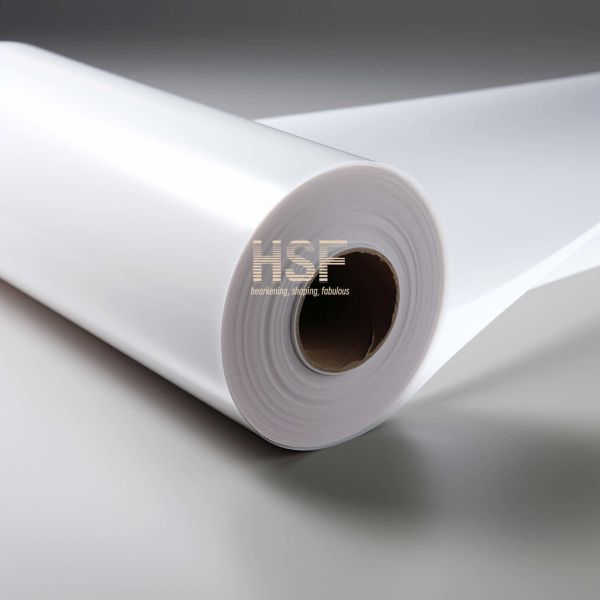
150μm Heavy-gauge White TPU Film
Ultra-elastic, tear-resistant, UV-stable TPU film with excellent impact resistance and low temperature resistance. Ideal for wearable, medical, and industrial protective applications.
TPU Film Types and Properties
Polyester-based TPU Films
These films use polyesters as the soft segment, providing high tensile strength and excellent abrasion resistance. Known for superior resistance to oils, chemicals, UV rays, and hydrolysis. Commonly used in industrial, automotive, and apparel applications.
Polyether-based TPU Films
These films use polyethers as the soft segment, offering high flexibility and elasticity. Feature excellent low-temperature flexibility, transparency, and water vapor permeability. Commonly used in medical, food packaging, and inflatable product applications.
Application Examples
Polyester Type TPU Film Applications
- Apparel and textiles: Outdoor sportswear and protective clothing with excellent waterproof and breathability properties
- Flexible electronics: Electrical insulation and mechanical protection for flexible electronics
- Automotive industry: Airbags, seat covers, door panel covers requiring abrasion and chemical resistance
- Renewable energy: Photovoltaic films with excellent weather resistance and durability
Polyether Type TPU Film Applications
- Medical devices: Temporary or permanent implants, catheters with excellent biocompatibility and sterilization capability
- Food industry: Food packaging applications with excellent water resistance
- Decorative films: Decorative films and laminates with excellent clarity and gloss
- Sporting goods: Balls, rafts, and inflatable products requiring flexibility and toughness
Medical Industry Applications
- Medical device coating: Improves lubricity, biocompatibility, and durability of catheters, guidewires, and stents
- Surgical drapes and gowns: Water resistance and sterilization resistance
- Medical packaging: Durable packaging material resistant to punctures
- Wound dressings: Provides moisture barrier, breathability, and flexibility
- Medical adhesives: Biocompatible adhesive components
- Blood bags: Puncture-resistant and durable blood storage solutions
Shore A Hardness Characteristics
- Flexibility: Lower Shore A values indicate softer, more flexible films suitable for high elongation applications
- Tear and puncture resistance: Higher Shore A values provide stiffer films with improved strength and durability
- Clarity: Lower Shore A films tend to be more transparent and clear
- Adhesion: Hardness influences adhesive properties through surface energy and modulus
- Processing: Harder films require higher processing temperatures and longer processing times
Medical Material Considerations
- Biocompatibility: Positive interaction with living tissues without adverse reactions
- Cytotoxicity: Meets standards to ensure no harmful impact on living cells
- Mechanical properties: Adequate tensile strength, elongation, tear strength, and puncture resistance
- Flexibility: Conforms to body parts and organs
- Sterilization resistance: Withstands autoclaving, gamma irradiation, and ethylene oxide gas sterilization
- Durability: Withstands handling, insertion, and measuring stresses
- Surface properties: Surface energy, wettability, and roughness affect tissue interactions
Production Process
- Raw material preparation: Mixture of aliphatic or aromatic polyester/polyether diols, polyols, and diisocyanates
- Polymerization: Reacting diisocyanate with diol to create prepolymer, then with polyol to form TPU
- Film extrusion: Heating under high pressure and extruding through a die for uniform thickness
- Film cooling and solidification: Water bath cooling to maintain shape
- Film treatment and finishing: Printing, lamination, or embossing treatments
- Film inspection and quality control: Testing for thickness, tensile strength, elongation, and physical properties
- Film packaging: Cutting to length, winding onto rolls, and shipping
Technical Specifications
| Test Item |
Test Method |
Unit |
Test Value |
| Hardness |
ASTM D2240 |
Shore A |
90 |
| Thickness |
ASTM D3767 |
mm |
0.147 |
| Specific Gravity |
ASTM D297 |
g/cm³ |
1.20 |
| Colour |
Visual Inspection |
/ |
Transparent |
| Tensile Strength |
ASTM D412/Die C |
Mpa |
CD: 74.13 MD: 68.17 |
| 100% MOD |
ASTM D412/Die C |
Mpa |
CD: 6.74 MD: 6.46 |
| 300% MOD |
ASTM D412/Die C |
Mpa |
CD: 20.25 MD: 16.84 |
| Elongation @ Break |
ASTM D412/Die C |
% |
CD: 598 MD: 626 |
| Tear Strength |
ASTM D624 |
KN/m |
CD: 107.42 MD: 107.92 |
| Melting Point |
DSC |
℃ |
178 |
| Dyne Value |
Dyne Test Pen |
Dyn/cm |
34 |
| UV Light Discoloration |
ASTM D1148 |
Grade |
- |
Note: The die used for tear strength is a right angle die.